THE ADVENTURE COLLECTIVE® · Independent discovery and booking for outdoor travel

Cross a border at dawn, walk the Siq to the Treasury, sleep under Wadi Rum’s stars and finish in Aqaba. This two‑day trip from Eilat compresses Petra’s ancient engineering and Bedouin desert life into an efficient, story‑packed itinerary.
Cross a border at dawn, walk the Siq to the Treasury, sleep under Wadi Rum’s stars and finish in Aqaba. This two‑day trip from Eilat compresses Petra’s ancient engineering and Bedouin desert life into an efficient, story‑packed itinerary.
You step off the minibus and the heat hits like a dry hand—then the Siq narrows and the sandstone exhales centuries. Daylight filters through a fracture in the rock and suddenly the Treasury appears, carved with a precision that still surprises the eye. This two-day route hustles you across borders and geologic time: from the rose‑red cliffs of Petra to the wide, wind‑swept bowls of Wadi Rum, finishing with an easy downhill into Aqaba.
Verified experiences and guided adventures in the surrounding area.
Operated by Booking-tours.com · Wadi Musa, Ma'an Governorate
You step off the minibus and the heat hits like a dry hand—then the Siq narrows and the sandstone exhales centuries. Daylight filters through a fracture in the rock and suddenly the Treasury appears, carved with a precision that still surprises the eye. This two-day route hustles you across borders and geologic time: from the rose‑red cliffs of Petra to the wide, wind‑swept bowls of Wadi Rum, finishing with an easy downhill into Aqaba.
Petra was the Nabataeans' capital, a thriving desert port that rerouted trade and invented hydraulic engineering to tame flash floods. The city’s facades are not fossils so much as a living record—ornate tombs, a Roman theater hewn into bedrock, and the Monastery perched above a ruinous amphitheater. Geologically, Petra is an open book of cross-bedded sandstone and iron staining; the colors shift through the day as if the canyon is changing its mind about what color to wear.
Wadi Rum is a different voice of the desert. Granite inselbergs and sandstone arches stand like mute storytellers while the sand dares you to climb its ribs for a view. The Bedouin families who host overnight guests still practice livestock grazing and share tea and stories by gaslamps—their tents are simple, warm, and intentionally low-impact.
Practicalities matter here: the tour picks up in Eilat and moves through the Israeli-Jordanian crossing, so passports and visas are the first items of business. Expect long stretches of walking in Petra—roughly 3–4 hours of on-foot exploration the first day with a similar window of jeep time in Wadi Rum the next. The itinerary includes breakfast, lunch, a night in a Bedouin camp, entrance to Petra, and a final transfer to Aqaba.
To prepare, wear broken‑in hiking shoes, carry at least 2–3 liters of water per person, and pack sun layers plus a light wind shell for camp nights. If you want better photos, wake before dawn for the Treasury without the crowd and stay up after sunset in Wadi Rum for a sky so dense with stars it feels like a tidal pull.
Be mindful: Petra’s stone is fragile, and camps aim to minimize plastic and waste—bring a reusable bottle and a headlamp. The tour moves fast but smart: it trades deep immersion in a single site for a sweeping two‑day introduction to Jordan’s most famous landscapes, ideal for travelers who want a taste of history, geology, and Bedouin hospitality without nights on a private route.
moderate.
2 days (approx. 8–10 hours sightseeing per day).
Moderate fitness; comfortable with several hours of walking on uneven surfaces and short climbs.
Yes—check your nationality’s visa requirements and arrange any necessary visa before travel; contact the supplier after booking for details.
Yes, entrance to Petra is included in the tour price per the itinerary information.
Expect about 3–4 hours of walking around Petra with uneven stone paths; Wadi Rum involves short hikes plus a 2‑hour 4x4 jeep tour.
Pack a warm layer, personal toiletries, any sleep medications, and a small daypack; most camps provide bedding and simple facilities.
Breakfast, lunch and one overnight accommodation with basic meals are included; notify the operator of dietary needs at booking.
Children may join but must be accompanied by an adult; the tour requires moderate mobility and border paperwork for minors.
Petra was the Nabataean capital and a trade hub that controlled incense and spice routes, notable for its hydraulic systems and rock-cut architecture.
Petra’s sandstone erodes easily—stay on marked paths, avoid touching facades, and use refillable bottles to reduce plastic waste.
Booking-tours.com operates guided outdoor trips and adventures with an emphasis on safety, stewardship, and memorable experiences.
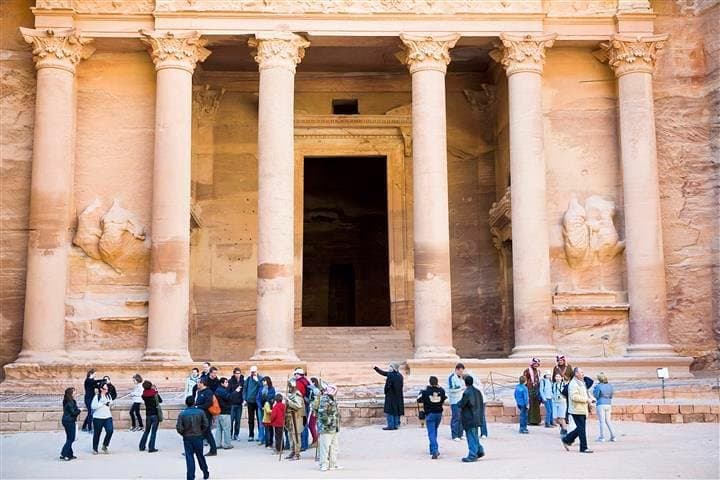
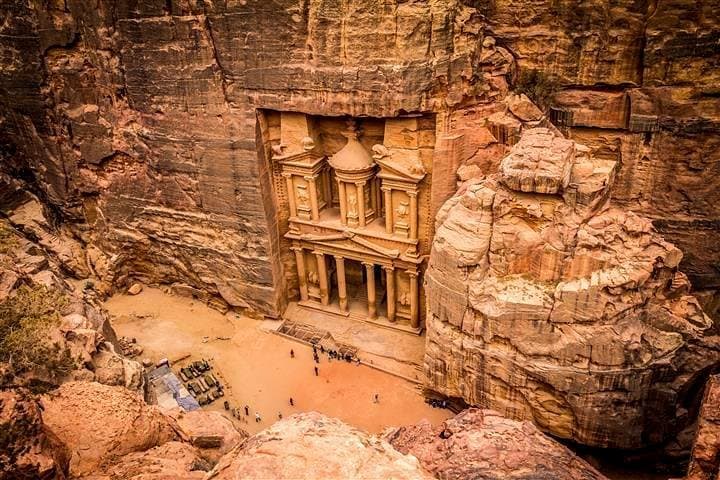
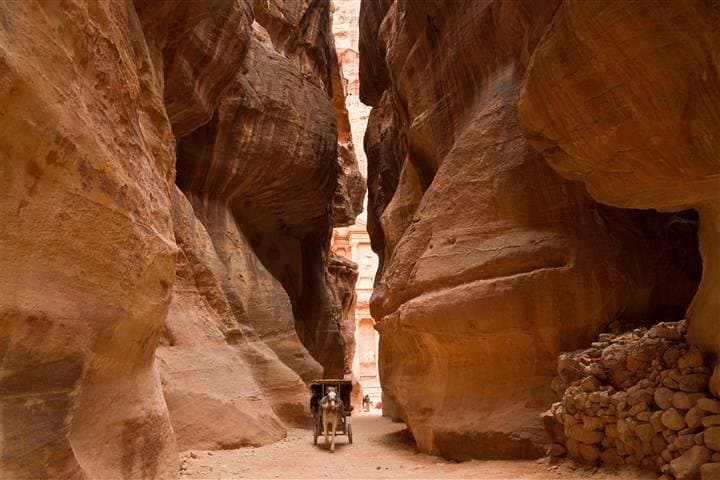
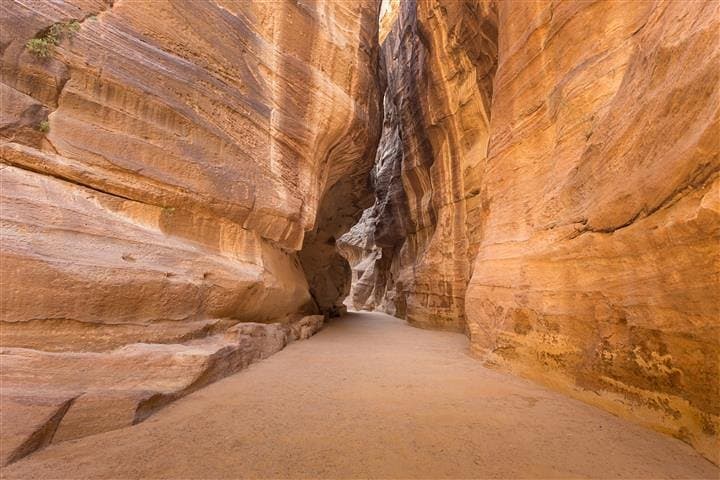
You step off the minibus and the heat hits like a dry hand—then the Siq narrows and the sandstone exhales centuries. Daylight filters through a fracture in the rock and suddenly the Treasury appears, carved with a precision that still surprises the eye. This two-day route hustles you across borders and geologic time: from the rose‑red cliffs of Petra to the wide, wind‑swept bowls of Wadi Rum, finishing with an easy downhill into Aqaba.
You step off the minibus and the heat hits like a dry hand—then the Siq narrows and the sandstone exhales centuries. Daylight filters through a fracture in the rock and suddenly the Treasury appears, carved with a precision that still surprises the eye. This two-day route hustles you across borders and geologic time: from the rose‑red cliffs of Petra to the wide, wind‑swept bowls of Wadi Rum, finishing with an easy downhill into Aqaba.
Petra was the Nabataeans' capital, a thriving desert port that rerouted trade and invented hydraulic engineering to tame flash floods. The city’s facades are not fossils so much as a living record—ornate tombs, a Roman theater hewn into bedrock, and the Monastery perched above a ruinous amphitheater. Geologically, Petra is an open book of cross-bedded sandstone and iron staining; the colors shift through the day as if the canyon is changing its mind about what color to wear.
Wadi Rum is a different voice of the desert. Granite inselbergs and sandstone arches stand like mute storytellers while the sand dares you to climb its ribs for a view. The Bedouin families who host overnight guests still practice livestock grazing and share tea and stories by gaslamps—their tents are simple, warm, and intentionally low-impact.
Practicalities matter here: the tour picks up in Eilat and moves through the Israeli-Jordanian crossing, so passports and visas are the first items of business. Expect long stretches of walking in Petra—roughly 3–4 hours of on-foot exploration the first day with a similar window of jeep time in Wadi Rum the next. The itinerary includes breakfast, lunch, a night in a Bedouin camp, entrance to Petra, and a final transfer to Aqaba.
To prepare, wear broken‑in hiking shoes, carry at least 2–3 liters of water per person, and pack sun layers plus a light wind shell for camp nights. If you want better photos, wake before dawn for the Treasury without the crowd and stay up after sunset in Wadi Rum for a sky so dense with stars it feels like a tidal pull.
Be mindful: Petra’s stone is fragile, and camps aim to minimize plastic and waste—bring a reusable bottle and a headlamp. The tour moves fast but smart: it trades deep immersion in a single site for a sweeping two‑day introduction to Jordan’s most famous landscapes, ideal for travelers who want a taste of history, geology, and Bedouin hospitality without nights on a private route.