THE ADVENTURE COLLECTIVE® · Independent discovery and booking for outdoor travel

Spend a day moving through millennia on a private guided tour from Amman to Petra and nearby Little Petra. Explore carved tombs, Nabataean waterworks and the Siq with a pace tailored to your group.
Spend a day moving through millennia on a private guided tour from Amman to Petra and nearby Little Petra. Explore carved tombs, Nabataean waterworks and the Siq with a pace tailored to your group.
You emerge from the Siq into a narrow slot of light and the Treasury fills the canyon like a carved promise — rose sandstone catching the morning sun and daring you forward. The city breathes around you: columns and façades scored by millennia of wind and flash floods, stairways that climb toward tombs cut high into cliffs.
Verified experiences and guided adventures in the surrounding area.
Operated by Tour Experts · Wadi Musa, Ma'an
You emerge from the Siq into a narrow slot of light and the Treasury fills the canyon like a carved promise — rose sandstone catching the morning sun and daring you forward. The city breathes around you: columns and façades scored by millennia of wind and flash floods, stairways that climb toward tombs cut high into cliffs.
Petra was the capital of the Nabataean kingdom, an engineering hub where water channels and cisterns turned desert sandstone into a living city; Little Petra (Siq al-Barid), ten minutes north, once served as a suburb and ritual site with surviving fresco fragments and irrigation systems. Geologically, the red and white banded sandstone here is soft enough to sculpt yet resilient against time, creating narrow defiles, carved façades and dramatic overhangs that shape both light and shadow.
Culturally this tour threads archaeology with Bedouin hospitality — guides and drivers translate stories of trade caravans, wine production and the discovery of Petra in 1812 by J.L. Burckhardt. Expect several hours of walking on uneven stone, optional short horseback rides to the Siq entrance, and quieter moments at Little Petra where cisterns and grottoes reward a slower pace.
Practical: start early to beat heat and tour buses, wear sturdy shoes with traction, carry 2–3 liters of water and sun protection, and budget extra time if you want to climb to viewpoints like the High Place of Sacrifice. If mobility is limited, the main Treasury sightline is still accessible with minimal uphill, but most other highlights require moderate walking on rugged terrain.
moderate.
4–11 hours.
Moderate — be able to walk several hours on uneven, stony terrain and climb steep steps.
This tour may require separate Petra admission; confirm at booking since admission is often not included by default.
Expect several hours of walking on uneven stone; routes include the Siq, Treasury area and optional climbs to viewpoints.
Yes — the private transfer makes a day trip feasible but be prepared for a long day (3–4 hours each way by road).
Some areas (Siq entrance and Treasury viewpoints) can be accessed by vehicle/short, flatter paths but most of Petra’s major sites require mobility to manage uneven steps and rocky trails.
Petra was the Nabataean capital and an essential caravan hub; rediscovered in 1812 by Swiss explorer J.L. Burckhardt and now a UNESCO World Heritage Site.
High visitor numbers stress sandstone surfaces and ancient waterworks — stick to marked paths, avoid climbing façades, and consider booking small-group tours to reduce impact.
Tour Experts operates guided outdoor trips and adventures with an emphasis on safety, stewardship, and memorable experiences.
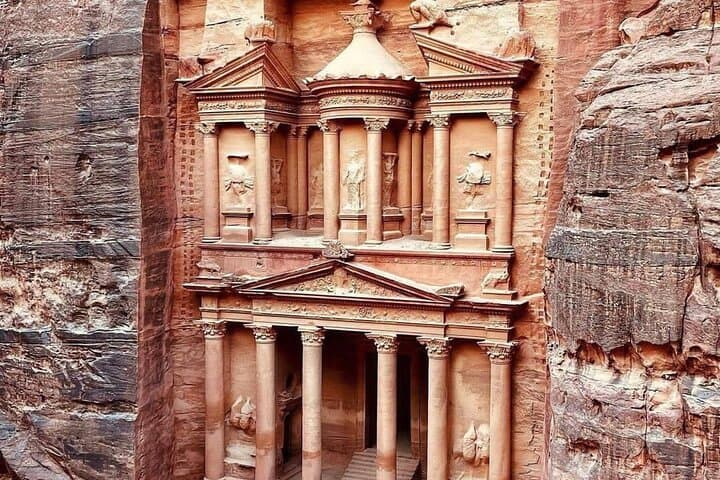
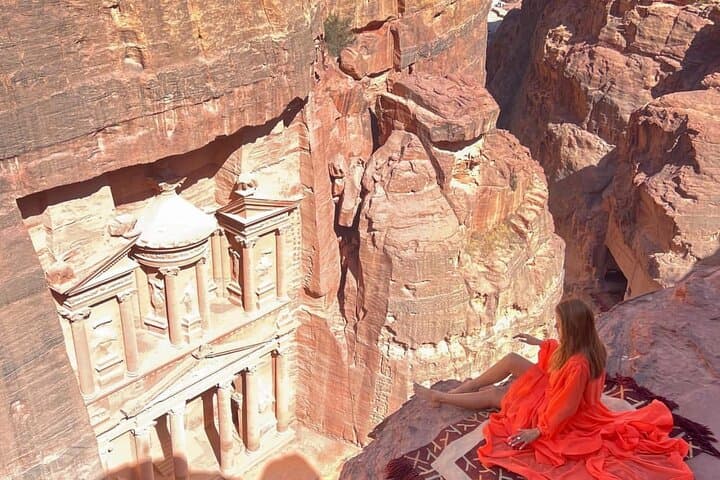
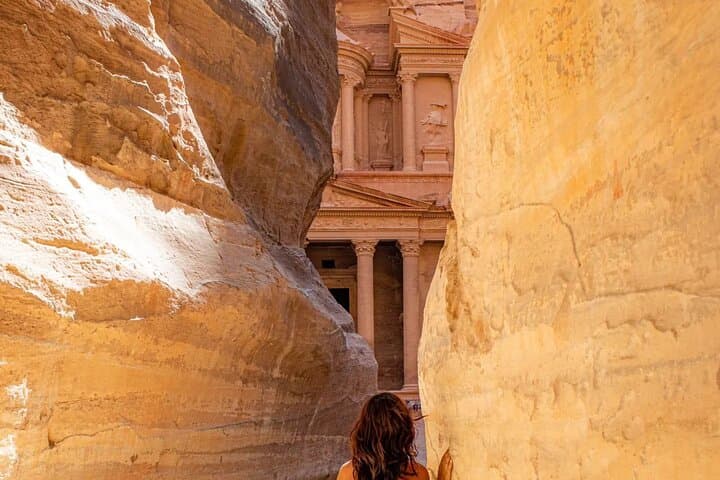
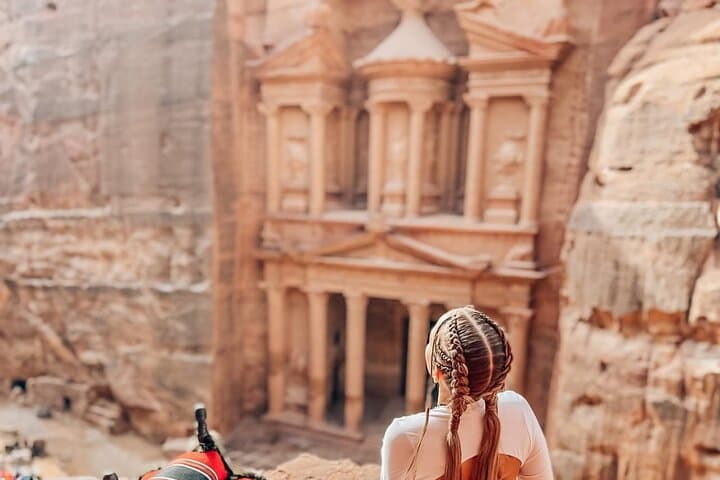
You emerge from the Siq into a narrow slot of light and the Treasury fills the canyon like a carved promise — rose sandstone catching the morning sun and daring you forward. The city breathes around you: columns and façades scored by millennia of wind and flash floods, stairways that climb toward tombs cut high into cliffs.
You emerge from the Siq into a narrow slot of light and the Treasury fills the canyon like a carved promise — rose sandstone catching the morning sun and daring you forward. The city breathes around you: columns and façades scored by millennia of wind and flash floods, stairways that climb toward tombs cut high into cliffs.
Petra was the capital of the Nabataean kingdom, an engineering hub where water channels and cisterns turned desert sandstone into a living city; Little Petra (Siq al-Barid), ten minutes north, once served as a suburb and ritual site with surviving fresco fragments and irrigation systems. Geologically, the red and white banded sandstone here is soft enough to sculpt yet resilient against time, creating narrow defiles, carved façades and dramatic overhangs that shape both light and shadow.
Culturally this tour threads archaeology with Bedouin hospitality — guides and drivers translate stories of trade caravans, wine production and the discovery of Petra in 1812 by J.L. Burckhardt. Expect several hours of walking on uneven stone, optional short horseback rides to the Siq entrance, and quieter moments at Little Petra where cisterns and grottoes reward a slower pace.
Practical: start early to beat heat and tour buses, wear sturdy shoes with traction, carry 2–3 liters of water and sun protection, and budget extra time if you want to climb to viewpoints like the High Place of Sacrifice. If mobility is limited, the main Treasury sightline is still accessible with minimal uphill, but most other highlights require moderate walking on rugged terrain.