THE ADVENTURE COLLECTIVE® · Independent discovery and booking for outdoor travel

Step through the Siq into Petra’s Treasury on a compact 2-day journey from Tel Aviv. This guided itinerary blends a sweeping introduction with a free day to climb to the Monastery and explore quieter ruins.
Step through the Siq into Petra’s Treasury on a compact 2-day journey from Tel Aviv. This guided itinerary blends a sweeping introduction with a free day to climb to the Monastery and explore quieter ruins.
The first light catches the sandstone gorge as you cross from Israel into Jordan, and the Siq squeezes the world down to a single ribbon of stone. Walk through that narrow crack and the Treasury appears: a faceted face hewn from rose-hued rock that stops you in mid-step.
Verified experiences and guided adventures in the surrounding area.
Operated by Booking-tours.com · Wadi Musa, Ma'an Governorate
The first light catches the sandstone gorge as you cross from Israel into Jordan, and the Siq squeezes the world down to a single ribbon of stone. Walk through that narrow crack and the Treasury appears: a faceted face hewn from rose-hued rock that stops you in mid-step.
Petra was the Nabatean capital from the 4th century BCE, a trading hub carved into Jurassic sandstone. Its geology is part of its drama: layers of iron and copper oxides create the pink, red and ochre striations, while wind and water have polished façades for two millennia. Cultural echoes remain in tomb inscriptions and the amphitheater — this site has been a UNESCO World Heritage Site since 1985.
Your two-day visit typically combines a 3–4 hour guided sweep of the main trail (the Siq to the Treasury, Royal Tombs, and amphitheater) with a second day for deeper hikes: the steep ascent to the Monastery involves roughly 800 steps and several exposed switchbacks, while the High Place of Sacrifice rewards early-morning effort with broad views.
Practical matters matter here: Petra sits around 1,000 m elevation and can be hot and dry; shade is rare past the Siq. Carry 2–3 liters of water, sturdy boots with traction, sun protection, and your passport (border crossings and entry checks are standard). Aim for first light or late afternoon to avoid the heat and tour buses, and allow extra time for photo stops and short climbs. On a two-day schedule, balance a guided overview with self-paced exploration on day two to see lesser-visited niches and the dramatic viewpoints that don’t fit a single-day itinerary.
moderate.
2 days.
Moderate fitness—comfortable walking for 3–6 hours across uneven ground and short steep climbs
Day-one guided entry is typically included with the guided itinerary; check booking details for any separate site fees or extended-pass requirements for multiple days.
Visa requirements depend on nationality—many travelers can obtain a Jordanian visa on arrival, but verify with official sources before travel and have passport details ready.
Expect roughly 800 steps and a steep climb; it’s a half-day effort for most visitors and best attempted when temperatures are cooler.
Yes—Wadi Musa offers hotels next to the archaeological park, allowing early access and more time to explore on day two.
Petra was the Nabateans’ desert capital and a crossroads of caravan routes; its rock-cut architecture reflects centuries of trade and local adaptation to harsh conditions.
Sandstone carvings are fragile—stay on marked paths, avoid climbing ruins, minimize plastic waste and support local guides to reduce impact.
Booking-tours.com operates guided outdoor trips and adventures with an emphasis on safety, stewardship, and memorable experiences.


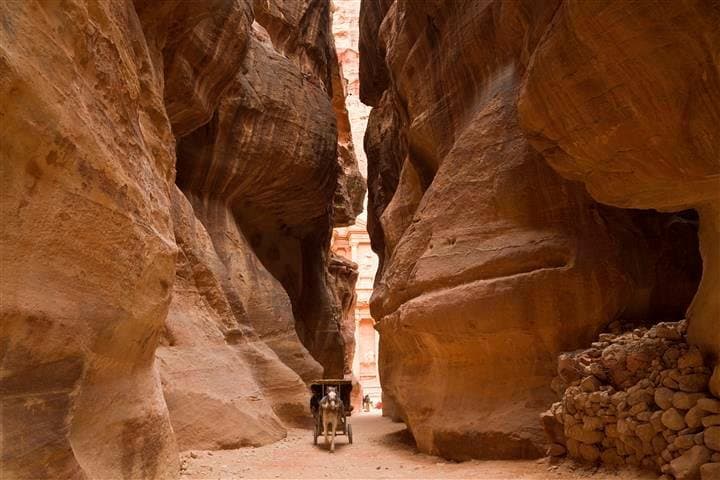
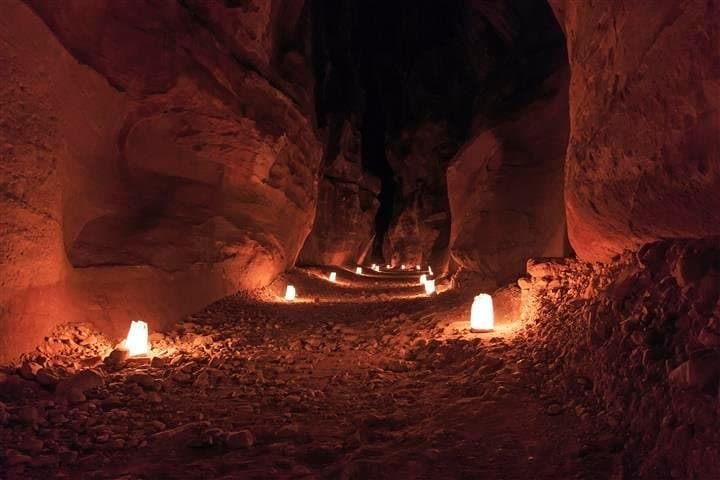
The first light catches the sandstone gorge as you cross from Israel into Jordan, and the Siq squeezes the world down to a single ribbon of stone. Walk through that narrow crack and the Treasury appears: a faceted face hewn from rose-hued rock that stops you in mid-step.
The first light catches the sandstone gorge as you cross from Israel into Jordan, and the Siq squeezes the world down to a single ribbon of stone. Walk through that narrow crack and the Treasury appears: a faceted face hewn from rose-hued rock that stops you in mid-step.
Petra was the Nabatean capital from the 4th century BCE, a trading hub carved into Jurassic sandstone. Its geology is part of its drama: layers of iron and copper oxides create the pink, red and ochre striations, while wind and water have polished façades for two millennia. Cultural echoes remain in tomb inscriptions and the amphitheater — this site has been a UNESCO World Heritage Site since 1985.
Your two-day visit typically combines a 3–4 hour guided sweep of the main trail (the Siq to the Treasury, Royal Tombs, and amphitheater) with a second day for deeper hikes: the steep ascent to the Monastery involves roughly 800 steps and several exposed switchbacks, while the High Place of Sacrifice rewards early-morning effort with broad views.
Practical matters matter here: Petra sits around 1,000 m elevation and can be hot and dry; shade is rare past the Siq. Carry 2–3 liters of water, sturdy boots with traction, sun protection, and your passport (border crossings and entry checks are standard). Aim for first light or late afternoon to avoid the heat and tour buses, and allow extra time for photo stops and short climbs. On a two-day schedule, balance a guided overview with self-paced exploration on day two to see lesser-visited niches and the dramatic viewpoints that don’t fit a single-day itinerary.