THE ADVENTURE COLLECTIVE® · Independent discovery and booking for outdoor travel

Learn pétanque on a sun-dusted gravel court overlooking Provencal hills: a two-hour English-language lesson that pairs technique with rosé, Pastis tasting and regional snacks. Small groups and year-round availability make this an accessible cultural and outdoor experience.
Learn pétanque on a sun-dusted gravel court overlooking Provencal hills: a two-hour English-language lesson that pairs technique with rosé, Pastis tasting and regional snacks. Small groups and year-round availability make this an accessible cultural and outdoor experience.
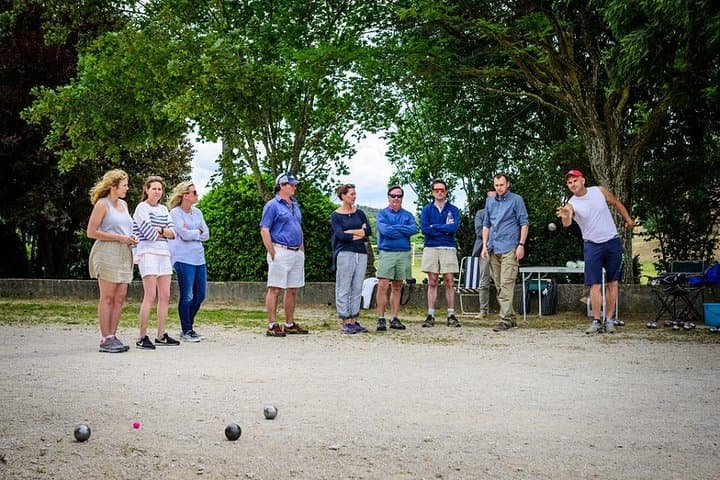
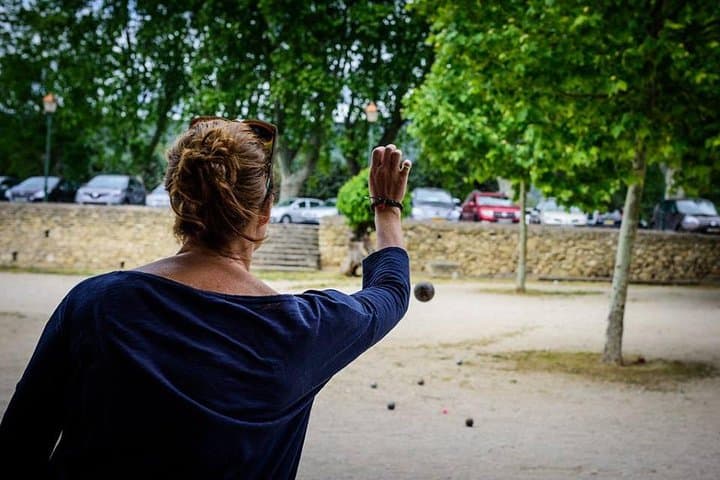
The sun leans over a low Provençal ridge and the gravel court gleams like a ribbon of mica — a dozen boules click and roll, each one laying down a small argument between skill and chance. You stand with a boule in hand, rosé in the other, learning a game that has shaped afternoons across southern France.
Verified experiences and guided adventures in the surrounding area.
Operated by Les Pastras · Avignon, Provence-Alpes-Côte d'Azur
The sun leans over a low Provençal ridge and the gravel court gleams like a ribbon of mica — a dozen boules click and roll, each one laying down a small argument between skill and chance. You stand with a boule in hand, rosé in the other, learning a game that has shaped afternoons across southern France.
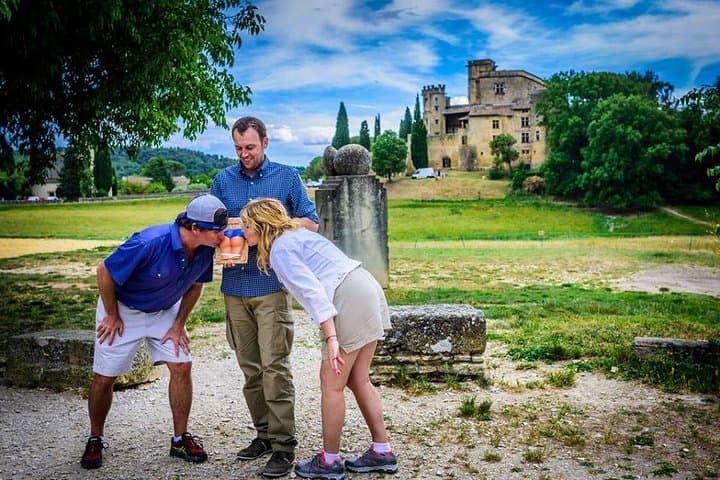
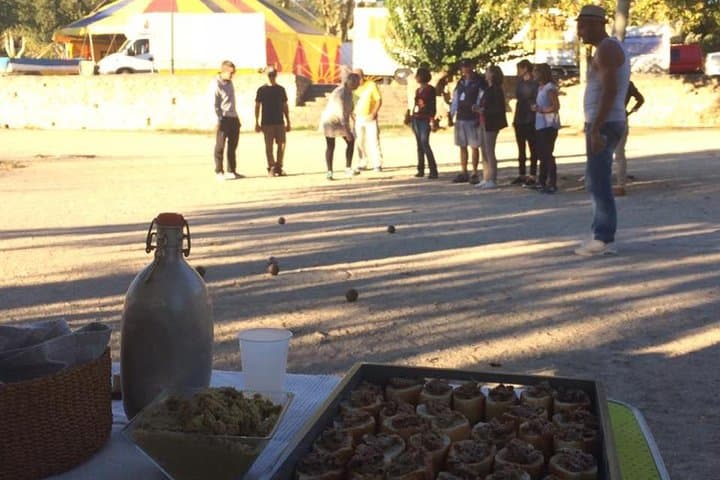
Pétanque grew from older European boule traditions and took its modern form in early 20th-century Provence, where flat, hard-packed soil and village squares became natural arenas. The region’s limestone hills and scattered olive groves frame the play; the terrain is forgiving, mostly level gravel that tests aim more than endurance. Culturally, the lesson doubles as an aperitif: sampling local Pastis, tasting pâtés and tapenade, and celebrating winners with a modest trophy — the same rituals that mark Provencal sociability.
Expect two relaxed hours: an English-language primer on rules and history, coached drills for throwing and shooting, then competitive rounds under friendly refereeing. Small groups (up to 12) keep instruction hands-on, and the pace suits almost any fitness level — infants can be in strollers and service animals are permitted.
Practical guidance: wear flat-soled shoes for steady footing on gravel, bring sun protection and water even if you plan to sip rosé, and arrive 10–15 minutes early to warm up and settle in. The hosts run lessons year-round on weekdays; cancel at least 24 hours ahead for a refund. Whether you come to learn technique or to lean into local ritual, this lesson offers a crisp, social slice of Provence that rewards curiosity and a steady hand.
easy.
2 hours.
Suitable for all fitness levels; requires basic balance and standing for short periods
No — lessons are designed for beginners and cover rules, throwing technique, and scoring.
Yes — hosts provide rosé and samples of homemade Pastis along with traditional snacks during the aperitif.
Shared lessons are capped at 12 participants to keep instruction personal.
Infants may join in strollers and must sit on laps; the activity is family-friendly but involves alcohol during the aperitif.
Pétanque became codified in early 1900s Provence as a simplified boules game suited to compact village squares and social play.
Respect private farmland and avoid trampling dry Mediterranean vegetation; hosts encourage carrying out waste and minimizing single-use plastics.
Les Pastras operates guided outdoor trips and adventures with an emphasis on safety, stewardship, and memorable experiences.
The sun leans over a low Provençal ridge and the gravel court gleams like a ribbon of mica — a dozen boules click and roll, each one laying down a small argument between skill and chance. You stand with a boule in hand, rosé in the other, learning a game that has shaped afternoons across southern France.
The sun leans over a low Provençal ridge and the gravel court gleams like a ribbon of mica — a dozen boules click and roll, each one laying down a small argument between skill and chance. You stand with a boule in hand, rosé in the other, learning a game that has shaped afternoons across southern France.
Pétanque grew from older European boule traditions and took its modern form in early 20th-century Provence, where flat, hard-packed soil and village squares became natural arenas. The region’s limestone hills and scattered olive groves frame the play; the terrain is forgiving, mostly level gravel that tests aim more than endurance. Culturally, the lesson doubles as an aperitif: sampling local Pastis, tasting pâtés and tapenade, and celebrating winners with a modest trophy — the same rituals that mark Provencal sociability.
Expect two relaxed hours: an English-language primer on rules and history, coached drills for throwing and shooting, then competitive rounds under friendly refereeing. Small groups (up to 12) keep instruction hands-on, and the pace suits almost any fitness level — infants can be in strollers and service animals are permitted.
Practical guidance: wear flat-soled shoes for steady footing on gravel, bring sun protection and water even if you plan to sip rosé, and arrive 10–15 minutes early to warm up and settle in. The hosts run lessons year-round on weekdays; cancel at least 24 hours ahead for a refund. Whether you come to learn technique or to lean into local ritual, this lesson offers a crisp, social slice of Provence that rewards curiosity and a steady hand.