THE ADVENTURE COLLECTIVE® · Independent discovery and booking for outdoor travel

Turn Perugia’s medieval alleys into a game: this app-driven scavenger hunt leads you to Etruscan arches, medieval aqueducts and hidden viewpoints while you solve riddles at your own pace. Perfect for curious walkers who prefer flexible, independent exploration.
Turn Perugia’s medieval alleys into a game: this app-driven scavenger hunt leads you to Etruscan arches, medieval aqueducts and hidden viewpoints while you solve riddles at your own pace. Perfect for curious walkers who prefer flexible, independent exploration.
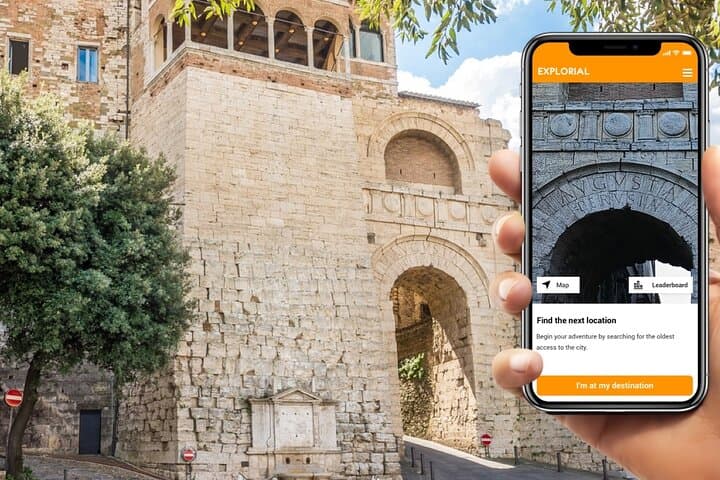
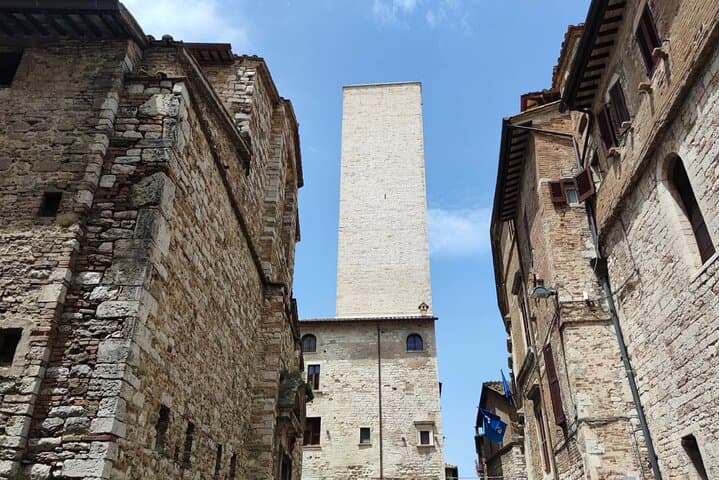
A morning in Perugia opens with stone alleys that slope toward sunlit squares; the city seems to nudge you forward, its arches and fountains offering the next clue. On this self-guided scavenger hunt, players move deliberately through medieval streets, reading plaques and plumbing the angles of Etruscan gates while a smartphone app translates riddles into routes.
Verified experiences and guided adventures in the surrounding area.
Operated by Explorial · Perugia, Umbria
A morning in Perugia opens with stone alleys that slope toward sunlit squares; the city seems to nudge you forward, its arches and fountains offering the next clue. On this self-guided scavenger hunt, players move deliberately through medieval streets, reading plaques and plumbing the angles of Etruscan gates while a smartphone app translates riddles into routes.
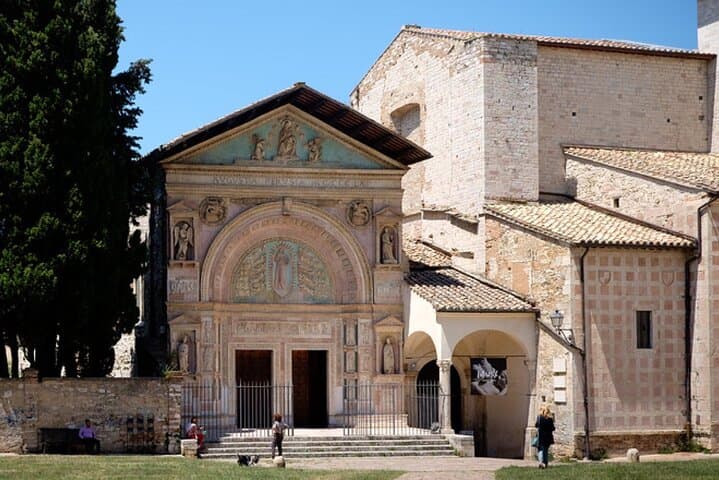
Perugia’s compact centro storico sits on an Etruscan ridge over the Tiber valley. The Arco Etrusco still frames ancient engineering, while the Acquedotto medievale traces the city’s need for water across centuries. The Oratorio di San Bernardino and Piazza IV Novembre speak to Perugia’s Renaissance and communal life—each stop gives a short chapter in a layered civic history.
Culturally, the route exposes ceramics shops, university cafés, and the persistent rhythm of daily life that shaped Umbrian identity. Architecturally, expect volcanic stone and compact alleys—geology that kept Perugia defensible and intimate.
Practical guidance: download the app and the access code before starting, charge your phone, and plan two hours but allow more for coffee or museum detours. Wear city walking shoes; cobbles are uneven and staircases are frequent. The game suits solo travelers, families, and small groups and rewards observation—answers are often on signs, reliefs, or façade details.
Timing matters: begin earlier to avoid midday crowds and to catch cooler temperatures. Bring a small water bottle, a lightweight layer for hilltop breezes, and curiosity—this tour turns sightseeing into a paced investigation of a living, historic city.
easy.
1–2 hours.
Suitable for all fitness levels; involves walking on uneven cobbles and stairs so basic mobility is required.
No, the tour is self-guided via the app; you proceed at your own pace using the provided access code.
The average completion time is 1–2 hours, but you can pause and explore side sights or cafés, extending the visit.
Yes—many families use it; some clues require reading and observation, so younger children might need adult help.
Yes—the experience is flexible and not tied to a start time once you have the access code; check local opening hours if you plan museum stops.
Perugia grew from an Etruscan hilltown into a medieval university city; its layered walls and arches reflect continuous civic development from antiquity through the Renaissance.
Respect historic fabric by staying on marked routes, avoiding graffiti, and minimizing noise in residential alleys; support local businesses and use refillable bottles to reduce litter.
Explorial operates guided outdoor trips and adventures with an emphasis on safety, stewardship, and memorable experiences.

A morning in Perugia opens with stone alleys that slope toward sunlit squares; the city seems to nudge you forward, its arches and fountains offering the next clue. On this self-guided scavenger hunt, players move deliberately through medieval streets, reading plaques and plumbing the angles of Etruscan gates while a smartphone app translates riddles into routes.
A morning in Perugia opens with stone alleys that slope toward sunlit squares; the city seems to nudge you forward, its arches and fountains offering the next clue. On this self-guided scavenger hunt, players move deliberately through medieval streets, reading plaques and plumbing the angles of Etruscan gates while a smartphone app translates riddles into routes.
Perugia’s compact centro storico sits on an Etruscan ridge over the Tiber valley. The Arco Etrusco still frames ancient engineering, while the Acquedotto medievale traces the city’s need for water across centuries. The Oratorio di San Bernardino and Piazza IV Novembre speak to Perugia’s Renaissance and communal life—each stop gives a short chapter in a layered civic history.
Culturally, the route exposes ceramics shops, university cafés, and the persistent rhythm of daily life that shaped Umbrian identity. Architecturally, expect volcanic stone and compact alleys—geology that kept Perugia defensible and intimate.
Practical guidance: download the app and the access code before starting, charge your phone, and plan two hours but allow more for coffee or museum detours. Wear city walking shoes; cobbles are uneven and staircases are frequent. The game suits solo travelers, families, and small groups and rewards observation—answers are often on signs, reliefs, or façade details.
Timing matters: begin earlier to avoid midday crowds and to catch cooler temperatures. Bring a small water bottle, a lightweight layer for hilltop breezes, and curiosity—this tour turns sightseeing into a paced investigation of a living, historic city.