THE ADVENTURE COLLECTIVE® · Independent discovery and booking for outdoor travel

Stand on elevated walkways and sail in front of Perito Moreno’s 50–80 m ice wall on a half-day excursion from El Calafate. Learn the glacier’s geology, watch for calving and get practical advice on timing and gear.
Stand on elevated walkways and sail in front of Perito Moreno’s 50–80 m ice wall on a half-day excursion from El Calafate. Learn the glacier’s geology, watch for calving and get practical advice on timing and gear.
A cold wind crosses the Patagonian steppe and the first white edge of the Perito Moreno Glacier appears over the rim of the Mirador de los Sigurs. Visitors step onto a network of metal walkways that cling to the cliff face, every level offering a new angle on the ice wall — blue crevasses, serrated ridges and towering pinnacles that groan and crack as the glacier slowly moves.
Verified experiences and guided adventures in the surrounding area.
Operated by Patagonia Dreams · El Calafate, Santa Cruz
A cold wind crosses the Patagonian steppe and the first white edge of the Perito Moreno Glacier appears over the rim of the Mirador de los Sigurs. Visitors step onto a network of metal walkways that cling to the cliff face, every level offering a new angle on the ice wall — blue crevasses, serrated ridges and towering pinnacles that groan and crack as the glacier slowly moves.
This ice is part of the Southern Patagonian Ice Field, sculpted by millennia of accumulation and flow and protected inside Los Glaciares National Park, a UNESCO World Heritage site. The landscape around El Calafate is ranching country and wind-bent scrub; guanaco herds sometimes watch from a distance. Local guides usually pair natural history with geology — explaining how the glacier calves where the ice meets Brazo Rico and why Perito Moreno is notable for its periodic, dramatic ruptures.
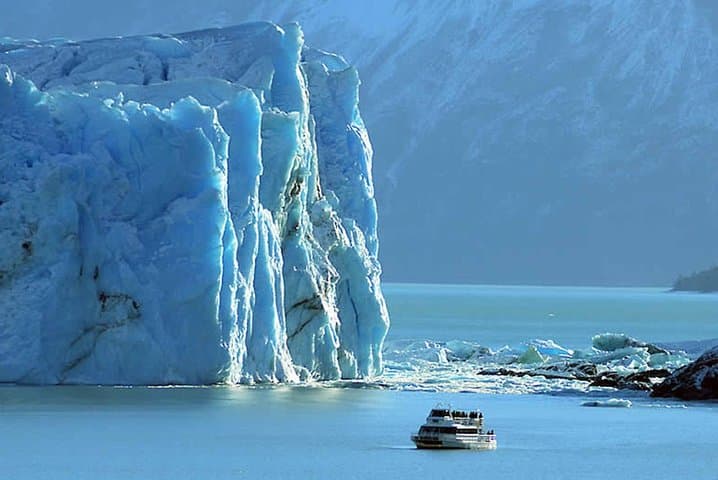
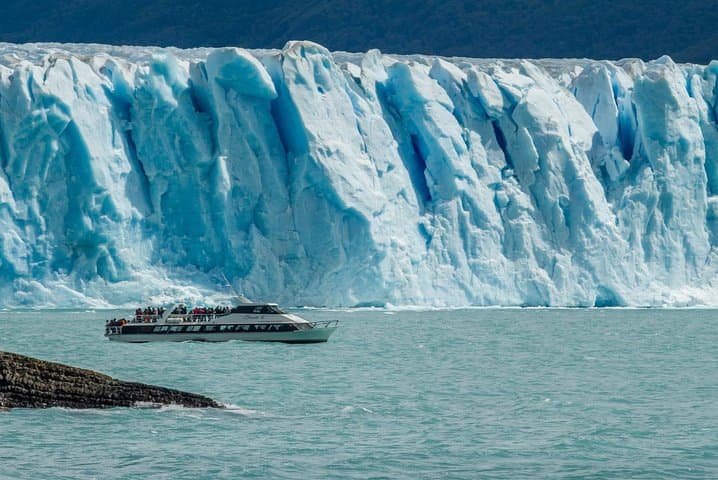
On this standard excursion, expect a comfortable transfer from El Calafate, roughly two hours each way, a 2–3 hour self-guided or guided walk along about 4 km (2.5 miles) of interconnected viewpoints, and a one-hour boat navigation that brings you close to the 50–80 m ice front.
Practical notes: dress in layers, bring windproof and waterproof outerwear, sturdy shoes for wet walkways, and binoculars or a camera with a zoom. Plan for variable weather and up to eight hours total door-to-door. If you hope to see a calving, position yourself at higher viewpoints and allow time; timing and luck matter. Follow park rules: stay on the walkways and carry out all waste.
easy.
6–8 hours.
Suitable for most fitness levels; involves walking up to 4 km on level and stair sections with short standing periods
Transfers are typically about 1.5–2 hours each way, depending on road and weather conditions.
Yes — the one-hour navigation uses licensed vessels with crew; life jackets and safety briefings are standard.
No — calving is a natural, unpredictable event. Visiting different viewpoints and allowing time improves your chance, but it can’t be guaranteed.
Major sections are designed for broad public access, but some stair sections are unavoidable; visitors in wheelchairs should check specific access points and consider bringing a companion.
Perito Moreno is part of the Southern Patagonian Ice Field and the park created in 1937; its modern protection recognizes both glacial dynamics and regional ranching history.
Glaciers reflect climate trends and tourism is managed through designated walkways and boat routes to limit disturbance; follow Leave No Trace practices and stay on marked paths.
Patagonia Dreams operates guided outdoor trips and adventures with an emphasis on safety, stewardship, and memorable experiences.
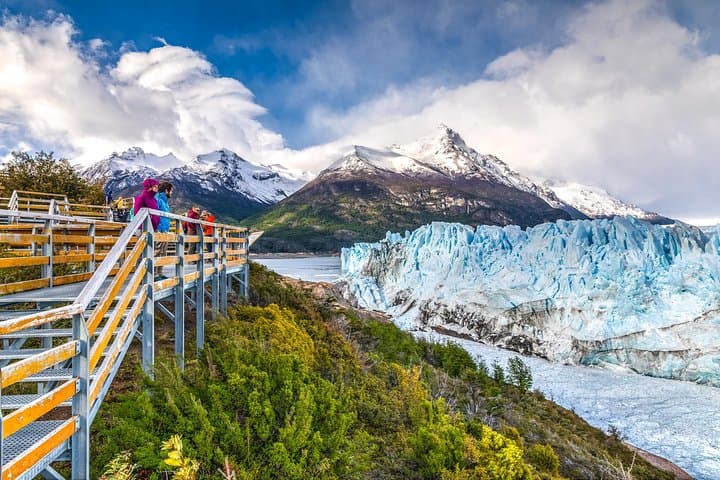
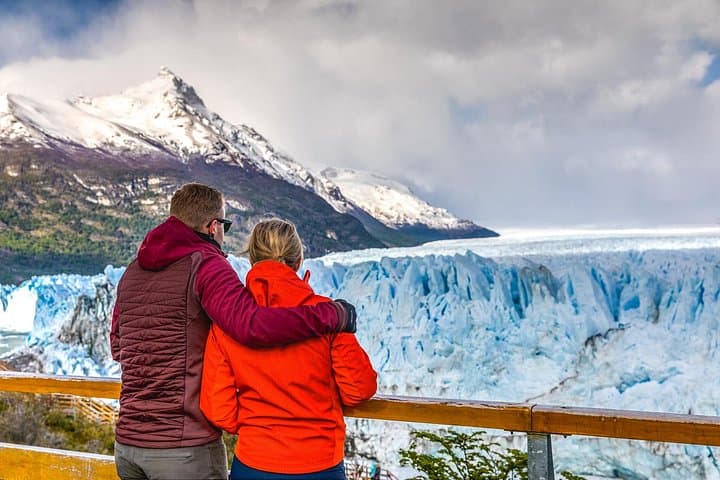
A cold wind crosses the Patagonian steppe and the first white edge of the Perito Moreno Glacier appears over the rim of the Mirador de los Sigurs. Visitors step onto a network of metal walkways that cling to the cliff face, every level offering a new angle on the ice wall — blue crevasses, serrated ridges and towering pinnacles that groan and crack as the glacier slowly moves.
A cold wind crosses the Patagonian steppe and the first white edge of the Perito Moreno Glacier appears over the rim of the Mirador de los Sigurs. Visitors step onto a network of metal walkways that cling to the cliff face, every level offering a new angle on the ice wall — blue crevasses, serrated ridges and towering pinnacles that groan and crack as the glacier slowly moves.
This ice is part of the Southern Patagonian Ice Field, sculpted by millennia of accumulation and flow and protected inside Los Glaciares National Park, a UNESCO World Heritage site. The landscape around El Calafate is ranching country and wind-bent scrub; guanaco herds sometimes watch from a distance. Local guides usually pair natural history with geology — explaining how the glacier calves where the ice meets Brazo Rico and why Perito Moreno is notable for its periodic, dramatic ruptures.
On this standard excursion, expect a comfortable transfer from El Calafate, roughly two hours each way, a 2–3 hour self-guided or guided walk along about 4 km (2.5 miles) of interconnected viewpoints, and a one-hour boat navigation that brings you close to the 50–80 m ice front.
Practical notes: dress in layers, bring windproof and waterproof outerwear, sturdy shoes for wet walkways, and binoculars or a camera with a zoom. Plan for variable weather and up to eight hours total door-to-door. If you hope to see a calving, position yourself at higher viewpoints and allow time; timing and luck matter. Follow park rules: stay on the walkways and carry out all waste.