THE ADVENTURE COLLECTIVE® · Independent discovery and booking for outdoor travel

Explore three of Turkey’s most compelling ancient sites on a single day trip from Antalya. Walk Perge’s colonnades, stand beneath Aspendos’ famous amphitheatre, and finish with the sea-swept ruins of Side’s Temple of Apollo.
Explore three of Turkey’s most compelling ancient sites on a single day trip from Antalya. Walk Perge’s colonnades, stand beneath Aspendos’ famous amphitheatre, and finish with the sea-swept ruins of Side’s Temple of Apollo.
You step off the air-conditioned shuttle into Anatolian light and the smell of dry earth and pine — the day unfurls among stone streets where empires once negotiated power.
Verified experiences and guided adventures in the surrounding area.
Operated by TURONTIME · Antalya, Antalya Province
You step off the air-conditioned shuttle into Anatolian light and the smell of dry earth and pine — the day unfurls among stone streets where empires once negotiated power.
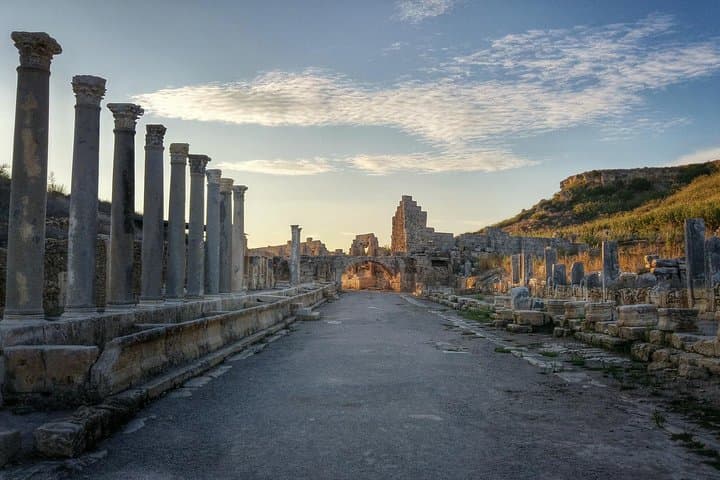
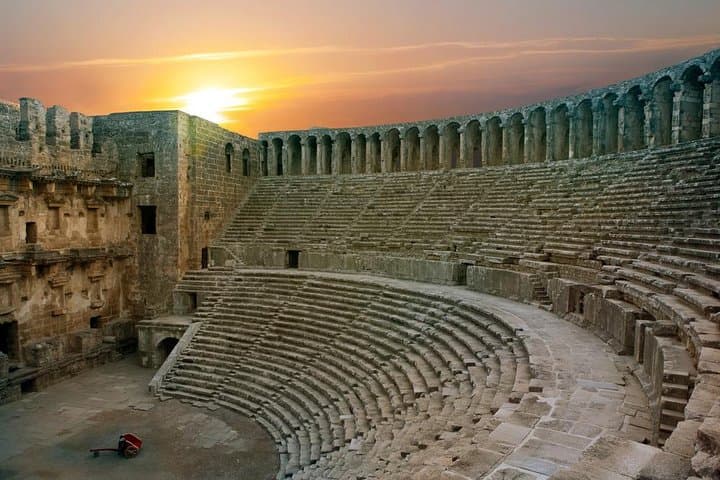
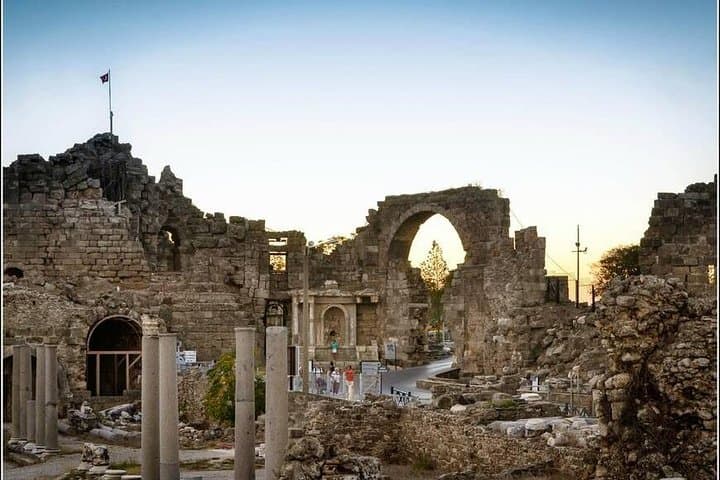
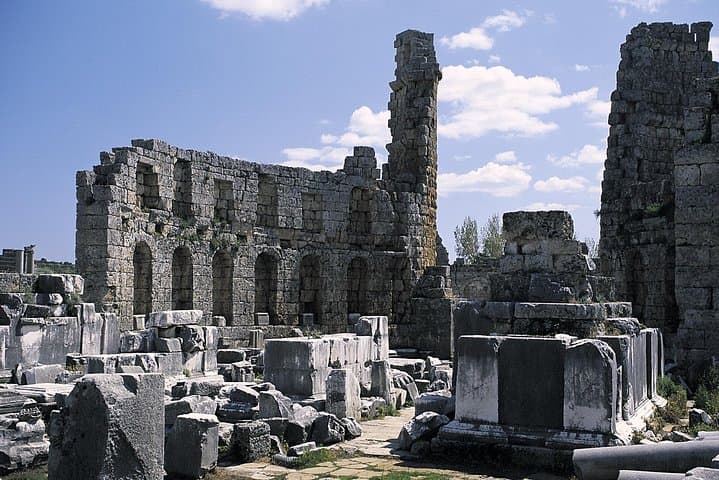
Perge opens the morning: broad colonnaded avenues, a 10,000-seat stadium and a Roman theatre that still echoes. Further east, Aspendos’ amphitheater — built in 155 AD — dominates a low limestone plain with acoustics that still carry a whisper to the back rows. The coastline closes the loop at Side, where the crumbled columns and the silhouette of the Temple of Apollo meet the Mediterranean horizon.
These sites trace layers of history: a legendary Trojan foundation in Perge, Roman civic planning and baths, Aspendos’ role as Pamphylia’s cultural hub and minting center, and Side’s long trading past along the Eurymedon river mouth. Geologically the region sits on a mix of coastal alluvium and softer limestone and marl that made elaborate carving and amphitheater construction possible.
Practical notes: this is a full 9-hour day with guided stops and lunch included; wear sturdy shoes for uneven Roman stone, bring sun protection and at least 2 liters of water, and expect short walks across exposed sites. Aspendos still hosts concerts, so check the cultural calendar if you want to coincide with performances. Cameras are welcome but avoid stepping off marked routes — the conservation of ruins and nearby nesting beaches depends on it.
Logistics: tours typically include pickup in Antalya, admission as listed, and transport; be prepared for periods of standing and walking on ancient, sometimes slippery, surfaces.
easy.
9 hours.
Suitable for people with basic fitness; includes standing, short uphill walks and uneven surfaces — no special endurance required.
Typically the tour includes admission to Perge and Aspendos and notes Manavgat Waterfall entrance; confirm at booking since operators may vary.
It’s classified as easy: expect multiple short walks on uneven ground and standing during site interpretation, suitable for most fitness levels.
Children are welcome; strollers are possible on some pathways but uneven stone may be difficult — carriers are easier for infants.
Yes — the itinerary allocates guided stops for exploration and photography, but larger groups may have limited free time at each site.
Perge and Aspendos were major urban centers in Pamphylia — Perge with Roman civic architecture and Aspendos famed for its exceptionally preserved 2nd-century amphitheatre.
Stay on marked paths, avoid touching fragile masonry, and respect local beach protection measures — coastal nesting zones for turtles are sensitive to disturbance and light pollution.
TURONTIME operates guided outdoor trips and adventures with an emphasis on safety, stewardship, and memorable experiences.
You step off the air-conditioned shuttle into Anatolian light and the smell of dry earth and pine — the day unfurls among stone streets where empires once negotiated power.
You step off the air-conditioned shuttle into Anatolian light and the smell of dry earth and pine — the day unfurls among stone streets where empires once negotiated power.
Perge opens the morning: broad colonnaded avenues, a 10,000-seat stadium and a Roman theatre that still echoes. Further east, Aspendos’ amphitheater — built in 155 AD — dominates a low limestone plain with acoustics that still carry a whisper to the back rows. The coastline closes the loop at Side, where the crumbled columns and the silhouette of the Temple of Apollo meet the Mediterranean horizon.
These sites trace layers of history: a legendary Trojan foundation in Perge, Roman civic planning and baths, Aspendos’ role as Pamphylia’s cultural hub and minting center, and Side’s long trading past along the Eurymedon river mouth. Geologically the region sits on a mix of coastal alluvium and softer limestone and marl that made elaborate carving and amphitheater construction possible.
Practical notes: this is a full 9-hour day with guided stops and lunch included; wear sturdy shoes for uneven Roman stone, bring sun protection and at least 2 liters of water, and expect short walks across exposed sites. Aspendos still hosts concerts, so check the cultural calendar if you want to coincide with performances. Cameras are welcome but avoid stepping off marked routes — the conservation of ruins and nearby nesting beaches depends on it.
Logistics: tours typically include pickup in Antalya, admission as listed, and transport; be prepared for periods of standing and walking on ancient, sometimes slippery, surfaces.