THE ADVENTURE COLLECTIVE® · Independent discovery and booking for outdoor travel

Walk Roman streets and hear the hush of an intact amphitheater, then let a mountain-fed river blow the dust from your hair. This full-day tour from Antalya pairs archaeological highlights—Perge and Aspendos—with the spray and green of Manavgat waterfalls.
Walk Roman streets and hear the hush of an intact amphitheater, then let a mountain-fed river blow the dust from your hair. This full-day tour from Antalya pairs archaeological highlights—Perge and Aspendos—with the spray and green of Manavgat waterfalls.
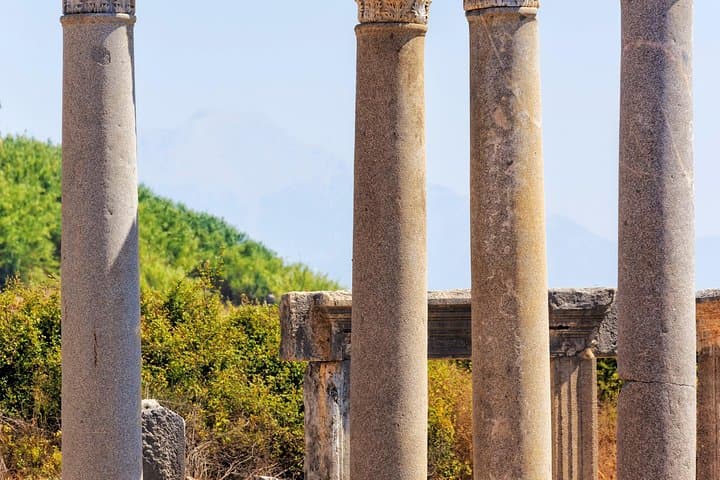
The minivan eases out of Antalya before sunrise and the Mediterranean light pulls the limestone landscape into focus. Citrus orchards slip by, then a ribbon of road unrolls toward stones that have kept their shape for millennia. Your first stop is Perge: a long, columned artery of a city where marble still remembers the footfalls of traders and Roman legionaries. Columns lean like old friends; a theater stage still carries carved reliefs that throw small, unexpected shadows.
Verified experiences and guided adventures in the surrounding area.
Operated by Neon Tours · Antalya, Antalya
The minivan eases out of Antalya before sunrise and the Mediterranean light pulls the limestone landscape into focus. Citrus orchards slip by, then a ribbon of road unrolls toward stones that have kept their shape for millennia. Your first stop is Perge: a long, columned artery of a city where marble still remembers the footfalls of traders and Roman legionaries. Columns lean like old friends; a theater stage still carries carved reliefs that throw small, unexpected shadows.
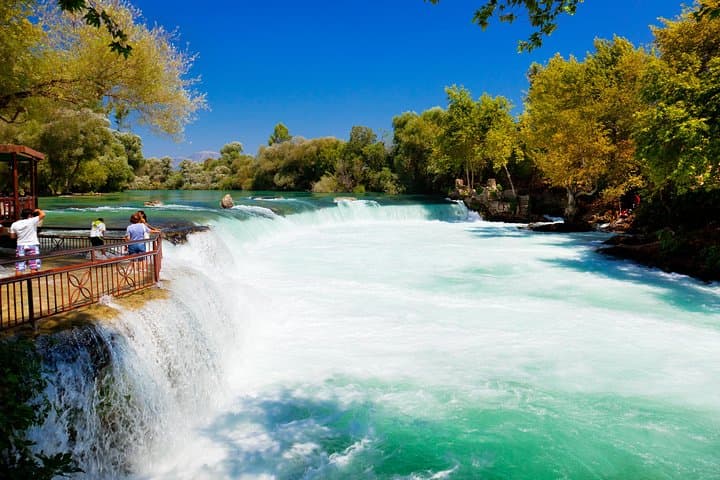
Perge began life long before Rome — the site shows occupation from the Bronze Age and was recorded by Hittite scribes. In the Roman period it swelled with public architecture: an agora, baths, a colonnaded street once paved with mosaics and a stadium where athletes trained. Aspendos, the next act in the day, preserves one of Anatolia’s best Roman theaters—its acoustics engineered so well that a whisper at center stage travels to the last stone seat. The tour then slides down the coast to Side, with its Temple of Apollo perched near the sea, and ends at the Manavgat or Kursunlu waterfalls, where the river demands attention with sudden cascades and cool spray.
Geologically, this slice of Turkey is where the rising Taurus Mountains meet the coastal plain; karst limestone fed by mountain streams carves caves and channels that give the waterfalls their punch. Culturally the area folds Hellenistic, Roman and Byzantine layers onto a modern Mediterranean life fueled by citrus, tourism and small fishing harbors.
Practical guide: the tour runs roughly eight hours and covers a mix of paved archaeological paths and uneven ancient stone. Expect easy walking between ruins but bring sturdy footwear—there are steps, loose gravel and some steep ramps at sites like Aspendos. Temperatures can swing: coastal breezes cool the morning but the ruins bake by midday. The operator provides pickup and drop-off; confirm your pickup point 24 hours ahead.
Bring water (1–2 liters), sun protection and a small daypack for layers—mornings can be breezy, afternoons hot. If museums are closed, expect a comparable alternate; the itinerary often includes short free time in Side for lunch and market browsing. Photography is rewarding: aim for early morning or late afternoon light at Perge and Aspendos to avoid harsh shadows; the waterfall is best when the light softens and the spray creates depth.
This is a day for people who want history and motion—ancient stone and running water in one run. Leave-no-trace matters here: stick to paths, avoid climbing reliefs and carry out plastics. The ruins have survived for centuries; your care helps keep them standing for the next visitor.
moderate.
8 hours.
Moderate fitness—able to walk on uneven surfaces for several hours and climb stairs at archaeological sites.
The tour is approximately 8 hours from pickup to drop-off, with timed stops at Perge, Aspendos, Side and the Manavgat/Kursunlu waterfalls.
Admission to Perge and Aspendos is included as noted in the itinerary; check your booking confirmation for specifics on museum access.
Children over age 4 are allowed but the tour is not recommended for very young kids due to walking and uneven terrain; children must be accompanied by an adult.
Lunch is typically not included; there is free time in Side where you can purchase food at seaside restaurants and local cafes.
Not recommended for guests with spinal injuries or serious mobility limitations due to steps and uneven surfaces at the ruins.
A light waterproof layer and shoes you don't mind getting damp if you want to get close to the spray; otherwise keep electronics protected in a ziplock.
Perge and Aspendos were important cities in ancient Pamphylia; Perge shows Bronze Age to Roman occupation and St. Paul is recorded visiting Perge on his missionary journeys.
Sites face erosion and tourist pressure—stay on marked paths, avoid touching reliefs and support local conservation fees where requested.
Neon Tours operates guided outdoor trips and adventures with an emphasis on safety, stewardship, and memorable experiences.
The minivan eases out of Antalya before sunrise and the Mediterranean light pulls the limestone landscape into focus. Citrus orchards slip by, then a ribbon of road unrolls toward stones that have kept their shape for millennia. Your first stop is Perge: a long, columned artery of a city where marble still remembers the footfalls of traders and Roman legionaries. Columns lean like old friends; a theater stage still carries carved reliefs that throw small, unexpected shadows.
The minivan eases out of Antalya before sunrise and the Mediterranean light pulls the limestone landscape into focus. Citrus orchards slip by, then a ribbon of road unrolls toward stones that have kept their shape for millennia. Your first stop is Perge: a long, columned artery of a city where marble still remembers the footfalls of traders and Roman legionaries. Columns lean like old friends; a theater stage still carries carved reliefs that throw small, unexpected shadows.
Perge began life long before Rome — the site shows occupation from the Bronze Age and was recorded by Hittite scribes. In the Roman period it swelled with public architecture: an agora, baths, a colonnaded street once paved with mosaics and a stadium where athletes trained. Aspendos, the next act in the day, preserves one of Anatolia’s best Roman theaters—its acoustics engineered so well that a whisper at center stage travels to the last stone seat. The tour then slides down the coast to Side, with its Temple of Apollo perched near the sea, and ends at the Manavgat or Kursunlu waterfalls, where the river demands attention with sudden cascades and cool spray.
Geologically, this slice of Turkey is where the rising Taurus Mountains meet the coastal plain; karst limestone fed by mountain streams carves caves and channels that give the waterfalls their punch. Culturally the area folds Hellenistic, Roman and Byzantine layers onto a modern Mediterranean life fueled by citrus, tourism and small fishing harbors.
Practical guide: the tour runs roughly eight hours and covers a mix of paved archaeological paths and uneven ancient stone. Expect easy walking between ruins but bring sturdy footwear—there are steps, loose gravel and some steep ramps at sites like Aspendos. Temperatures can swing: coastal breezes cool the morning but the ruins bake by midday. The operator provides pickup and drop-off; confirm your pickup point 24 hours ahead.
Bring water (1–2 liters), sun protection and a small daypack for layers—mornings can be breezy, afternoons hot. If museums are closed, expect a comparable alternate; the itinerary often includes short free time in Side for lunch and market browsing. Photography is rewarding: aim for early morning or late afternoon light at Perge and Aspendos to avoid harsh shadows; the waterfall is best when the light softens and the spray creates depth.
This is a day for people who want history and motion—ancient stone and running water in one run. Leave-no-trace matters here: stick to paths, avoid climbing reliefs and carry out plastics. The ruins have survived for centuries; your care helps keep them standing for the next visitor.