THE ADVENTURE COLLECTIVE® · Independent discovery and booking for outdoor travel

Explore Perge’s colonnades, stand in Aspendos’ unrivaled Roman theater and pose by Manavgat waterfall on a full-day guided tour from Antalya. This accessible day trip combines archaeology, coastal views and a riverside lunch.
Explore Perge’s colonnades, stand in Aspendos’ unrivaled Roman theater and pose by Manavgat waterfall on a full-day guided tour from Antalya. This accessible day trip combines archaeology, coastal views and a riverside lunch.
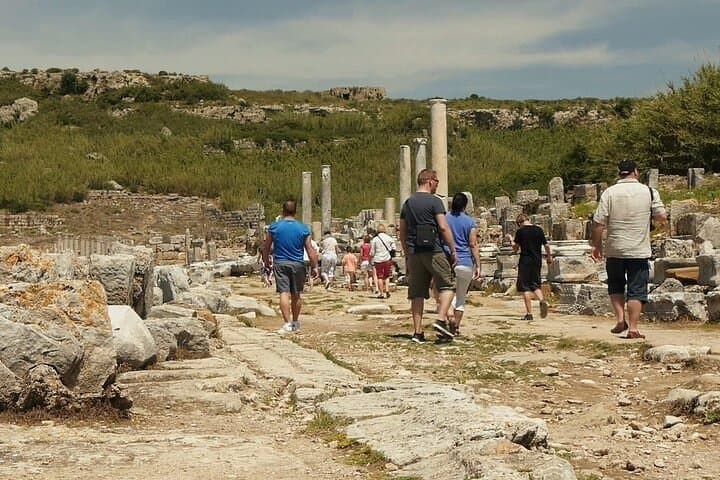
You step out of your Antalya hotel at first light and the coast’s humidity is still cooling; the bus hums away from the city toward flat wheat fields and then the low spine of the Taurus range. By midmorning you’re walking a broad Roman street at Perge, the air tasting faintly of dust and citrus, columns to your left and the outline of a vast stadium ahead.
Verified experiences and guided adventures in the surrounding area.
Operated by Excursionbazaar.com · Antalya, Antalya Province
You step out of your Antalya hotel at first light and the coast’s humidity is still cooling; the bus hums away from the city toward flat wheat fields and then the low spine of the Taurus range. By midmorning you’re walking a broad Roman street at Perge, the air tasting faintly of dust and citrus, columns to your left and the outline of a vast stadium ahead.
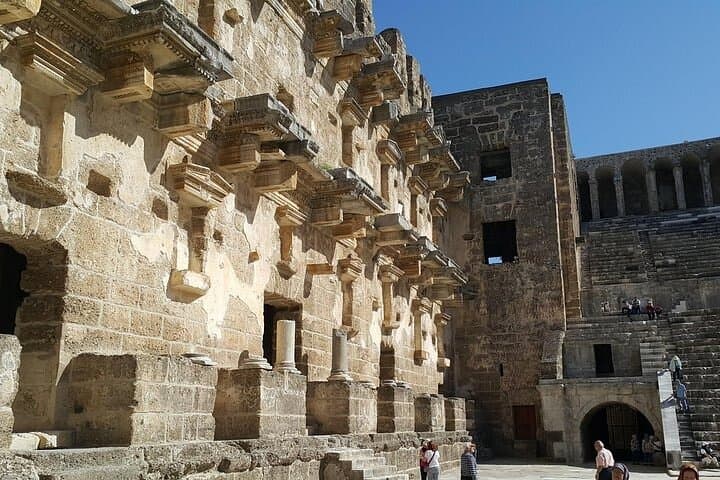
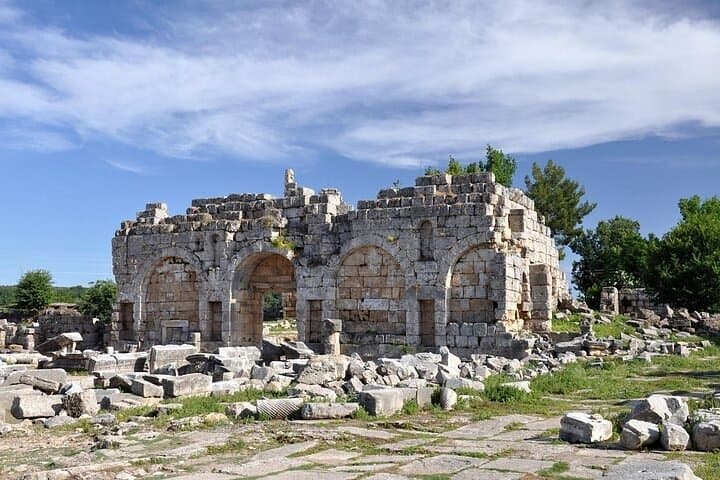
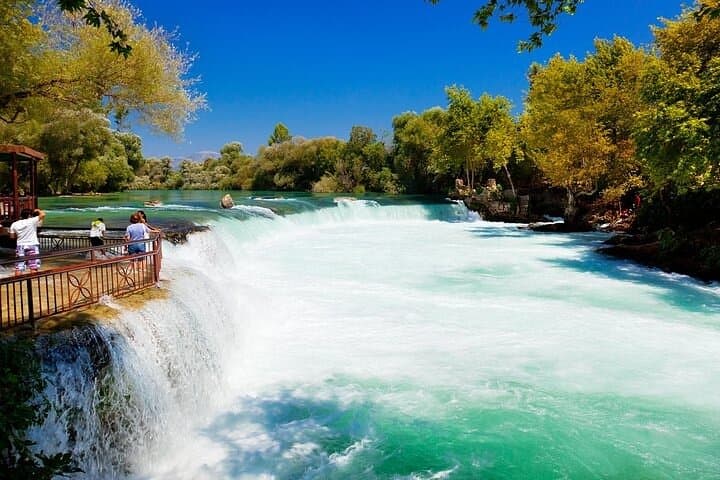
Perge began as a Bronze Age settlement and reached its architectural peak under the Romans—its grid plan, colonnaded avenues and theater echo an Anatolian city reshaped by Hellenistic and Roman hands. Aspendos, later on the route, is carved into the limestone plain; its theater’s acoustics and semicircular stone seats are direct lessons in Roman engineering. Side’s Apollo Temple perches on the waterfront, where marble columns lean into Aegean light, and the Manavgat waterfall offers a sudden, green interruption — a shallow, rushing curtain fed from Taurus springs.
This is a day that blends archaeology, geology and coastal culture: limestone ridges, alluvial plains, and ruins built with locally quarried marble. Expect uneven stone underfoot, sun-baked open sites, and short guided walks at each stop.
Practical edge: wear sturdy shoes with good grip for ancient steps, pack 1–1.5 liters of water, and bring sun protection; lunch is included but carry small cash for souvenirs. The itinerary is long — about 10 hours with hotel pickup — so plan logistics around a full-day excursion and moderate walking capability.
moderate.
10 hours.
Moderate fitness — able to walk 1–3 miles over uneven surfaces and climb stone steps repeatedly.
Entrance to some sites is included in the tour price (check booking details); confirm with the operator which admissions are covered before travel.
Expect 20–60 minute drives between stops; the full tour is about 10 hours including stops and lunch.
Yes if they have moderate mobility; steep steps and uneven ground may be challenging for very young children or those with limited mobility.
Most shared tours operate in English and often offer guides fluent in multiple languages—verify at booking for specific language needs.
Perge and Aspendos flourished under Roman rule; Aspendos’ theater is one of the best-preserved examples of Roman entertainment architecture in Anatolia.
Sites suffer from erosion and visitor wear — stick to marked paths, avoid climbing fragile ruins and support local guides who follow preservation rules.
Excursionbazaar.com operates guided outdoor trips and adventures with an emphasis on safety, stewardship, and memorable experiences.
You step out of your Antalya hotel at first light and the coast’s humidity is still cooling; the bus hums away from the city toward flat wheat fields and then the low spine of the Taurus range. By midmorning you’re walking a broad Roman street at Perge, the air tasting faintly of dust and citrus, columns to your left and the outline of a vast stadium ahead.
You step out of your Antalya hotel at first light and the coast’s humidity is still cooling; the bus hums away from the city toward flat wheat fields and then the low spine of the Taurus range. By midmorning you’re walking a broad Roman street at Perge, the air tasting faintly of dust and citrus, columns to your left and the outline of a vast stadium ahead.
Perge began as a Bronze Age settlement and reached its architectural peak under the Romans—its grid plan, colonnaded avenues and theater echo an Anatolian city reshaped by Hellenistic and Roman hands. Aspendos, later on the route, is carved into the limestone plain; its theater’s acoustics and semicircular stone seats are direct lessons in Roman engineering. Side’s Apollo Temple perches on the waterfront, where marble columns lean into Aegean light, and the Manavgat waterfall offers a sudden, green interruption — a shallow, rushing curtain fed from Taurus springs.
This is a day that blends archaeology, geology and coastal culture: limestone ridges, alluvial plains, and ruins built with locally quarried marble. Expect uneven stone underfoot, sun-baked open sites, and short guided walks at each stop.
Practical edge: wear sturdy shoes with good grip for ancient steps, pack 1–1.5 liters of water, and bring sun protection; lunch is included but carry small cash for souvenirs. The itinerary is long — about 10 hours with hotel pickup — so plan logistics around a full-day excursion and moderate walking capability.