THE ADVENTURE COLLECTIVE® · Independent discovery and booking for outdoor travel

Walk Perge’s Roman colonnades, stand beneath Aspendos’ near-intact theater and cool off at the dramatic Düden waterfalls—all in a private day trip from Antalya. Expect uneven stone, karst-fed cascades and a history-rich guide.
Walk Perge’s Roman colonnades, stand beneath Aspendos’ near-intact theater and cool off at the dramatic Düden waterfalls—all in a private day trip from Antalya. Expect uneven stone, karst-fed cascades and a history-rich guide.
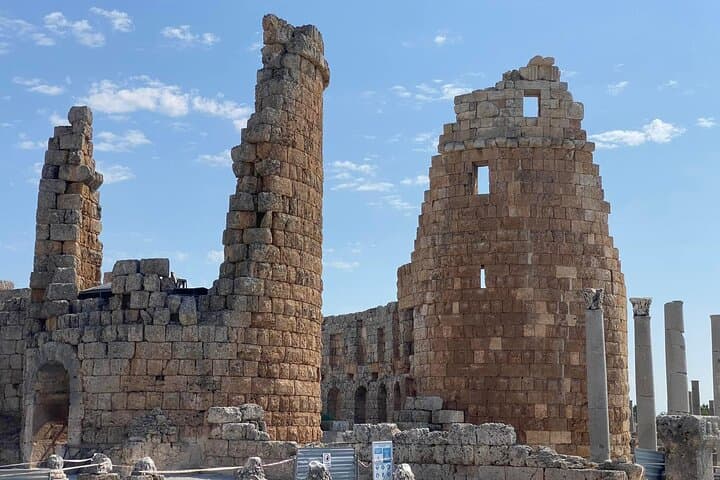
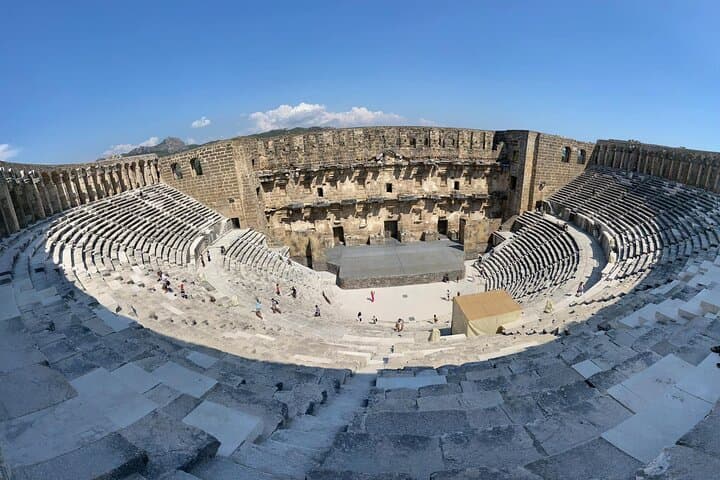
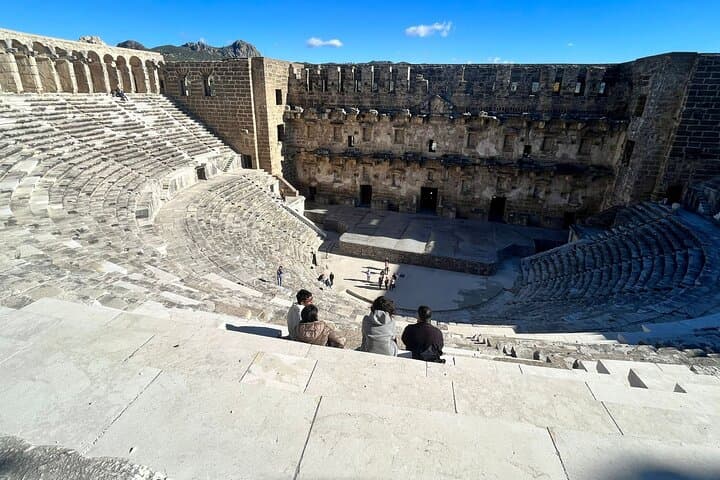
A morning breeze off the Mediterranean pushes through the columns at Perge as the guide points to an amphitheater seat carved two millennia ago. You walk a colonnaded street where marble edges still catch light; later the road moves east to Aspendos, where a Roman theater holds its echo and summer operas, and the day finishes with the Düden waterfalls dropping toward the sea.
Verified experiences and guided adventures in the surrounding area.
Operated by Likya Nature Travel · Antalya, Antalya
A morning breeze off the Mediterranean pushes through the columns at Perge as the guide points to an amphitheater seat carved two millennia ago. You walk a colonnaded street where marble edges still catch light; later the road moves east to Aspendos, where a Roman theater holds its echo and summer operas, and the day finishes with the Düden waterfalls dropping toward the sea.
Perge and Aspendos are anchors of Roman and Hellenistic Anatolia—Perge's Hadrianic gates and stadium mark a city that intersected trade and early Christian routes, while Aspendos' 2nd-century theater survives because of later Seljuk-era reuse and careful restoration.
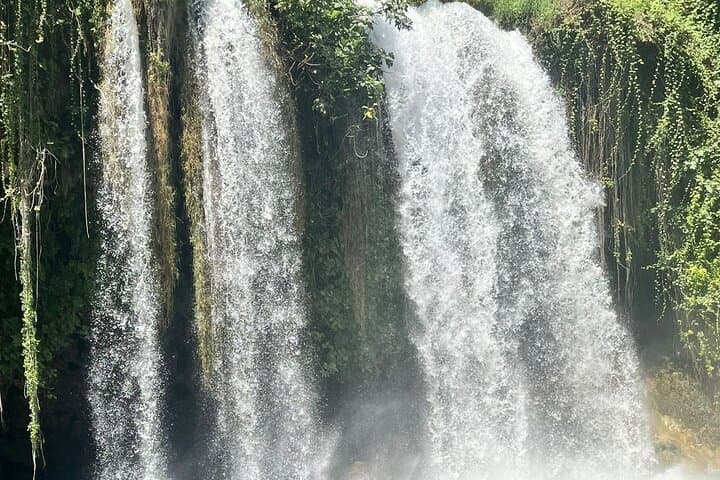
Geologically the region is limestone and karst—springs feed the Düden rivers that carve tunnels before spilling into the sea—so expect caves, tunneled runnels and stepped cascades. Local culture mixes coastal fishing towns, Antalya's Ottoman-era Kaleiçi quarter nearby, and modern hospitality at roadside meyhanes.
Practically: this private full-day run is about seven hours with multiple short walks on uneven archaeological stone and stepped trails at the falls. Wear sturdy shoes, carry 1–2 liters of water, and plan for sun between late spring and early autumn. Photography is excellent in low-angle morning or late-afternoon light; midday can be hot. If you have mobility limits, ask about alternate pacing or vehicle drop-offs—sites have stairs and irregular surfaces. Expect a relaxed pace overall but several short bursts of standing and walking while the guide interprets the sites.
moderate.
7 hours.
Moderate: comfortable walking for 2–3 hours total on uneven terrain with short periods standing and stair negotiation.
This tour lists admission as not included—bring cash or card to purchase tickets at site entrances unless your booking specifies otherwise.
Expect roughly 1.5–2 hours at Perge, about 1–1.5 hours at Aspendos, and shorter stops (30–60 minutes) at Düden waterfalls—total walking spread across the day.
Yes—it's described as suitable for all fitness levels, but note uneven surfaces and some stairs; private pace and vehicle access can be arranged for limited mobility.
Yes—the itinerary includes a lunch break at a local restaurant and additional short rests; bring snacks if you prefer specific diets.
Perge and Aspendos were significant Anatolian centers in Hellenistic and Roman periods; Aspendos' theater dates to the 2nd century AD and Perge features Hadrianic architecture and Roman public spaces.
Sites are fragile—stay on marked paths, avoid climbing on carved reliefs, and use local services to support preservation efforts; limit single-use plastics near waterways.
Likya Nature Travel operates guided outdoor trips and adventures with an emphasis on safety, stewardship, and memorable experiences.
A morning breeze off the Mediterranean pushes through the columns at Perge as the guide points to an amphitheater seat carved two millennia ago. You walk a colonnaded street where marble edges still catch light; later the road moves east to Aspendos, where a Roman theater holds its echo and summer operas, and the day finishes with the Düden waterfalls dropping toward the sea.
A morning breeze off the Mediterranean pushes through the columns at Perge as the guide points to an amphitheater seat carved two millennia ago. You walk a colonnaded street where marble edges still catch light; later the road moves east to Aspendos, where a Roman theater holds its echo and summer operas, and the day finishes with the Düden waterfalls dropping toward the sea.
Perge and Aspendos are anchors of Roman and Hellenistic Anatolia—Perge's Hadrianic gates and stadium mark a city that intersected trade and early Christian routes, while Aspendos' 2nd-century theater survives because of later Seljuk-era reuse and careful restoration.
Geologically the region is limestone and karst—springs feed the Düden rivers that carve tunnels before spilling into the sea—so expect caves, tunneled runnels and stepped cascades. Local culture mixes coastal fishing towns, Antalya's Ottoman-era Kaleiçi quarter nearby, and modern hospitality at roadside meyhanes.
Practically: this private full-day run is about seven hours with multiple short walks on uneven archaeological stone and stepped trails at the falls. Wear sturdy shoes, carry 1–2 liters of water, and plan for sun between late spring and early autumn. Photography is excellent in low-angle morning or late-afternoon light; midday can be hot. If you have mobility limits, ask about alternate pacing or vehicle drop-offs—sites have stairs and irregular surfaces. Expect a relaxed pace overall but several short bursts of standing and walking while the guide interprets the sites.