THE ADVENTURE COLLECTIVE® · Independent discovery and booking for outdoor travel

Cross a national border in less than half an hour and spend a day among the stone towns and sheltered waters of Boka Kotorska. This full-day small-group tour from Dubrovnik pairs panoramic coastal driving with walking tours of Kotor and Perast.
Cross a national border in less than half an hour and spend a day among the stone towns and sheltered waters of Boka Kotorska. This full-day small-group tour from Dubrovnik pairs panoramic coastal driving with walking tours of Kotor and Perast.
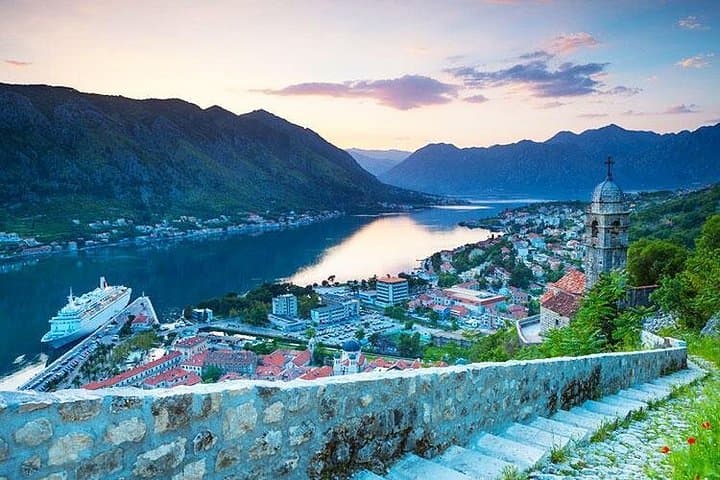
Pull up to the water and the bay demands your attention: narrow fjord-like inlets, chalky limestone cliffs, and villages tacked to the shoreline like islands of stone. On a full-day small-group run from Dubrovnik you cross the Croatian–Montenegrin border in under 30 minutes and drive the coast that frames Boka Kotorska, where the sea often seems to hold its breath.
Verified experiences and guided adventures in the surrounding area.
Operated by Ragusa Tours · Kotor, Kotor Municipality
Pull up to the water and the bay demands your attention: narrow fjord-like inlets, chalky limestone cliffs, and villages tacked to the shoreline like islands of stone. On a full-day small-group run from Dubrovnik you cross the Croatian–Montenegrin border in under 30 minutes and drive the coast that frames Boka Kotorska, where the sea often seems to hold its breath.
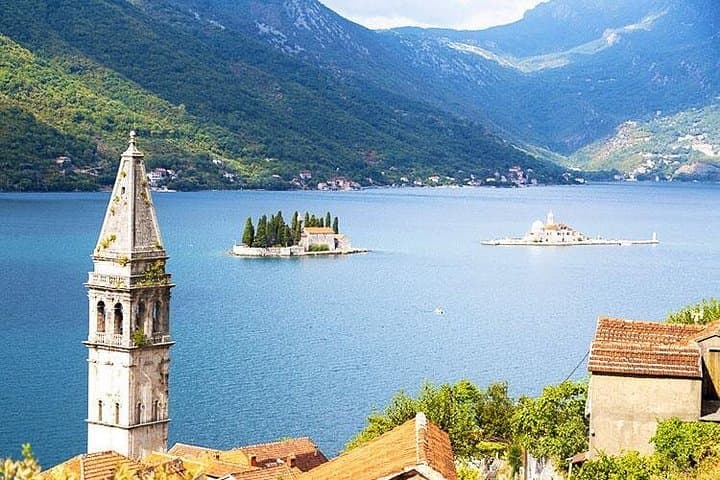
The route threads past villas and Venetian facades that speak to centuries of maritime trade. Kotor’s Old Town grew around Saint Tryphon’s cathedral, rebuilt across eras and echoing the region’s Byzantine and Venetian layers. Perast, smaller and flatter, brags baroque palaces and two tiny islets—one crowned by the man-made shrine Our Lady of the Rocks—built by generations of sailors.
Geology here is abrupt: karst limestone drops into cold Adriatic channels, creating sheltered waters that shaped local shipbuilding and fishing cultures. Pilgrimages and merchants left churches, sea forts and stone quays that still set the rhythm of daily life.
Practically, expect a mix of short walks on cobbled streets, photo stops overlooking the bay, and free time to browse local souvenirs. Bring a valid passport for the border, comfortable footwear for uneven surfaces, and layers—the wind on the water can be sharp even in summer. A small local tax (about €2) is charged on entry to Kotor.
The day is straightforward but full: panoramic drives, compact medieval alleys, and chances to stand where sailors once read the horizon. It’s an accessible coastal immersion—scenic, historical, and easy to fit into a Dubrovnik-centered itinerary.
easy.
11 hours.
Suitable for most fitness levels; requires short periods of standing and walking on uneven cobbles.
Yes. You cross into Montenegro from Croatia, so a current, valid passport is required for all participants.
No. The local entry tax to Kotor (around €2 per person) is paid separately on arrival.
Yes. The itinerary includes guided walking in Kotor and free time in Perast to explore, shop, or photograph the bay.
Partially. The minibus transport is accessible, but cobbled streets, steps and uneven surfaces in the towns can be challenging for those with reduced mobility.
Kotor and its surrounding settlements form the Natural and Culturo-Historical Region of Kotor, a UNESCO World Heritage Site with medieval architecture influenced by Venetian rule and earlier Byzantine and Roman presence.
Tourism concentrates on a small coastal strip—carry out waste, respect protected church interiors, and avoid feeding wildlife; small local fees support municipal upkeep.
Ragusa Tours operates guided outdoor trips and adventures with an emphasis on safety, stewardship, and memorable experiences.
Pull up to the water and the bay demands your attention: narrow fjord-like inlets, chalky limestone cliffs, and villages tacked to the shoreline like islands of stone. On a full-day small-group run from Dubrovnik you cross the Croatian–Montenegrin border in under 30 minutes and drive the coast that frames Boka Kotorska, where the sea often seems to hold its breath.
Pull up to the water and the bay demands your attention: narrow fjord-like inlets, chalky limestone cliffs, and villages tacked to the shoreline like islands of stone. On a full-day small-group run from Dubrovnik you cross the Croatian–Montenegrin border in under 30 minutes and drive the coast that frames Boka Kotorska, where the sea often seems to hold its breath.
The route threads past villas and Venetian facades that speak to centuries of maritime trade. Kotor’s Old Town grew around Saint Tryphon’s cathedral, rebuilt across eras and echoing the region’s Byzantine and Venetian layers. Perast, smaller and flatter, brags baroque palaces and two tiny islets—one crowned by the man-made shrine Our Lady of the Rocks—built by generations of sailors.
Geology here is abrupt: karst limestone drops into cold Adriatic channels, creating sheltered waters that shaped local shipbuilding and fishing cultures. Pilgrimages and merchants left churches, sea forts and stone quays that still set the rhythm of daily life.
Practically, expect a mix of short walks on cobbled streets, photo stops overlooking the bay, and free time to browse local souvenirs. Bring a valid passport for the border, comfortable footwear for uneven surfaces, and layers—the wind on the water can be sharp even in summer. A small local tax (about €2) is charged on entry to Kotor.
The day is straightforward but full: panoramic drives, compact medieval alleys, and chances to stand where sailors once read the horizon. It’s an accessible coastal immersion—scenic, historical, and easy to fit into a Dubrovnik-centered itinerary.