THE ADVENTURE COLLECTIVE® · Independent discovery and booking for outdoor travel

A full-day minibus circuit from Puerto Madryn visiting Peninsula Valdes and Punta Tombo. Expect long coastal drives, fenced penguin boardwalks and seasonal whale watching—plus a cultural stop in the Welsh-influenced Chubut valley.
A full-day minibus circuit from Puerto Madryn visiting Peninsula Valdes and Punta Tombo. Expect long coastal drives, fenced penguin boardwalks and seasonal whale watching—plus a cultural stop in the Welsh-influenced Chubut valley.
A pale Atlantic wind pushes across the windshield as the minibus turns away from Puerto Madryn and opens onto low scrub and ragged coastline. Salt and guano hang in the air; the road angles toward a land of beach shelves and whale-breeding coves. Passengers watch binoculars swing into place as the driver calls out the first glimpse of a distant spout or a line of standing penguins.
Verified experiences and guided adventures in the surrounding area.
Operated by Sussanich Turismo · Puerto Madryn, Chubut Province
A pale Atlantic wind pushes across the windshield as the minibus turns away from Puerto Madryn and opens onto low scrub and ragged coastline. Salt and guano hang in the air; the road angles toward a land of beach shelves and whale-breeding coves. Passengers watch binoculars swing into place as the driver calls out the first glimpse of a distant spout or a line of standing penguins.
Peninsula Valdes is a sculpted promontory of marine terraces and volcanic bedrock that draws southern right whales, orcas and sea lions. South along the coast, Punta Tombo hosts one of the largest Magellanic penguin colonies on the Atlantic seaboard. The Chubut river valley, with towns like Trelew and Gaiman, reflects the area's 19th-century Welsh settlements—tea houses and stone chapels survive alongside ranching culture.
Expect a full-day rhythm: long highway stretches between lookout points, short walks to viewpoints and fenced boardwalks at penguin colonies. Wildlife encounters are seasonal—whales concentrate nearshore in cooler months; penguins are most active through spring and summer. Local guides emphasize distance and low-impact viewing; many viewing areas are run by reserve authorities with modest entrance fees.
Practical notes: the outing lasts about seven hours, operates in most weather, and is suitable for a wide range of physical abilities; wheelchair-accessible areas exist but terrain varies. Bring layered windproof clothing, sun protection, binoculars and reusable water—restrooms and food options are limited between villages. With planning, the minibus circuit delivers concentrated viewing of Patagonia’s coastal wildlife and a quick cultural detour into Welsh-Argentine life.
easy.
7 hours.
Light fitness; able to board a minibus and do short walks up to 1 km on uneven surfaces
No — the itinerary notes that admissions are not included; bring cash or card depending on the reserve’s payment options.
Southern right whales are most frequently seen between June and December, with peak sightings in winter and early spring months.
Many viewing areas and transportation are accessible, but terrain at some sites can be uneven—notify operators of accessibility needs when booking.
The tour runs about seven hours; food is typically not included so bring snacks or plan a stop in a town like Puerto Pirámides or Gaiman.
The Chubut valley reflects a unique Welsh settlement from the 1860s—settlers established farms and tea traditions that persist in Trelew and Gaiman today.
Peninsula Valdes is a protected area (and UNESCO-recognized), with strict rules to minimize disturbance; visitors should follow local guidelines to reduce impact.
Sussanich Turismo operates guided outdoor trips and adventures with an emphasis on safety, stewardship, and memorable experiences.


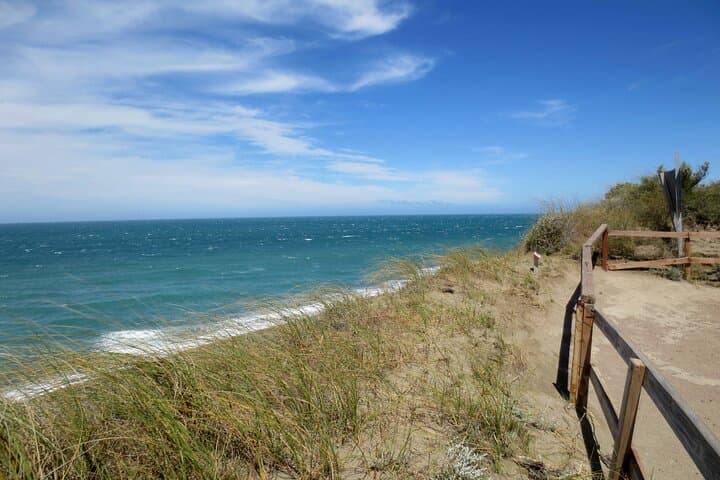
A pale Atlantic wind pushes across the windshield as the minibus turns away from Puerto Madryn and opens onto low scrub and ragged coastline. Salt and guano hang in the air; the road angles toward a land of beach shelves and whale-breeding coves. Passengers watch binoculars swing into place as the driver calls out the first glimpse of a distant spout or a line of standing penguins.
A pale Atlantic wind pushes across the windshield as the minibus turns away from Puerto Madryn and opens onto low scrub and ragged coastline. Salt and guano hang in the air; the road angles toward a land of beach shelves and whale-breeding coves. Passengers watch binoculars swing into place as the driver calls out the first glimpse of a distant spout or a line of standing penguins.
Peninsula Valdes is a sculpted promontory of marine terraces and volcanic bedrock that draws southern right whales, orcas and sea lions. South along the coast, Punta Tombo hosts one of the largest Magellanic penguin colonies on the Atlantic seaboard. The Chubut river valley, with towns like Trelew and Gaiman, reflects the area's 19th-century Welsh settlements—tea houses and stone chapels survive alongside ranching culture.
Expect a full-day rhythm: long highway stretches between lookout points, short walks to viewpoints and fenced boardwalks at penguin colonies. Wildlife encounters are seasonal—whales concentrate nearshore in cooler months; penguins are most active through spring and summer. Local guides emphasize distance and low-impact viewing; many viewing areas are run by reserve authorities with modest entrance fees.
Practical notes: the outing lasts about seven hours, operates in most weather, and is suitable for a wide range of physical abilities; wheelchair-accessible areas exist but terrain varies. Bring layered windproof clothing, sun protection, binoculars and reusable water—restrooms and food options are limited between villages. With planning, the minibus circuit delivers concentrated viewing of Patagonia’s coastal wildlife and a quick cultural detour into Welsh-Argentine life.