THE ADVENTURE COLLECTIVE® · Independent discovery and booking for outdoor travel

Visit Punta Tombo to witness Magellanic penguins through courtship, nesting and chick-rearing on a full-day tour from Puerto Madryn. This practical guide covers what to expect, when to go, and the essentials to bring for a responsible wildlife encounter.
Visit Punta Tombo to witness Magellanic penguins through courtship, nesting and chick-rearing on a full-day tour from Puerto Madryn. This practical guide covers what to expect, when to go, and the essentials to bring for a responsible wildlife encounter.
A coastal wind pushes across low scrub as the shoreline opens into a wide, pebbled plain. You step off the bus and the colony is already there: a dispersed crowd of Magellanic penguins moving with purpose across the beach, heads bobbing as they tend nests or shepherd chicks. The sound is a low chorus—grunts and brays that map the rhythms of breeding season.
Verified experiences and guided adventures in the surrounding area.
Operated by Luna Roja · Punta Tombo, Chubut
A coastal wind pushes across low scrub as the shoreline opens into a wide, pebbled plain. You step off the bus and the colony is already there: a dispersed crowd of Magellanic penguins moving with purpose across the beach, heads bobbing as they tend nests or shepherd chicks. The sound is a low chorus—grunts and brays that map the rhythms of breeding season.
Punta Tombo is the largest continental Magellanic penguin reserve, carved into a stretch of Chubut coast where Patagonian steppe meets the Atlantic. The site records decades of natural-history research; interpretive panels at the center summarize studies of nesting cycles and population shifts. Geologically the cape is composed of wind-scoured sediment and marine terraces, which create flat viewing areas and the tangled burrows where penguins incubate eggs.
Culturally, the short drive south from Puerto Madryn threads through ranch land and small Welsh-Argentine towns, reflecting the mixed human history of the region. Guanacos and coastal seabirds are common backdrop actors.
Practical guidance: arrive with sturdy shoes for gravel and boardwalks, a windproof layer for strong sea breezes, and binoculars for distant vantage points. Tours run about 10 hours round-trip from Puerto Madryn, with time at the reserve to walk designated paths and read exhibits. Respect signage—stay on trails and maintain distance from nests to avoid disturbing breeding pairs. Bring water and snacks; facilities are basic. Morning light is best for photography, while midseason (austral spring to summer) is when courtship and chick-rearing activity peak. Punta Tombo rewards patience: watch a pair exchange duties, and the landscape will seem, for a moment, entirely dedicated to the small, deliberate penguins.
easy.
10 hours.
Suitable for most fitness levels; involves short, flat walks on gravel and boardwalks.
The round-trip tour is about 10 hours (approximately 600 minutes), including driving and time at the reserve.
Entrance fees are typically paid at the reserve separately from the tour cost—confirm with your operator before arrival.
Southern spring and summer (September–February) are peak times for courtship, incubation and chick rearing; mid-summer shows many chicks on the colony.
Yes—this activity is suitable for all fitness levels; infants must sit on an adult’s lap on the vehicle according to tour rules.
The reserve preserves a long-studied Magellanic penguin colony; research here has informed population monitoring and conservation across Patagonia.
Stay on marked trails and follow guide instructions—limiting disturbance reduces nest abandonment. Local organizations monitor breeding success and regulate visitor access to protect colonies.
Luna Roja operates guided outdoor trips and adventures with an emphasis on safety, stewardship, and memorable experiences.
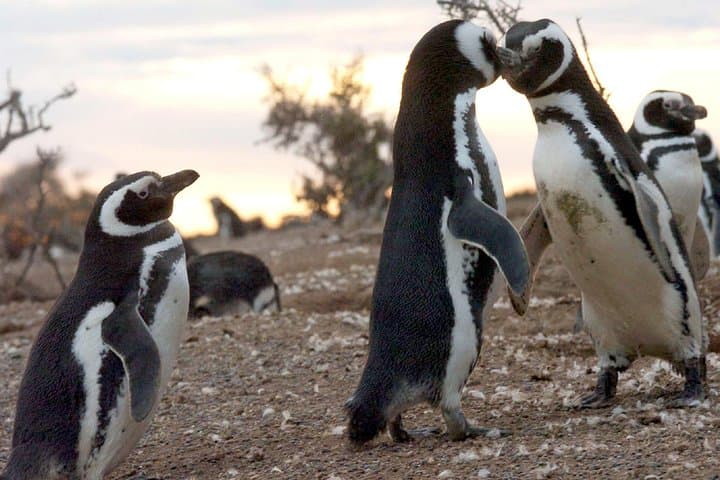
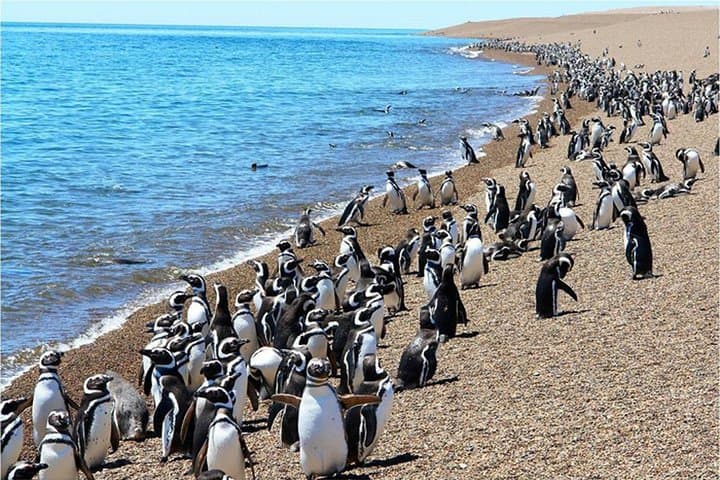
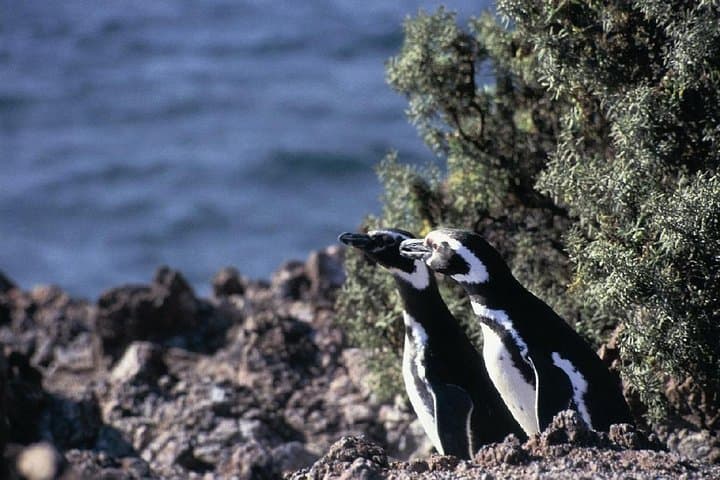
A coastal wind pushes across low scrub as the shoreline opens into a wide, pebbled plain. You step off the bus and the colony is already there: a dispersed crowd of Magellanic penguins moving with purpose across the beach, heads bobbing as they tend nests or shepherd chicks. The sound is a low chorus—grunts and brays that map the rhythms of breeding season.
A coastal wind pushes across low scrub as the shoreline opens into a wide, pebbled plain. You step off the bus and the colony is already there: a dispersed crowd of Magellanic penguins moving with purpose across the beach, heads bobbing as they tend nests or shepherd chicks. The sound is a low chorus—grunts and brays that map the rhythms of breeding season.
Punta Tombo is the largest continental Magellanic penguin reserve, carved into a stretch of Chubut coast where Patagonian steppe meets the Atlantic. The site records decades of natural-history research; interpretive panels at the center summarize studies of nesting cycles and population shifts. Geologically the cape is composed of wind-scoured sediment and marine terraces, which create flat viewing areas and the tangled burrows where penguins incubate eggs.
Culturally, the short drive south from Puerto Madryn threads through ranch land and small Welsh-Argentine towns, reflecting the mixed human history of the region. Guanacos and coastal seabirds are common backdrop actors.
Practical guidance: arrive with sturdy shoes for gravel and boardwalks, a windproof layer for strong sea breezes, and binoculars for distant vantage points. Tours run about 10 hours round-trip from Puerto Madryn, with time at the reserve to walk designated paths and read exhibits. Respect signage—stay on trails and maintain distance from nests to avoid disturbing breeding pairs. Bring water and snacks; facilities are basic. Morning light is best for photography, while midseason (austral spring to summer) is when courtship and chick-rearing activity peak. Punta Tombo rewards patience: watch a pair exchange duties, and the landscape will seem, for a moment, entirely dedicated to the small, deliberate penguins.