THE ADVENTURE COLLECTIVE® · Independent discovery and booking for outdoor travel

Sail the Beagle Channel from Ushuaia to Martillo Island and meet Magellanic and Gentoo penguins up close. This five-hour wildlife cruise combines bird colonies, sea lion haul-outs and the iconic Les Éclaireurs Lighthouse with clear, practical guidance for visitors.
Sail the Beagle Channel from Ushuaia to Martillo Island and meet Magellanic and Gentoo penguins up close. This five-hour wildlife cruise combines bird colonies, sea lion haul-outs and the iconic Les Éclaireurs Lighthouse with clear, practical guidance for visitors.
A brisk southern wind cuts across the Beagle Channel as the boat slips away from Ushuaia’s sheltered harbor. Snow-capped ridges line the horizon and the water turns from gunmetal to glass; cormorants wheel overhead while the guide scans for white flashes on the rocks. The itinerary threads past Bird Island and Alicia Island before steering for the compact, gravel-strewn Martillo Island — where Magellanic and Gentoo penguins walk the shore with an almost casual curiosity.
Verified experiences and guided adventures in the surrounding area.
Operated by Ni Lo Pienses Tour · Ushuaia, Tierra del Fuego
A brisk southern wind cuts across the Beagle Channel as the boat slips away from Ushuaia’s sheltered harbor. Snow-capped ridges line the horizon and the water turns from gunmetal to glass; cormorants wheel overhead while the guide scans for white flashes on the rocks. The itinerary threads past Bird Island and Alicia Island before steering for the compact, gravel-strewn Martillo Island — where Magellanic and Gentoo penguins walk the shore with an almost casual curiosity.
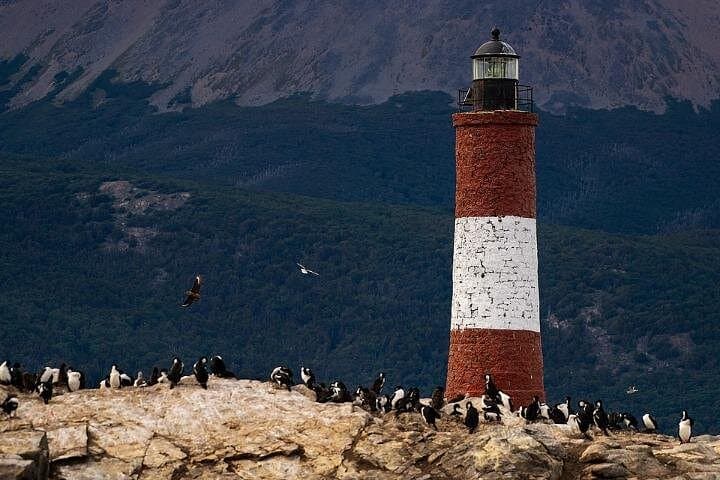
The channel itself is a product of glacial carving and tectonic uplift, a narrow marine corridor that marks the southern edge of the Andes. Human history here is layered: Yámana peoples once hunted these coasts, European explorers mapped the channel during 19th-century voyages, and the Les Éclaireurs Lighthouse (in operation since 1920) has become an icon of the “End of the World.”
Visitors experience wildlife viewing from a distance-regulated dock or protected beach access; guides explain breeding cycles and the mechanics of penguin rookeries, making the trip as much about natural history as spectacle.
Practicalities matter: tours run about five hours, boats are open to the elements, and weather changes fast — bring layered, waterproof clothing and binoculars. Guides typically speak Spanish and English, and passenger numbers are limited to reduce disturbance. Photography is rewarded, but rules prohibit chasing or touching the animals. For travelers seeking a compact, wildlife-focused outing that combines easy walking with dramatic Arctic-adjacent scenery, Martillo Island delivers a clear, direct encounter with Patagonia’s southern wildlife.
easy.
5 hours.
Suitable for most fitness levels—activity involves short, flat walks on gravel or boardwalks and calm boat transfers.
Between October and April penguin colonies are present on Martillo Island and sightings are very likely; outside that window numbers are lower and sightings less predictable.
Yes—this is a low-impact wildlife cruise with short, flat shore access; however infants must sit on laps and guests with serious mobility or spine issues should consult operators.
Guides enforce regulated viewing distances and designated paths to avoid disturbing nests; you can often be within a few meters but must not touch or chase animals.
Operators monitor sea conditions and may alter routes or cancel; check cancellation and refund policies when booking and dress for cold, wet weather regardless.
The Beagle Channel was surveyed during 19th-century voyages (notably HMS Beagle) and Les Éclaireurs Lighthouse, inaugurated in 1920, marks the maritime approach to Ushuaia.
Visits follow strict guidelines to minimize disturbance during breeding season; stay on paths, avoid flash photography close to nests, and pack out all waste to protect fragile coastal ecosystems.
Ni Lo Pienses Tour operates guided outdoor trips and adventures with an emphasis on safety, stewardship, and memorable experiences.
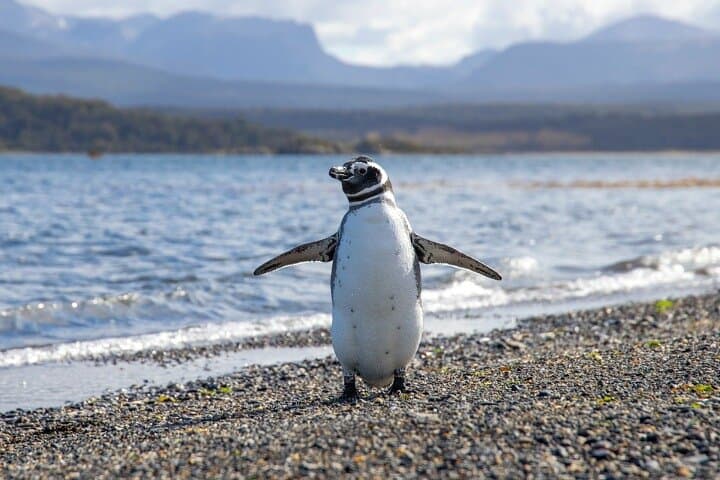
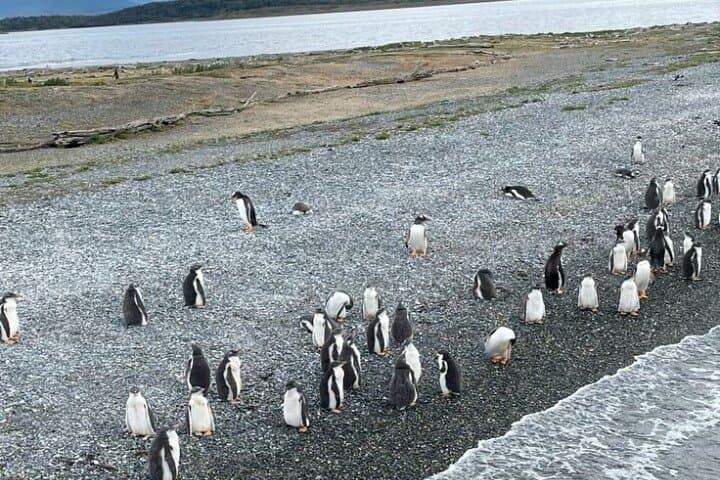
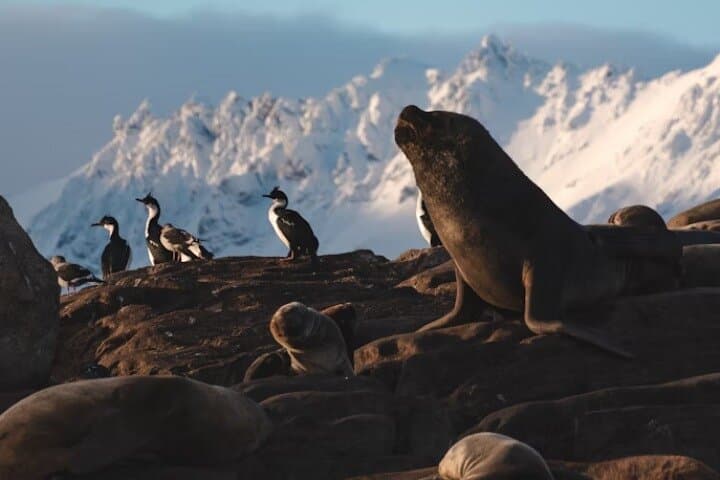
A brisk southern wind cuts across the Beagle Channel as the boat slips away from Ushuaia’s sheltered harbor. Snow-capped ridges line the horizon and the water turns from gunmetal to glass; cormorants wheel overhead while the guide scans for white flashes on the rocks. The itinerary threads past Bird Island and Alicia Island before steering for the compact, gravel-strewn Martillo Island — where Magellanic and Gentoo penguins walk the shore with an almost casual curiosity.
A brisk southern wind cuts across the Beagle Channel as the boat slips away from Ushuaia’s sheltered harbor. Snow-capped ridges line the horizon and the water turns from gunmetal to glass; cormorants wheel overhead while the guide scans for white flashes on the rocks. The itinerary threads past Bird Island and Alicia Island before steering for the compact, gravel-strewn Martillo Island — where Magellanic and Gentoo penguins walk the shore with an almost casual curiosity.
The channel itself is a product of glacial carving and tectonic uplift, a narrow marine corridor that marks the southern edge of the Andes. Human history here is layered: Yámana peoples once hunted these coasts, European explorers mapped the channel during 19th-century voyages, and the Les Éclaireurs Lighthouse (in operation since 1920) has become an icon of the “End of the World.”
Visitors experience wildlife viewing from a distance-regulated dock or protected beach access; guides explain breeding cycles and the mechanics of penguin rookeries, making the trip as much about natural history as spectacle.
Practicalities matter: tours run about five hours, boats are open to the elements, and weather changes fast — bring layered, waterproof clothing and binoculars. Guides typically speak Spanish and English, and passenger numbers are limited to reduce disturbance. Photography is rewarded, but rules prohibit chasing or touching the animals. For travelers seeking a compact, wildlife-focused outing that combines easy walking with dramatic Arctic-adjacent scenery, Martillo Island delivers a clear, direct encounter with Patagonia’s southern wildlife.