THE ADVENTURE COLLECTIVE® · Independent discovery and booking for outdoor travel

Spend a day moving from village classrooms to an ancient temple and a canyon-bound waterfall. This private tour combines cultural exchange, Balinese ritual sites, and a dramatic cave waterfall for an accessible, full-day outing from Ubud.
Spend a day moving from village classrooms to an ancient temple and a canyon-bound waterfall. This private tour combines cultural exchange, Balinese ritual sites, and a dramatic cave waterfall for an accessible, full-day outing from Ubud.
Early light finds the road from Ubud slipping into highland air: palms and rice terraces blur, then settle as the minivan turns toward Penglipuran. Children’s laughter meets the group at a village classroom — small hands waving, eager to practice English — and the day quickly becomes both an exchange and an education. Later, at Kehen Temple the courtyard’s aged trees lean over stone steps while wooden bells hung from the branches jingle with the breeze, a lived-in sound of Bali’s ritual life.
Verified experiences and guided adventures in the surrounding area.
Operated by CV MyBali Explore · Penglipuran (Bangli), Bali
Early light finds the road from Ubud slipping into highland air: palms and rice terraces blur, then settle as the minivan turns toward Penglipuran. Children’s laughter meets the group at a village classroom — small hands waving, eager to practice English — and the day quickly becomes both an exchange and an education. Later, at Kehen Temple the courtyard’s aged trees lean over stone steps while wooden bells hung from the branches jingle with the breeze, a lived-in sound of Bali’s ritual life.
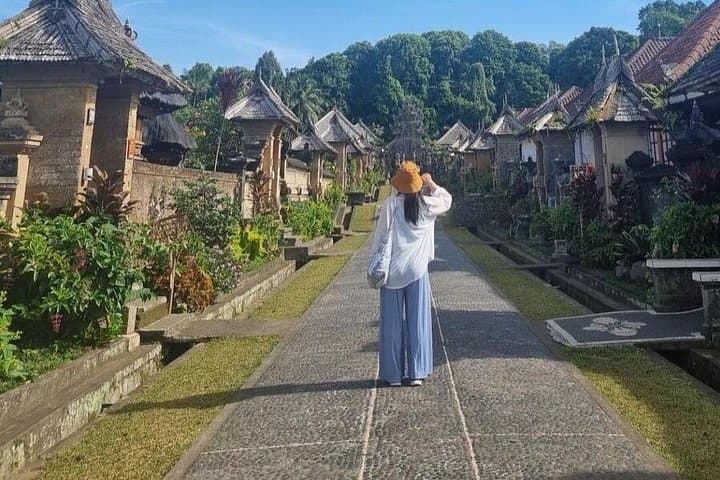
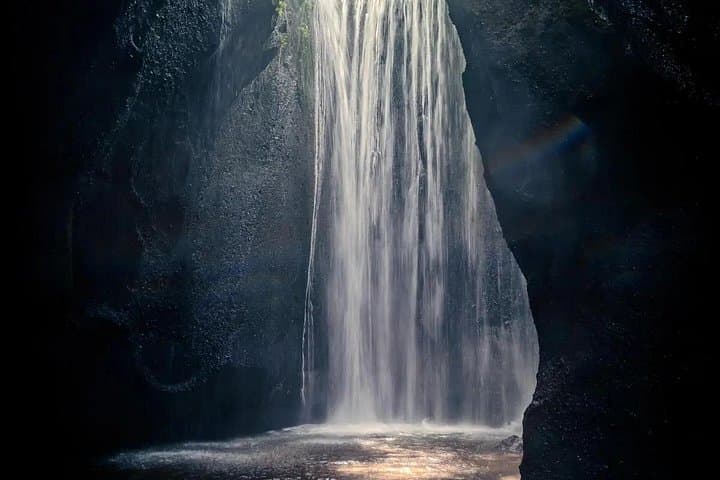
Geology and movement shape the route: volcanic ridges give way to river-cut canyons, and at Cepung Waterfall the stream forces itself through a narrow slot, dropping into a shadowed bowl where shafts of sunlight pick out spray. Penglipuran’s streets preserve traditional house compounds arranged according to Parahyangan, Palemahan and Pawongan — the Balinese spatial logic that ties spiritual, environmental and social order together.
Expect moderate walking: uneven village lanes, temple steps, and a short scramble down to the waterfall cave. The tour balances cultural stops with time in nature, and guides usually include admission and bottled water; private pickup is common from Ubud.
Practical edge: bring modest clothing or a sarong for temple visits, non-slip shoes for wet rock and steps, and a waterproof pouch for your camera in the canyon. Morning departures avoid midday heat and allow better light in Cepung’s cave. Carry small notes of local currency for donations, snacks, and the occasional stall. With respectful curiosity and steady footwear, this day pairs human stories and dramatic landscapes into a single, memorable loop.
moderate.
6–8 hours.
Suitable for travelers in reasonable health who can manage stairs, short uneven trails and a few hundred metres of downhill to the waterfall.
Most operators include private AC transfer from Ubud or nearby towns; confirm pickup point and time when booking.
There is usually space to cool off, but conditions vary with rainfall—follow your guide’s safety advice and avoid swimming when flows are strong.
Yes — the classroom visit is typically a simple English exchange; guides help facilitate interaction and you’ll be paired with teachers for structured activities.
The tour involves stairs and uneven terrain and is not recommended for travelers with serious back issues or pregnancy; check the operator’s restrictions before booking.
Penglipuran Village preserves a traditional Balinese compound layout and Kehen Temple is an historic Hindu site in Bangli known for its large banyan trees and ceremonial role.
Visitors should avoid single-use plastics, follow marked paths and respect temple rules; local communities rely on low-impact tourism for income while protecting traditional spaces.
CV MyBali Explore operates guided outdoor trips and adventures with an emphasis on safety, stewardship, and memorable experiences.
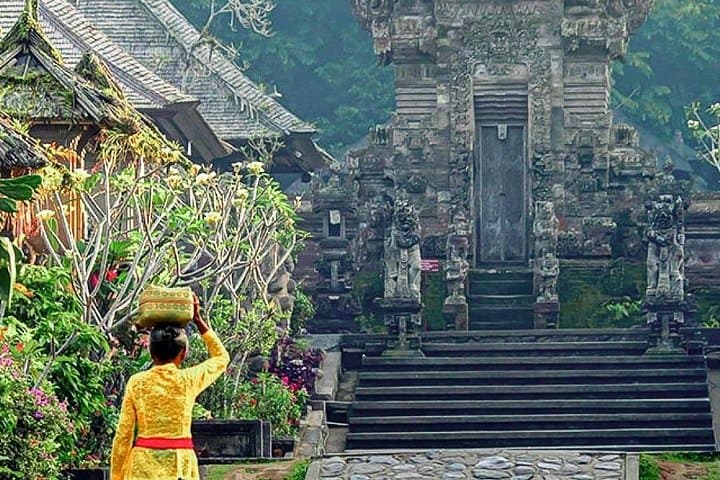
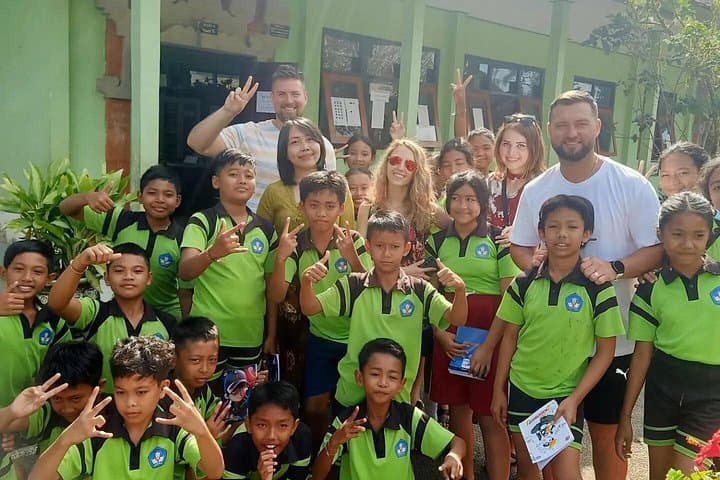
Early light finds the road from Ubud slipping into highland air: palms and rice terraces blur, then settle as the minivan turns toward Penglipuran. Children’s laughter meets the group at a village classroom — small hands waving, eager to practice English — and the day quickly becomes both an exchange and an education. Later, at Kehen Temple the courtyard’s aged trees lean over stone steps while wooden bells hung from the branches jingle with the breeze, a lived-in sound of Bali’s ritual life.
Early light finds the road from Ubud slipping into highland air: palms and rice terraces blur, then settle as the minivan turns toward Penglipuran. Children’s laughter meets the group at a village classroom — small hands waving, eager to practice English — and the day quickly becomes both an exchange and an education. Later, at Kehen Temple the courtyard’s aged trees lean over stone steps while wooden bells hung from the branches jingle with the breeze, a lived-in sound of Bali’s ritual life.
Geology and movement shape the route: volcanic ridges give way to river-cut canyons, and at Cepung Waterfall the stream forces itself through a narrow slot, dropping into a shadowed bowl where shafts of sunlight pick out spray. Penglipuran’s streets preserve traditional house compounds arranged according to Parahyangan, Palemahan and Pawongan — the Balinese spatial logic that ties spiritual, environmental and social order together.
Expect moderate walking: uneven village lanes, temple steps, and a short scramble down to the waterfall cave. The tour balances cultural stops with time in nature, and guides usually include admission and bottled water; private pickup is common from Ubud.
Practical edge: bring modest clothing or a sarong for temple visits, non-slip shoes for wet rock and steps, and a waterproof pouch for your camera in the canyon. Morning departures avoid midday heat and allow better light in Cepung’s cave. Carry small notes of local currency for donations, snacks, and the occasional stall. With respectful curiosity and steady footwear, this day pairs human stories and dramatic landscapes into a single, memorable loop.