THE ADVENTURE COLLECTIVE® · Independent discovery and booking for outdoor travel

Climb to the colors and turrets of Pena Palace, then wander the expansive Pena Park where exotic trees and granite viewpoints unfold. This guide covers what to see, timing tips, and practical advice for a smooth visit.
Climb to the colors and turrets of Pena Palace, then wander the expansive Pena Park where exotic trees and granite viewpoints unfold. This guide covers what to see, timing tips, and practical advice for a smooth visit.
A low mist lifts off the Sintra Hills and reveals a scarlet-and-ochre palace crowning the ridge. Pena Palace’s turrets and painted façades sit above a tangled park of pines and exotic trees; paths cut through dappled light and open to sweeping views over the Atlantic and the town below.
Verified experiences and guided adventures in the surrounding area.
Operated by My Travelons Ltd · Sintra, Lisbon District
A low mist lifts off the Sintra Hills and reveals a scarlet-and-ochre palace crowning the ridge. Pena Palace’s turrets and painted façades sit above a tangled park of pines and exotic trees; paths cut through dappled light and open to sweeping views over the Atlantic and the town below.
Built in the mid-19th century by King Ferdinand II on the ruins of a monastery, Pena Palace is one of Portugal’s most striking examples of Romanticist architecture. The surrounding Pena Park is an intentionally eclectic landscape—introduced species, serpentine stone walls, and engineered viewpoints—that reflects Victorian-era taste for the picturesque. The Chalet of the Countess of Edla, a rustic Swiss-style retreat in the park, shows a quieter chapter of Sintra’s cultural experiment in combining nature and art.
Expect a mix of indoor and outdoor exploration: tiled royal chambers, frescoed halls, and broad terraces, then miles of forested trails and hidden belvederes. The park’s geology is granite outcrops and weathered schist that shape paths and viewpoints; in windier moments the trees seem to lean toward the sea.
Practical guidance: choose the skip-the-line ticket in high season, or arrive early to avoid crowds. Wear supportive walking shoes—park trails are uneven and include steep sections. Bring water and sun protection; a light rain jacket is wise even in summer. Shuttle service between palace and park saves steep climbs but plan for limited stops. Audio guides add historical context if you prefer self-paced exploration. Allow 1–4 hours depending on how deep you go into the park and how many viewpoints you stop to savor.
easy.
1–4 hours.
Suitable for most fitness levels; expect some uphill walking and uneven trails
Some ticket options have timed entry while general park access is flexible; check your booking details and arrive within the allotted window if provided.
Shuttle service is available as an add-on depending on the option you choose—confirm when booking or use local shuttles and buses instead.
The palace has some accessible areas, but many park trails are steep and uneven; accessibility is limited outside the main palace terraces.
A focused palace visit can take about 1–2 hours; exploring Pena Park and the Chalet of the Countess of Edla can extend the visit to 3–4 hours or more.
Pena Palace was reconstructed in the 1830s–1850s by King Ferdinand II on a former monastery and became a key example of Portuguese Romantic architecture.
Pena Park is part of the Sintra Cultural Landscape (UNESCO); stick to marked paths, avoid disturbing plantings, and carry out waste to protect the fragile grounds.
My Travelons Ltd operates guided outdoor trips and adventures with an emphasis on safety, stewardship, and memorable experiences.
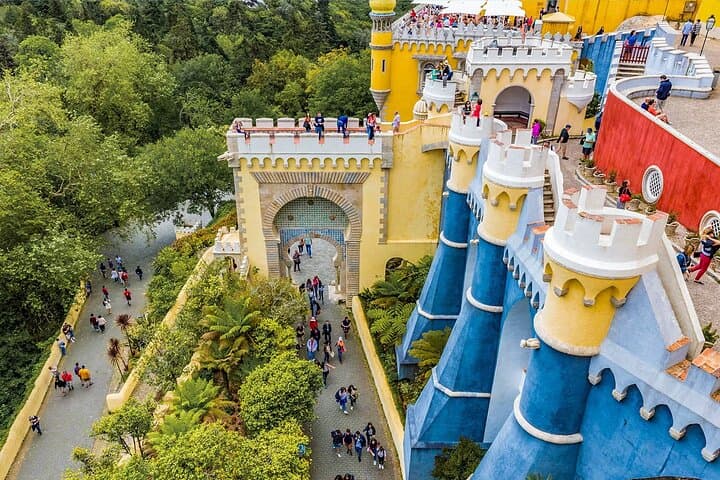
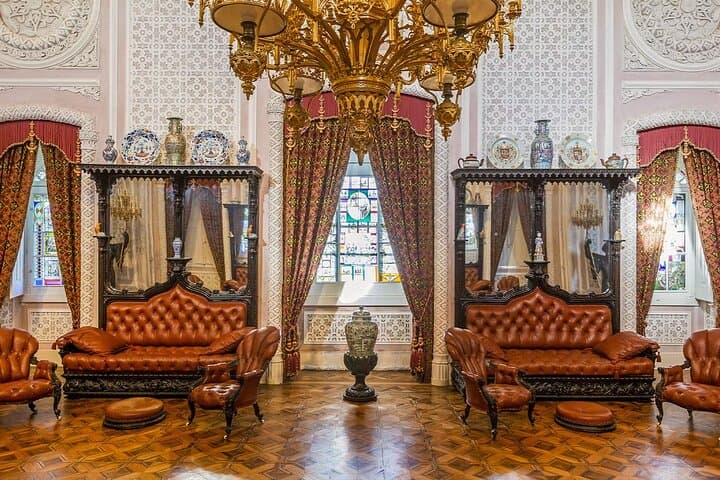
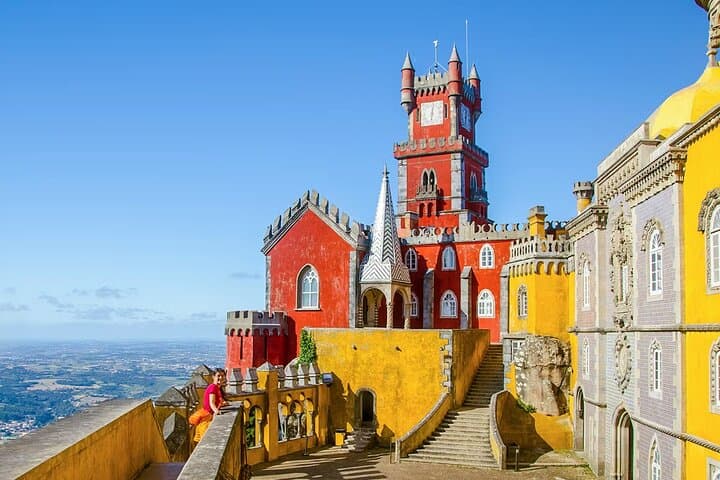
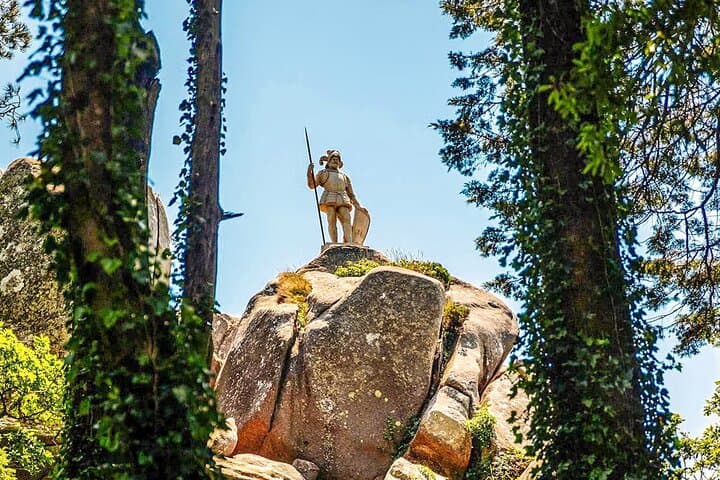
A low mist lifts off the Sintra Hills and reveals a scarlet-and-ochre palace crowning the ridge. Pena Palace’s turrets and painted façades sit above a tangled park of pines and exotic trees; paths cut through dappled light and open to sweeping views over the Atlantic and the town below.
A low mist lifts off the Sintra Hills and reveals a scarlet-and-ochre palace crowning the ridge. Pena Palace’s turrets and painted façades sit above a tangled park of pines and exotic trees; paths cut through dappled light and open to sweeping views over the Atlantic and the town below.
Built in the mid-19th century by King Ferdinand II on the ruins of a monastery, Pena Palace is one of Portugal’s most striking examples of Romanticist architecture. The surrounding Pena Park is an intentionally eclectic landscape—introduced species, serpentine stone walls, and engineered viewpoints—that reflects Victorian-era taste for the picturesque. The Chalet of the Countess of Edla, a rustic Swiss-style retreat in the park, shows a quieter chapter of Sintra’s cultural experiment in combining nature and art.
Expect a mix of indoor and outdoor exploration: tiled royal chambers, frescoed halls, and broad terraces, then miles of forested trails and hidden belvederes. The park’s geology is granite outcrops and weathered schist that shape paths and viewpoints; in windier moments the trees seem to lean toward the sea.
Practical guidance: choose the skip-the-line ticket in high season, or arrive early to avoid crowds. Wear supportive walking shoes—park trails are uneven and include steep sections. Bring water and sun protection; a light rain jacket is wise even in summer. Shuttle service between palace and park saves steep climbs but plan for limited stops. Audio guides add historical context if you prefer self-paced exploration. Allow 1–4 hours depending on how deep you go into the park and how many viewpoints you stop to savor.