THE ADVENTURE COLLECTIVE® · Independent discovery and booking for outdoor travel

In a half-day from Tirana you can trade the city for a limestone gorge, an hour-long climb and a cave where cave-bear bones and Paleolithic artifacts sleep in the dark. Finish at Petrelë Castle with sweeping views and a taste of rural Albanian hospitality.
In a half-day from Tirana you can trade the city for a limestone gorge, an hour-long climb and a cave where cave-bear bones and Paleolithic artifacts sleep in the dark. Finish at Petrelë Castle with sweeping views and a taste of rural Albanian hospitality.
You leave Tirana with the city’s concrete geometry receding in the rearview as the road climbs into limestone hills. Within forty minutes the air thins and the scrubby oaks press closer; a small village appears with stone houses and drying figs. From the parking area a narrow footpath threads uphill—this is the beginning of the Black Cave, known locally as Shpella e Zezë.
Verified experiences and guided adventures in the surrounding area.
Operated by BTOURS Albania · Tirana, Tirana
You leave Tirana with the city’s concrete geometry receding in the rearview as the road climbs into limestone hills. Within forty minutes the air thins and the scrubby oaks press closer; a small village appears with stone houses and drying figs. From the parking area a narrow footpath threads uphill—this is the beginning of the Black Cave, known locally as Shpella e Zezë.
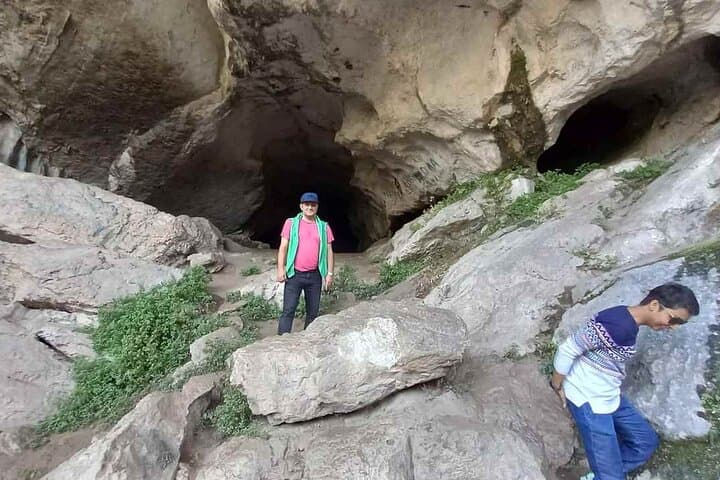
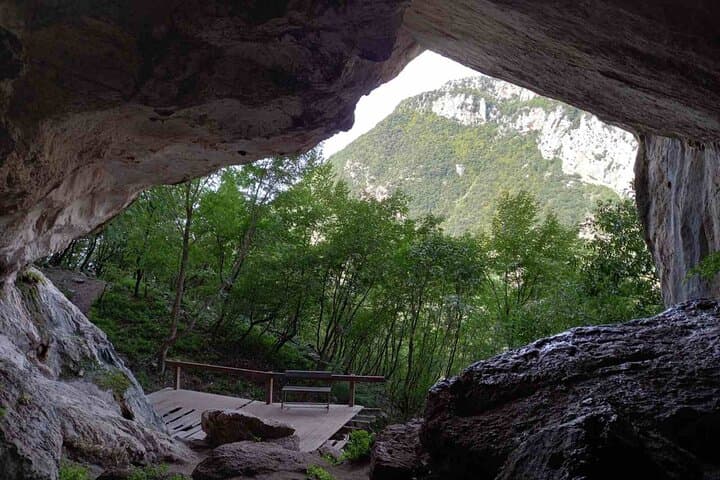
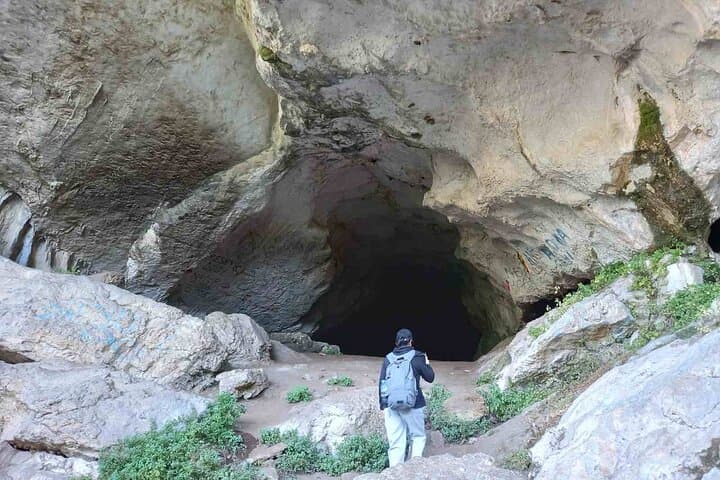
The trail gains a few hundred meters over a steady, hour-long hike, opening onto a cave mouth that yawns like a dark doorway into deep karst. Inside, the cave’s 360 meters of passages are lined with drips that became stalactites and stalagmites over millennia. A guide’s headlamp reveals ancient calcite curtains and echoing chambers where bats wheel and the walls keep the quiet of cold rock. Excavations have unearthed cave-bear remains here—Ursus spelaeus—dating the site’s use and occupation back tens of thousands of years, and archaeologists point to Paleolithic artifacts that place human footsteps in this hollow long before modern Albania.
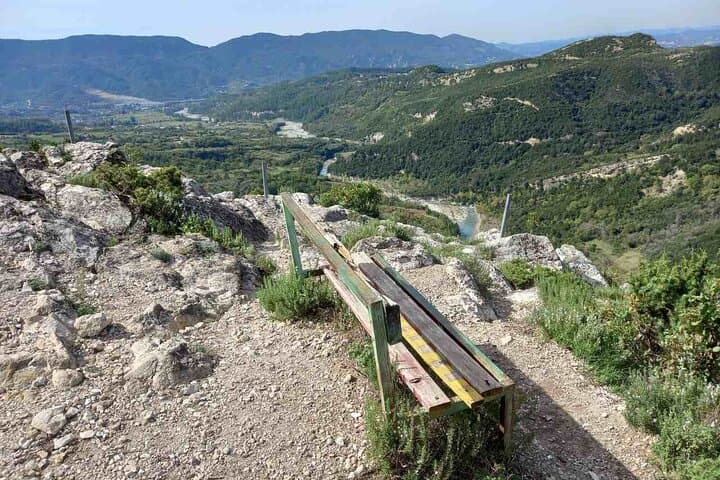
The second act of the day is Petrelë Castle, perched on a rocky promontory overlooking the Erzen valley. A fortified tower with roots in the 6th century AD (credited to Emperor Justinian in local histories) keeps watch over a patchwork of olive groves and red-tiled villages. The castle’s later walls and terraces, largely 15th century additions, offer short, gratifying scrambles and expansive views that make the drive and hike feel well earned.
Culturally the loop is compact: rural hospitality in Pellumbas—local fruit, homemade liqueurs and raki—and a strong sense of continuity between ancient and living landscapes. Geologically it’s a quick primer in karst: limestone that has been hollowed by water into rooms that store both animal bones and human history.
Practical notes: plan for a 4–5 hour excursion from Tirana that includes driving time, a one-hour uphill hike to the cave, cave exploration and a visit to Petrelë Castle. The hike is on uneven dirt and rock: good ankle support and steady footing matter. Weather can change quickly in spring and autumn; caves are cool year-round so bring a light insulating layer. The tour operator provides transport and a guide; they recommend moderate fitness and advise against the route for travelers with serious spinal, heart or pregnancy-related restrictions.
If you want photographs, aim for the golden hour over Petrelë for the best light; inside the cave, slow shutter speeds and a tripod or steady hand will capture the textures. Treat the site with respect—archaeological deposits and bat colonies are fragile—and leave nothing behind. This day trip is compact, revelatory and delivers both raw geology and human history in one easily accessible loop from Tirana.
moderate.
4–5 hours.
Moderate — able to handle an hour of uphill hiking on uneven terrain and short climbs at the castle
Expect about 45–60 minutes each way on a steep but well-trodden trail; allow extra time for stops and photos.
Children in good health can do the hike, but supervision is essential—some sections are exposed and the cave floor can be slippery.
No — the trail includes uneven rock and uphill sections and the cave interior requires stair-like steps and careful footing.
Yes — bat colonies are present and may be seen in flight inside the cave; keep noise to a minimum to avoid disturbing them.
This operator’s tour includes transport and guiding; any local entrance fees are typically handled by the guide or stated at booking—check the specific listing.
Yes — the village has family-operated homes offering fruit and simple local plates; adding a lunch stop can extend the day by about an hour.
Petrelë Castle includes a 6th-century tower linked in local tradition to Emperor Justinian and later 15th-century fortifications that reflect Albania’s medieval defensive history.
The cave hosts sensitive archaeological deposits and bat colonies; visitors are asked to avoid touching formations and to follow group-size limits to reduce disturbance.
BTOURS Albania operates guided outdoor trips and adventures with an emphasis on safety, stewardship, and memorable experiences.
You leave Tirana with the city’s concrete geometry receding in the rearview as the road climbs into limestone hills. Within forty minutes the air thins and the scrubby oaks press closer; a small village appears with stone houses and drying figs. From the parking area a narrow footpath threads uphill—this is the beginning of the Black Cave, known locally as Shpella e Zezë.
You leave Tirana with the city’s concrete geometry receding in the rearview as the road climbs into limestone hills. Within forty minutes the air thins and the scrubby oaks press closer; a small village appears with stone houses and drying figs. From the parking area a narrow footpath threads uphill—this is the beginning of the Black Cave, known locally as Shpella e Zezë.
The trail gains a few hundred meters over a steady, hour-long hike, opening onto a cave mouth that yawns like a dark doorway into deep karst. Inside, the cave’s 360 meters of passages are lined with drips that became stalactites and stalagmites over millennia. A guide’s headlamp reveals ancient calcite curtains and echoing chambers where bats wheel and the walls keep the quiet of cold rock. Excavations have unearthed cave-bear remains here—Ursus spelaeus—dating the site’s use and occupation back tens of thousands of years, and archaeologists point to Paleolithic artifacts that place human footsteps in this hollow long before modern Albania.
The second act of the day is Petrelë Castle, perched on a rocky promontory overlooking the Erzen valley. A fortified tower with roots in the 6th century AD (credited to Emperor Justinian in local histories) keeps watch over a patchwork of olive groves and red-tiled villages. The castle’s later walls and terraces, largely 15th century additions, offer short, gratifying scrambles and expansive views that make the drive and hike feel well earned.
Culturally the loop is compact: rural hospitality in Pellumbas—local fruit, homemade liqueurs and raki—and a strong sense of continuity between ancient and living landscapes. Geologically it’s a quick primer in karst: limestone that has been hollowed by water into rooms that store both animal bones and human history.
Practical notes: plan for a 4–5 hour excursion from Tirana that includes driving time, a one-hour uphill hike to the cave, cave exploration and a visit to Petrelë Castle. The hike is on uneven dirt and rock: good ankle support and steady footing matter. Weather can change quickly in spring and autumn; caves are cool year-round so bring a light insulating layer. The tour operator provides transport and a guide; they recommend moderate fitness and advise against the route for travelers with serious spinal, heart or pregnancy-related restrictions.
If you want photographs, aim for the golden hour over Petrelë for the best light; inside the cave, slow shutter speeds and a tripod or steady hand will capture the textures. Treat the site with respect—archaeological deposits and bat colonies are fragile—and leave nothing behind. This day trip is compact, revelatory and delivers both raw geology and human history in one easily accessible loop from Tirana.