THE ADVENTURE COLLECTIVE® · Independent discovery and booking for outdoor travel

Step into Pedro St. James and stand where Caymanian democracy began. This guided tour pairs a 3D film with a walking visit through the restored Great House, exhibitions, and ocean-facing grounds.
Step into Pedro St. James and stand where Caymanian democracy began. This guided tour pairs a 3D film with a walking visit through the restored Great House, exhibitions, and ocean-facing grounds.
A short walk from the coast, the Great House at Pedro St. James sits on a wind-swept promontory that throws open ocean views and a steady trade-wind breath that seems to keep the past in motion. Visitors arrive to a multi-sensory welcome: a 3D film that drops you into early Cayman life, then a guided circuit through thick stone walls, hand-hewn stairs and galleries that hold objects with clean, honest stories.
Verified experiences and guided adventures in the surrounding area.
Operated by Pedro St. James - National Historic Site · George Town, Grand Cayman
A short walk from the coast, the Great House at Pedro St. James sits on a wind-swept promontory that throws open ocean views and a steady trade-wind breath that seems to keep the past in motion. Visitors arrive to a multi-sensory welcome: a 3D film that drops you into early Cayman life, then a guided circuit through thick stone walls, hand-hewn stairs and galleries that hold objects with clean, honest stories.
Built in the late 18th century and altered through its life as a plantation, courthouse and eventual restored Great House, Pedro St. James carries layers of social history. It’s locally famed as the “birthplace of democracy” after the 1831 decision to form the islands’ first elected assembly; in 1835 the site saw the public reading that marked the end of slavery across the British Empire. Geologically, the structure sits on Cayman limestone; the grounds are low-lying, with coral-derived soils and hardy coastal vegetation that lean toward the sea and resist the salt.
A visit balances cultural context with simple logistics: tours run hourly from morning into late afternoon, last about 90 minutes, and include the on-site exhibitions and stamp collection. Expect short walks across seven landscaped acres, informative placards, and a chance to stand where island politics turned. Practical tips — sun protection, comfortable footwear and a refillable water bottle — will keep the day pleasant. Public buses serve the site, and there’s a café and gift shop for a slow finish. For travelers who want history with a breeze and clear coastal sightlines, Pedro St. James delivers a compact, well-presented slice of Cayman life.
moderate.
1–1.5 hours.
Light to moderate mobility required for short walks and stairs; comfortable for most visitors with basic fitness.
Tours typically run 60–90 minutes and include a 3D film, the Great House interior and the surrounding grounds.
Yes — mobile tickets are accepted; you can use a paper or mobile ticket at redemption.
The property allows strollers and service animals, but some internal areas have stairs and uneven thresholds.
Yes — buses NS, EE, BT or #9 serve the area with about a 20-minute trip from central George Town.
Pedro St. James is the oldest surviving stone structure in the Cayman Islands and was the site of early 1830s meetings that led to the first elected Caymanian assembly and the 1835 reading ending slavery locally.
The site is maintained by the Cayman government; visitors are asked to respect restored structures, avoid touching artifacts and follow established paths to protect fragile grounds.
Pedro St. James - National Historic Site operates guided outdoor trips and adventures with an emphasis on safety, stewardship, and memorable experiences.
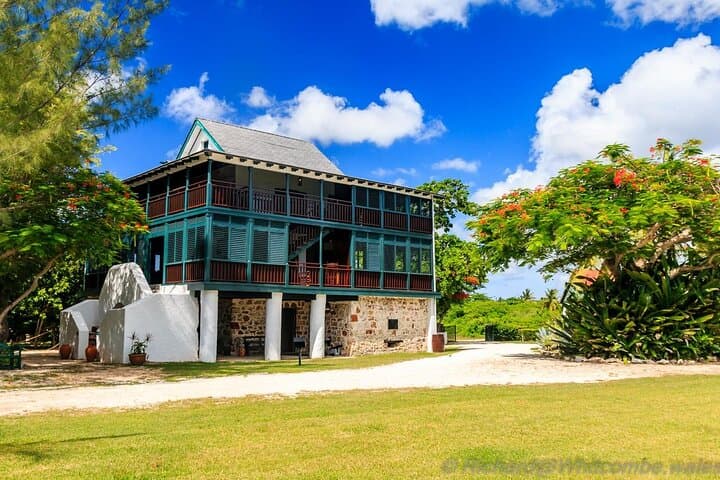


A short walk from the coast, the Great House at Pedro St. James sits on a wind-swept promontory that throws open ocean views and a steady trade-wind breath that seems to keep the past in motion. Visitors arrive to a multi-sensory welcome: a 3D film that drops you into early Cayman life, then a guided circuit through thick stone walls, hand-hewn stairs and galleries that hold objects with clean, honest stories.
A short walk from the coast, the Great House at Pedro St. James sits on a wind-swept promontory that throws open ocean views and a steady trade-wind breath that seems to keep the past in motion. Visitors arrive to a multi-sensory welcome: a 3D film that drops you into early Cayman life, then a guided circuit through thick stone walls, hand-hewn stairs and galleries that hold objects with clean, honest stories.
Built in the late 18th century and altered through its life as a plantation, courthouse and eventual restored Great House, Pedro St. James carries layers of social history. It’s locally famed as the “birthplace of democracy” after the 1831 decision to form the islands’ first elected assembly; in 1835 the site saw the public reading that marked the end of slavery across the British Empire. Geologically, the structure sits on Cayman limestone; the grounds are low-lying, with coral-derived soils and hardy coastal vegetation that lean toward the sea and resist the salt.
A visit balances cultural context with simple logistics: tours run hourly from morning into late afternoon, last about 90 minutes, and include the on-site exhibitions and stamp collection. Expect short walks across seven landscaped acres, informative placards, and a chance to stand where island politics turned. Practical tips — sun protection, comfortable footwear and a refillable water bottle — will keep the day pleasant. Public buses serve the site, and there’s a café and gift shop for a slow finish. For travelers who want history with a breeze and clear coastal sightlines, Pedro St. James delivers a compact, well-presented slice of Cayman life.