THE ADVENTURE COLLECTIVE® · Independent discovery and booking for outdoor travel

A compact coastal hike on Rio’s west side, the Pedra do Telégrafo Trail combines Atlantic Forest paths, rocky scrambles and a famous optical-illusion rock. Early starts reward hikers with wide ocean views and fewer crowds.
A compact coastal hike on Rio’s west side, the Pedra do Telégrafo Trail combines Atlantic Forest paths, rocky scrambles and a famous optical-illusion rock. Early starts reward hikers with wide ocean views and fewer crowds.
Before sunrise, the granite slab of Pedra do Telégrafo looms above the western rim of Rio’s urban coastline, a weathered ledge that frames the ocean and a string of beaches like a natural amphitheater. Hikers move in single file along a narrow spine of trail, the Atlantic Forest breathing humidity and birdcalls into the air as the city below wakes.
Verified experiences and guided adventures in the surrounding area.
Operated by FORTALEZA DREAM TOUR · Rio de Janeiro, Rio de Janeiro
Before sunrise, the granite slab of Pedra do Telégrafo looms above the western rim of Rio’s urban coastline, a weathered ledge that frames the ocean and a string of beaches like a natural amphitheater. Hikers move in single file along a narrow spine of trail, the Atlantic Forest breathing humidity and birdcalls into the air as the city below wakes.
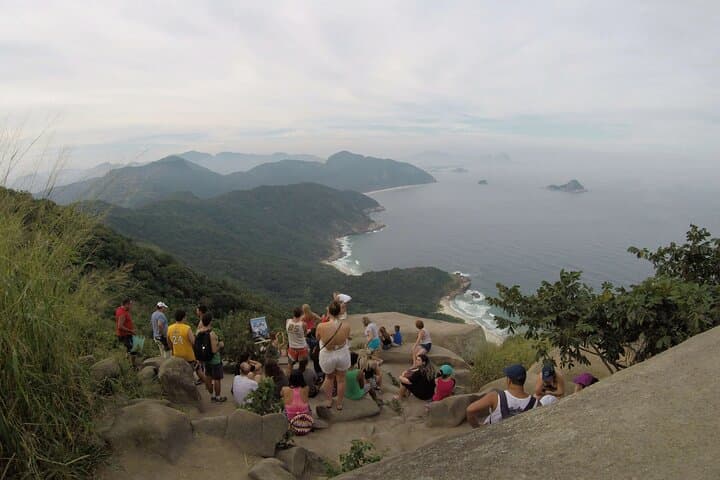
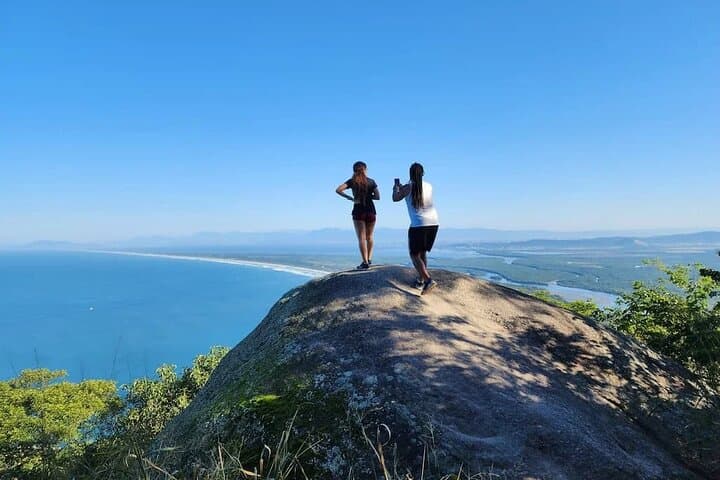
The route follows old service paths that climb through secondary Atlantic Forest—an ecosystem that once blanketed Brazil’s coast. The rock itself is a hard, exfoliating granite outcrop shaped by coastal erosion and freeze-thaw cycles; its name refers to an old telegraph post in the area. From the summit you’ll scan Perigoso, Meio and Grumari beaches, take in Pontal do Recreio’s curve and, if the light is right, spot offshore islets parading on the horizon.
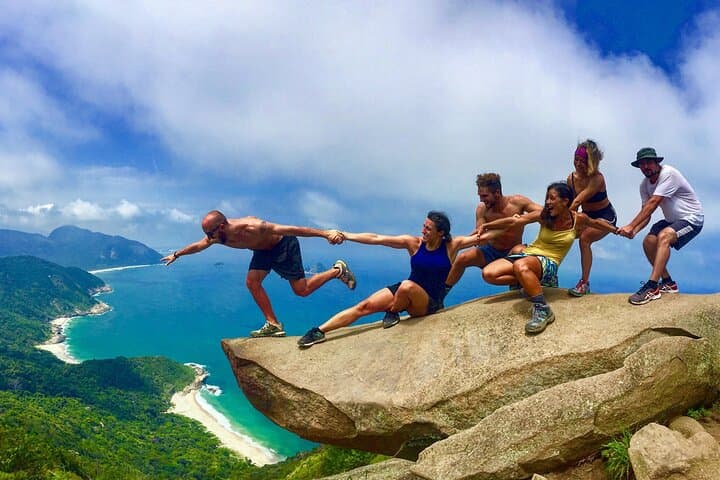
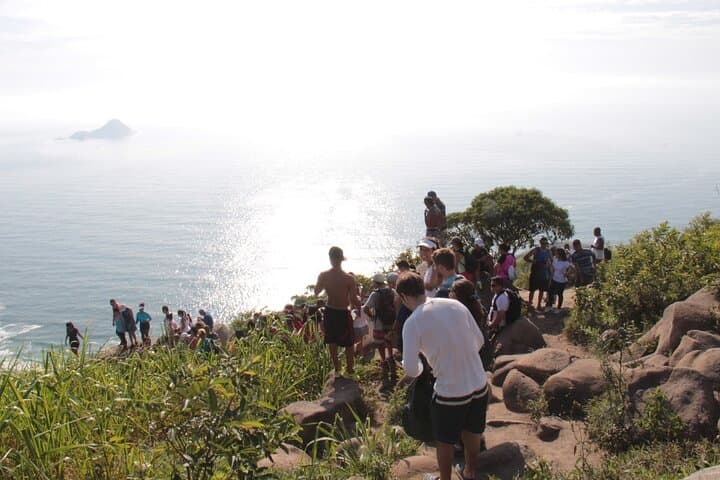
Practical guidance is straightforward: the advertised route is about 3.5 km round-trip with moderate footing and roughly 150–250 m of elevation gain depending on the approach. Expect sections of packed dirt, exposed roots and short, non-technical rock scrambles. The highlight is the illusion rock that creates the “hanging” photo—stay cautious near cliff edges and follow guide instructions. Start early (many operations begin pickups around 6:00 am) to beat crowds and heat; mid-morning brings lines for photos and more traffic on access roads.
Local culture blends beach life and conservation concern—vendors and small kiosks serve simple fare near trailheads, while guides emphasize Leave No Trace practices. Bring water, sun protection, sturdy shoes and patience: the payoff is a raw coastal panorama and that unforgettable, gravity-defying photograph.
moderate.
2–4 hours.
Suitable for people with a basic fitness level who can manage a steady uphill and short rock scrambles.
The advertised route is about 3.5 km round-trip with moderate footing and roughly 150–250 m of elevation gain—most people complete the hike in 1.5–2.5 hours depending on stops.
The illusion is created by a photoshoot spot near an exposed edge; local guides regulate access and you should follow instructions, avoid risky positions and never attempt unsupervised stunts.
Independent hikers frequent the trail, but organized tours simplify transport, timing and access—especially useful to avoid crowds and ensure safe photo procedures.
Basic kiosks and rest stops may exist near the access road, but rely on carrying water and snacks; public restrooms are not guaranteed at the summit.
Part of the coastal Atlantic Forest region, the outcrop was named for an old telegraph post in the area and sits on granite shaped by coastal erosion over millennia.
The surrounding Atlantic Forest is a threatened ecosystem—stay on trails, pack out waste and avoid feeding wildlife to limit human impact.
FORTALEZA DREAM TOUR operates guided outdoor trips and adventures with an emphasis on safety, stewardship, and memorable experiences.
Before sunrise, the granite slab of Pedra do Telégrafo looms above the western rim of Rio’s urban coastline, a weathered ledge that frames the ocean and a string of beaches like a natural amphitheater. Hikers move in single file along a narrow spine of trail, the Atlantic Forest breathing humidity and birdcalls into the air as the city below wakes.
Before sunrise, the granite slab of Pedra do Telégrafo looms above the western rim of Rio’s urban coastline, a weathered ledge that frames the ocean and a string of beaches like a natural amphitheater. Hikers move in single file along a narrow spine of trail, the Atlantic Forest breathing humidity and birdcalls into the air as the city below wakes.
The route follows old service paths that climb through secondary Atlantic Forest—an ecosystem that once blanketed Brazil’s coast. The rock itself is a hard, exfoliating granite outcrop shaped by coastal erosion and freeze-thaw cycles; its name refers to an old telegraph post in the area. From the summit you’ll scan Perigoso, Meio and Grumari beaches, take in Pontal do Recreio’s curve and, if the light is right, spot offshore islets parading on the horizon.
Practical guidance is straightforward: the advertised route is about 3.5 km round-trip with moderate footing and roughly 150–250 m of elevation gain depending on the approach. Expect sections of packed dirt, exposed roots and short, non-technical rock scrambles. The highlight is the illusion rock that creates the “hanging” photo—stay cautious near cliff edges and follow guide instructions. Start early (many operations begin pickups around 6:00 am) to beat crowds and heat; mid-morning brings lines for photos and more traffic on access roads.
Local culture blends beach life and conservation concern—vendors and small kiosks serve simple fare near trailheads, while guides emphasize Leave No Trace practices. Bring water, sun protection, sturdy shoes and patience: the payoff is a raw coastal panorama and that unforgettable, gravity-defying photograph.