THE ADVENTURE COLLECTIVE® · Independent discovery and booking for outdoor travel

A steep, hands-on trek to one of Rio’s most dramatic summits: Pedra da Gávea offers raw granite exposure and sweeping views over the South and West zones. This guided route mixes strenuous jungle switchbacks with short rope-assisted sections — perfect for fit hikers seeking big urban panoramas.
A steep, hands-on trek to one of Rio’s most dramatic summits: Pedra da Gávea offers raw granite exposure and sweeping views over the South and West zones. This guided route mixes strenuous jungle switchbacks with short rope-assisted sections — perfect for fit hikers seeking big urban panoramas.
You meet your guide before sunrise in Barra da Tijuca, the city still soft and the Atlantic glinting beyond the trees. The trail immediately tucks into the humid green of Tijuca Forest, climbing through roots and granite steps until the canopy opens onto sheer rock faces. The final pitches require hands, a short fixed-rope section and steady footing — the city below shrinking into beaches, Sugarloaf and Christ the Redeemer as you rise.
Verified experiences and guided adventures in the surrounding area.
Operated by Rio Imperio Turismo · Rio de Janeiro, Rio de Janeiro
You meet your guide before sunrise in Barra da Tijuca, the city still soft and the Atlantic glinting beyond the trees. The trail immediately tucks into the humid green of Tijuca Forest, climbing through roots and granite steps until the canopy opens onto sheer rock faces. The final pitches require hands, a short fixed-rope section and steady footing — the city below shrinking into beaches, Sugarloaf and Christ the Redeemer as you rise.
Geology here is blunt and honest: Pedra da Gávea is a coastal granite-gneiss monolith rising roughly 850 meters above sea level, part of the Serra do Mar that frames Rio’s shore. Its name—"rock of the hawk"—and the disputed carved-face stories give the peak a cultural edge; locals treat the summit as both playground and lookout. Tijuca itself is reclaimed forest, replanted in the 19th century to save the water supply and reshape the city’s ecology.
On the route you'll pass steep, rooty trails, exposed slabs and a few short technical sections that feel like low-angle rock climbing. Expect three to five hours round-trip depending on pace and group size.
Practical guidance: start early to avoid midday heat and sudden tropical showers, carry 2–3 liters of water, wear grippy boots and a light harness/helmet if you have one — guides supply climbing gear. The route is physically demanding and exposed; it’s not recommended for those with serious heart or back conditions or for pregnant travelers. Hire an experienced local guide for navigation, safety and to time photo stops for the best light.
challenging.
4–6 hours.
Requires good cardiovascular fitness, leg strength and comfort with sustained scrambling and exposure
Physically demanding with sustained climbing and exposed scrambling; expect 4–6 hours and steep sections that require good fitness and surefootedness.
Basic scrambling experience helps; guides provide helmets, harnesses and fixed-line instruction for the more exposed pitches.
Most groups meet in Barra da Tijuca or São Conrado; public transport and taxis reach nearby trailheads, but confirm exact meeting points with your operator.
No — operators often cancel in heavy rain or thunderstorms because wet granite and exposure increase objective risk; reschedule if storms are forecast.
The peak sits inside Tijuca National Park, a reforested segment of Atlantic Forest restored in the 19th century to protect water supplies and urban lands.
Tijuca is a protected national park; stick to trails, avoid disturbing wildlife and pack out all trash to limit erosion and habitat damage.
Rio Imperio Turismo operates guided outdoor trips and adventures with an emphasis on safety, stewardship, and memorable experiences.


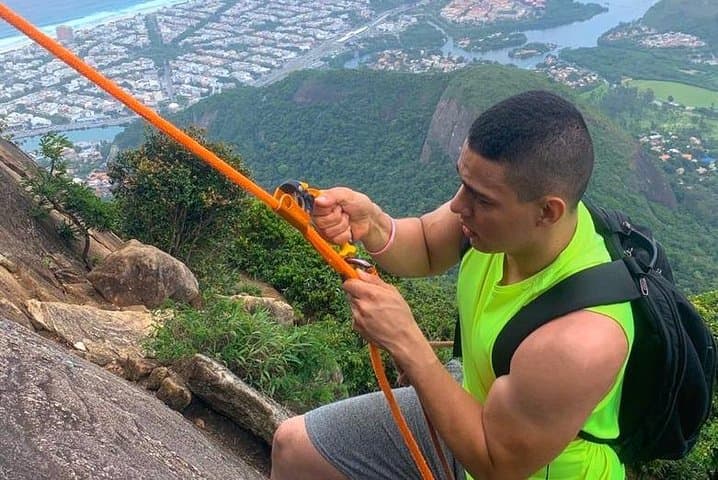

You meet your guide before sunrise in Barra da Tijuca, the city still soft and the Atlantic glinting beyond the trees. The trail immediately tucks into the humid green of Tijuca Forest, climbing through roots and granite steps until the canopy opens onto sheer rock faces. The final pitches require hands, a short fixed-rope section and steady footing — the city below shrinking into beaches, Sugarloaf and Christ the Redeemer as you rise.
You meet your guide before sunrise in Barra da Tijuca, the city still soft and the Atlantic glinting beyond the trees. The trail immediately tucks into the humid green of Tijuca Forest, climbing through roots and granite steps until the canopy opens onto sheer rock faces. The final pitches require hands, a short fixed-rope section and steady footing — the city below shrinking into beaches, Sugarloaf and Christ the Redeemer as you rise.
Geology here is blunt and honest: Pedra da Gávea is a coastal granite-gneiss monolith rising roughly 850 meters above sea level, part of the Serra do Mar that frames Rio’s shore. Its name—"rock of the hawk"—and the disputed carved-face stories give the peak a cultural edge; locals treat the summit as both playground and lookout. Tijuca itself is reclaimed forest, replanted in the 19th century to save the water supply and reshape the city’s ecology.
On the route you'll pass steep, rooty trails, exposed slabs and a few short technical sections that feel like low-angle rock climbing. Expect three to five hours round-trip depending on pace and group size.
Practical guidance: start early to avoid midday heat and sudden tropical showers, carry 2–3 liters of water, wear grippy boots and a light harness/helmet if you have one — guides supply climbing gear. The route is physically demanding and exposed; it’s not recommended for those with serious heart or back conditions or for pregnant travelers. Hire an experienced local guide for navigation, safety and to time photo stops for the best light.