THE ADVENTURE COLLECTIVE® · Independent discovery and booking for outdoor travel

Pedra da Gávea is Rio’s dramatic granite monolith — a steep, technical hike through Tijuca Forest that finishes with sweeping ocean views. This guide covers what to expect on the ropes-and-scramble route, plus practical tips for timing, gear, and safety.
Pedra da Gávea is Rio’s dramatic granite monolith — a steep, technical hike through Tijuca Forest that finishes with sweeping ocean views. This guide covers what to expect on the ropes-and-scramble route, plus practical tips for timing, gear, and safety.
Sun and Atlantic wind meet on the face of Pedra da Gávea, a granite massif that dominates São Conrado and the western edge of Rio de Janeiro. You start in the humid folds of Tijuca Forest, walking under tall fig trees and ferns, then the trail narrows into steep rock steps and exposed slabs that demand focused footwork and an experienced guide.
Verified experiences and guided adventures in the surrounding area.
Operated by NMountain · Rio de Janeiro, Rio de Janeiro
Sun and Atlantic wind meet on the face of Pedra da Gávea, a granite massif that dominates São Conrado and the western edge of Rio de Janeiro. You start in the humid folds of Tijuca Forest, walking under tall fig trees and ferns, then the trail narrows into steep rock steps and exposed slabs that demand focused footwork and an experienced guide.
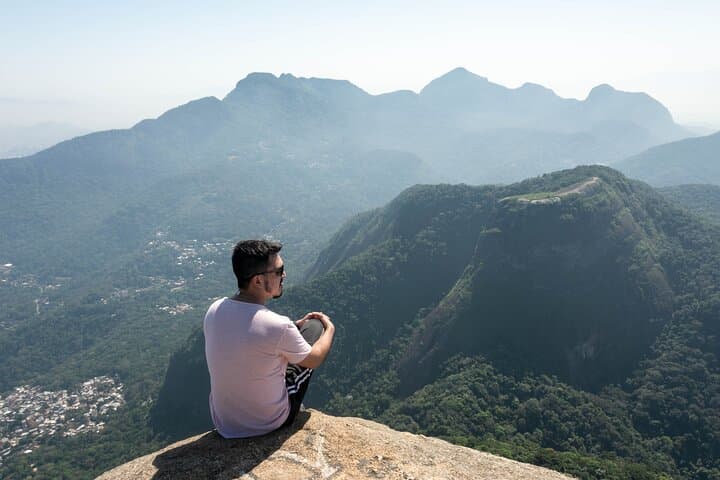
Geologically the peak is a chunk of Precambrian granite pushing out of the city — weathered faces, vertical walls and a broad, flat summit at roughly 850 meters that makes the climb feel like you’re scaling an island in the sky. Culturally the rock carries local lore: an enigmatic “face” and disputed inscriptions have fed myths for generations and the ridge is part of the living urban-forest heritage of Rio.
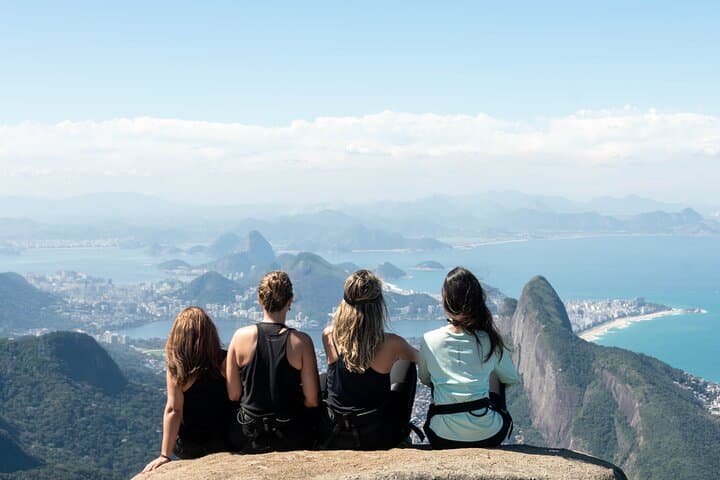
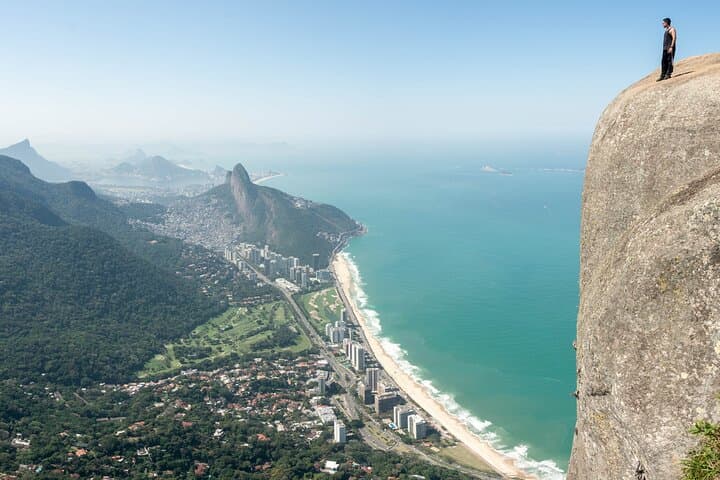
Expect sustained climbs, short rope-assisted sections, and a final scramble with secured anchors and abseil gear provided by the operator for the trickiest pitches. Photography stops are frequent; views open onto Pedra Bonita, the ocean, and the curve of São Conrado beach where paragliders drift like punctuation marks.
Practical tips: bring 2–3 liters of water, steady trail shoes with sticky rubber, sun protection and layered clothing for rapid microclimate shifts. Start early to avoid midday heat and larger groups. The route takes roughly 3.5–6.5 hours depending on group pace and weather; fitness and comfort with exposure are essential. Respect marked lines in Tijuca National Park, pack out waste, and follow your guide’s directions on rappels — the technical sections are short but absolute about safety.
challenging.
3.5–6.5 hours.
High — regular hikers with good cardiovascular fitness, leg strength, and comfort with exposure.
You should have strong cardio and leg endurance; the route includes sustained climbs, scrambling, and short rope-assisted sections — not suitable for beginners without prior hiking experience.
No advanced climbing certification is required, but participants must be comfortable with basic scrambling and short abseils; guides provide safety gear and instruction.
Early morning is best for cooler temperatures, clearer views and to avoid afternoon clouds that often roll in over the summit.
No special permit is required for the trail, but guided ascent in some sections is recommended and operators provide required safety equipment; follow Tijuca National Park rules.
The rock has long been a landmark for Cariocas; local legends about a carved face and mysterious inscriptions have made it part of Rio’s cultural folklore.
Pedra da Gávea sits within protected Tijuca Forest — stay on trail, carry out all trash, and avoid disturbing flora and wildlife to reduce erosion and habitat impact.
NMountain operates guided outdoor trips and adventures with an emphasis on safety, stewardship, and memorable experiences.
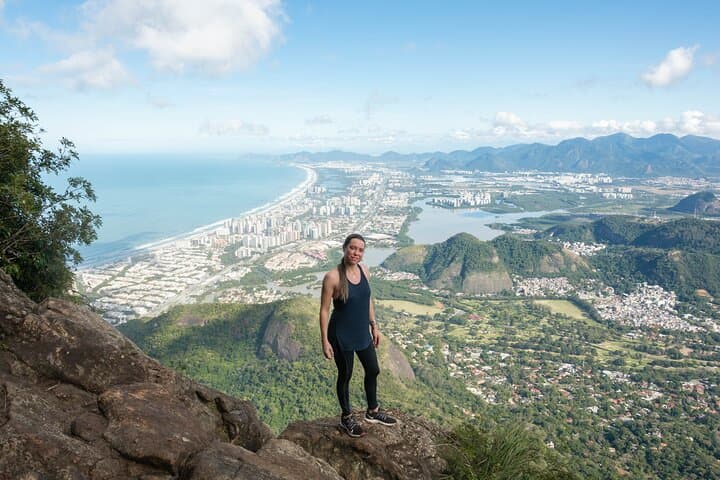
Sun and Atlantic wind meet on the face of Pedra da Gávea, a granite massif that dominates São Conrado and the western edge of Rio de Janeiro. You start in the humid folds of Tijuca Forest, walking under tall fig trees and ferns, then the trail narrows into steep rock steps and exposed slabs that demand focused footwork and an experienced guide.
Sun and Atlantic wind meet on the face of Pedra da Gávea, a granite massif that dominates São Conrado and the western edge of Rio de Janeiro. You start in the humid folds of Tijuca Forest, walking under tall fig trees and ferns, then the trail narrows into steep rock steps and exposed slabs that demand focused footwork and an experienced guide.
Geologically the peak is a chunk of Precambrian granite pushing out of the city — weathered faces, vertical walls and a broad, flat summit at roughly 850 meters that makes the climb feel like you’re scaling an island in the sky. Culturally the rock carries local lore: an enigmatic “face” and disputed inscriptions have fed myths for generations and the ridge is part of the living urban-forest heritage of Rio.
Expect sustained climbs, short rope-assisted sections, and a final scramble with secured anchors and abseil gear provided by the operator for the trickiest pitches. Photography stops are frequent; views open onto Pedra Bonita, the ocean, and the curve of São Conrado beach where paragliders drift like punctuation marks.
Practical tips: bring 2–3 liters of water, steady trail shoes with sticky rubber, sun protection and layered clothing for rapid microclimate shifts. Start early to avoid midday heat and larger groups. The route takes roughly 3.5–6.5 hours depending on group pace and weather; fitness and comfort with exposure are essential. Respect marked lines in Tijuca National Park, pack out waste, and follow your guide’s directions on rappels — the technical sections are short but absolute about safety.