THE ADVENTURE COLLECTIVE® · Independent discovery and booking for outdoor travel

A demanding 6‑hour guided hike in Tijuca National Park that climbs exposed granite, uses rope-assisted sections, and finishes with sweeping views over Rio and the Atlantic. Ideal for experienced hikers comfortable with scrambling and exposure.
A demanding 6‑hour guided hike in Tijuca National Park that climbs exposed granite, uses rope-assisted sections, and finishes with sweeping views over Rio and the Atlantic. Ideal for experienced hikers comfortable with scrambling and exposure.
You start on Estrada do Sorimã, the pavement giving way to a narrow track that quickly tilts into steep roots and carved stone. The forest presses close — leaves brushing packs, birds punctuating the climb — and the city below recedes into tiles and coastline. Pedra da Gávea’s summit arrives like a reveal: a flat slab of granite with uncompromising views of the Atlantic, the bay, and the jagged ridges of Tijuca National Park.
Verified experiences and guided adventures in the surrounding area.
Operated by Rio Radical · Rio de Janeiro, Rio de Janeiro
You start on Estrada do Sorimã, the pavement giving way to a narrow track that quickly tilts into steep roots and carved stone. The forest presses close — leaves brushing packs, birds punctuating the climb — and the city below recedes into tiles and coastline. Pedra da Gávea’s summit arrives like a reveal: a flat slab of granite with uncompromising views of the Atlantic, the bay, and the jagged ridges of Tijuca National Park.
Geologically the monolith is an ancient gneiss-granite outcrop sculpted by millions of years of erosion; locally it's wrapped in lore, from indigenous stories to modern myths about a carved face in the rock. The route threads through secondary Atlantic Forest, past the Carrasqueira section where ropes and fixed anchors assist steep, technical steps. Guides often stop at the “wall” — a vertical face that simulates an abyss and produces standout photos.
This is a demanding, exposure-prone day hike rather than a casual walk. Expect sustained climbs, short technical scrambles, and narrow ledges. A licensed guide, safety gear, and basic rope systems are commonly used on guided departures.
Practical guidance: start early to avoid heat and afternoon showers, carry 2–3 liters of water, and use stable boots with good grip. Bring light gloves for rope sections and a lightweight wind layer for the summit. If you suffer from vertigo or recent back issues, opt for a lower-elevation walk—this route requires steady footing and confident scrambling. When done right, the summit rewards with expansive panoramas that make every steep step feel earned.
challenging.
6 hours.
Suited to hikers with strong cardiovascular fitness and experience with steep, sustained elevation and short technical scrambles.
No formal climbing certification is required, but you should be comfortable with exposure, scrambling, and short rope‑assisted sections; guided trips include instruction and safety equipment.
Begin at first light when possible — typically before 8:00 AM — to avoid heat and afternoon storms and to secure better parking at the meeting point.
Guides are strongly recommended and commonly provided; they manage rope gear, route finding, and the most complex stretches for safety and photo access.
There are no facilities on the route; plan accordingly and use facilities at the park entrance before departure.
Pedra da Gávea is an ancient gneiss-granite mass within Tijuca National Park, long visible to coastal peoples and woven into local legends about its face‑like profile.
Located inside Tijuca National Park, the area is part of a large 19th‑century reforestation effort; visitors are urged to stay on trails and pack out waste to protect fragile Atlantic Forest patches.
Rio Radical operates guided outdoor trips and adventures with an emphasis on safety, stewardship, and memorable experiences.
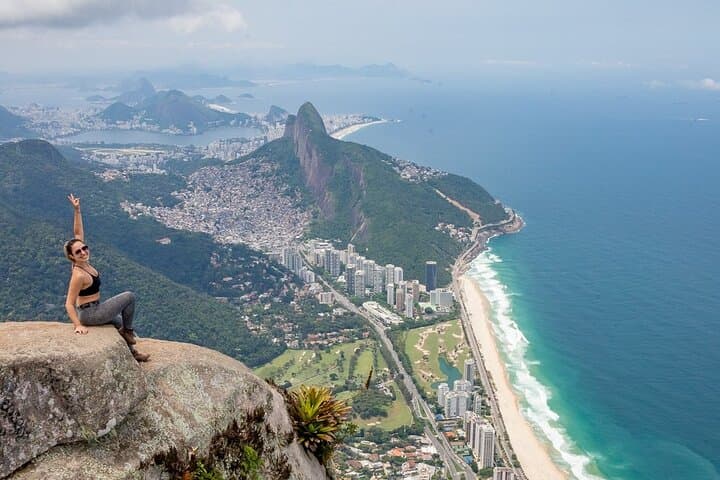


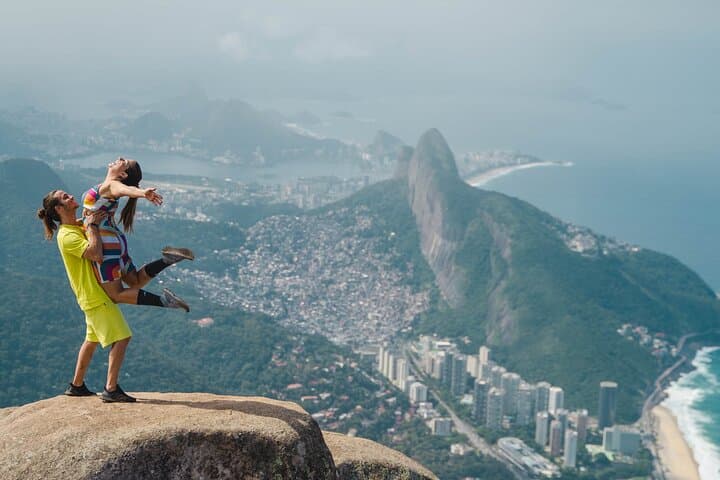
You start on Estrada do Sorimã, the pavement giving way to a narrow track that quickly tilts into steep roots and carved stone. The forest presses close — leaves brushing packs, birds punctuating the climb — and the city below recedes into tiles and coastline. Pedra da Gávea’s summit arrives like a reveal: a flat slab of granite with uncompromising views of the Atlantic, the bay, and the jagged ridges of Tijuca National Park.
You start on Estrada do Sorimã, the pavement giving way to a narrow track that quickly tilts into steep roots and carved stone. The forest presses close — leaves brushing packs, birds punctuating the climb — and the city below recedes into tiles and coastline. Pedra da Gávea’s summit arrives like a reveal: a flat slab of granite with uncompromising views of the Atlantic, the bay, and the jagged ridges of Tijuca National Park.
Geologically the monolith is an ancient gneiss-granite outcrop sculpted by millions of years of erosion; locally it's wrapped in lore, from indigenous stories to modern myths about a carved face in the rock. The route threads through secondary Atlantic Forest, past the Carrasqueira section where ropes and fixed anchors assist steep, technical steps. Guides often stop at the “wall” — a vertical face that simulates an abyss and produces standout photos.
This is a demanding, exposure-prone day hike rather than a casual walk. Expect sustained climbs, short technical scrambles, and narrow ledges. A licensed guide, safety gear, and basic rope systems are commonly used on guided departures.
Practical guidance: start early to avoid heat and afternoon showers, carry 2–3 liters of water, and use stable boots with good grip. Bring light gloves for rope sections and a lightweight wind layer for the summit. If you suffer from vertigo or recent back issues, opt for a lower-elevation walk—this route requires steady footing and confident scrambling. When done right, the summit rewards with expansive panoramas that make every steep step feel earned.