THE ADVENTURE COLLECTIVE® · Independent discovery and booking for outdoor travel

A short, steep ascent through Tijuca National Park leads to the dramatic granite summit of Pedra da Gávea, where ocean and city views meet a guide-assisted scramble. Expect dense forest, a fixed-rope climb, and panoramic vistas of Rio’s beaches.
A short, steep ascent through Tijuca National Park leads to the dramatic granite summit of Pedra da Gávea, where ocean and city views meet a guide-assisted scramble. Expect dense forest, a fixed-rope climb, and panoramic vistas of Rio’s beaches.
You push under a green ceiling of Atlantic forest and the air tightens with humidity; ahead, a hulking granite shoulder rises from the canopy like a ship’s prow daring you to climb. Pedra da Gávea sits above São Conrado and the western beaches of Rio, a coastal monolith that frames sweeping Pacific-alike views and, on busy days, the flash of base jumpers carving the sky.
Verified experiences and guided adventures in the surrounding area.
Operated by Rio Eco Trip · Rio de Janeiro, Rio de Janeiro
You push under a green ceiling of Atlantic forest and the air tightens with humidity; ahead, a hulking granite shoulder rises from the canopy like a ship’s prow daring you to climb. Pedra da Gávea sits above São Conrado and the western beaches of Rio, a coastal monolith that frames sweeping Pacific-alike views and, on busy days, the flash of base jumpers carving the sky.
Geologically it’s a massive granite and gneiss outcrop—one of the largest coastal rock blocks in the world—shaped by millions of years of uplift and erosion. Culturally, the climb threads Tijuca National Park, a restored urban forest created in the 19th century to recover Rio’s watershed; the trail crosses paths once used by farmers and now patrolled by park rangers. The route gives a compact cross-section of Rio’s geography: dense understory, exposed rock slabs, and a final short fixed-rope scramble where guides fit you with harnesses.
Practically, expect steep switchbacks, uneven roots, and one assisted climb that requires basic upper-body effort but no technical lead climbing—guides supply helmets, harnesses, and belays. Start early to avoid heat and afternoon storms; bring 2–3 liters of water, sturdy trail shoes with grip, and sun protection. Rain turns the granite slick and the descent technical; if weather looks unstable the park or guides may cancel. At the top, the city unfurls—beaches, mountains, and a horizon that rewards the hard steps. This is a short, intense climb that asks for fitness, focus, and respect for the forest that guards it.
challenging.
3–6 hours.
Good aerobic fitness and leg strength; comfortable with steep, sustained climbs and short aided scrambles.
Most groups spend 3–6 hours total including approach, ascent, time on the summit, and descent—actual moving time on the trail is often 2–3 hours.
No technical climbing experience is required; the final section is a short, guided scramble using fixed ropes with safety gear provided by the operator.
Avoid going in steady rain or during thunderstorms—wet granite is dangerously slippery and guides commonly cancel if conditions are poor.
The easiest option is a short Uber or taxi to the trailhead near the neighborhood of São Conrado or Gávea; public transit options are available but slower.
Tijuca was replanted in the 19th century to recover local watersheds; the trail follows old access routes that linked farms and lookout points.
Tijuca is a protected urban national park—stay on marked trails, pack out waste, and avoid disturbing nesting birds and native understory species.
Rio Eco Trip operates guided outdoor trips and adventures with an emphasis on safety, stewardship, and memorable experiences.
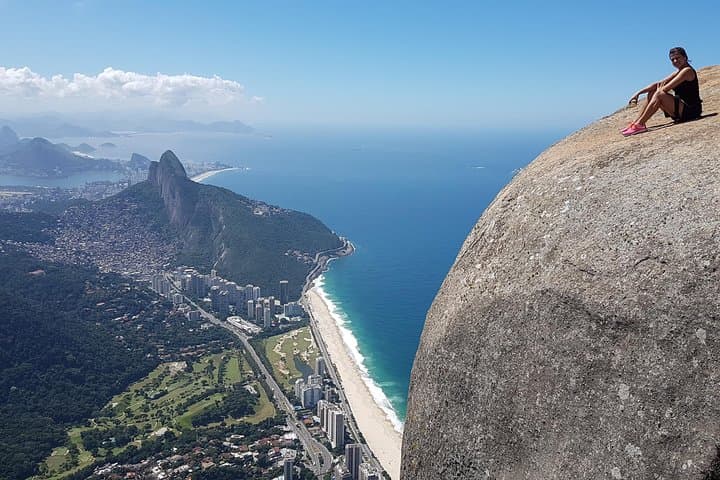
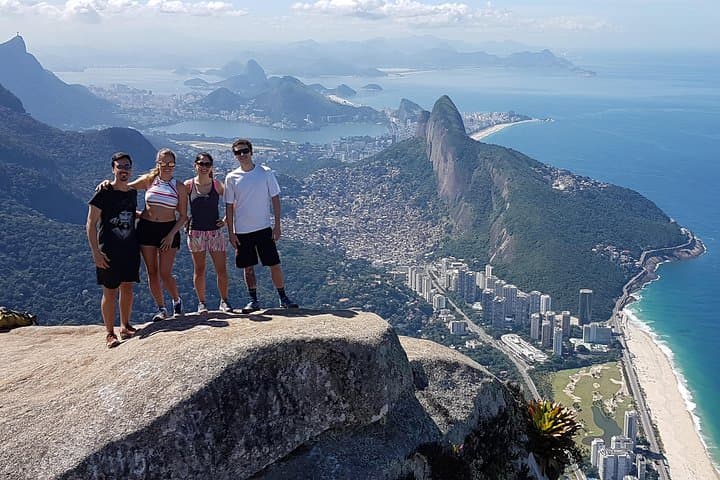
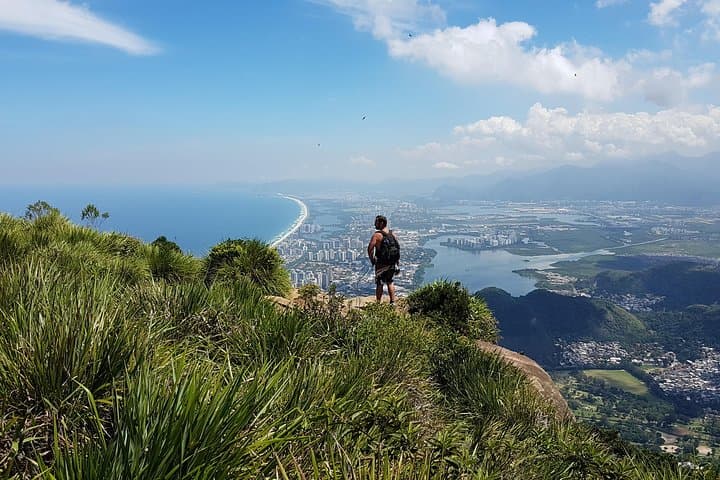
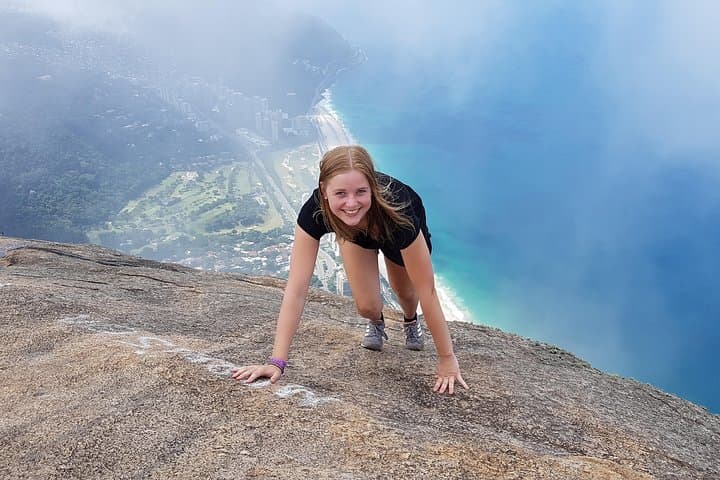
You push under a green ceiling of Atlantic forest and the air tightens with humidity; ahead, a hulking granite shoulder rises from the canopy like a ship’s prow daring you to climb. Pedra da Gávea sits above São Conrado and the western beaches of Rio, a coastal monolith that frames sweeping Pacific-alike views and, on busy days, the flash of base jumpers carving the sky.
You push under a green ceiling of Atlantic forest and the air tightens with humidity; ahead, a hulking granite shoulder rises from the canopy like a ship’s prow daring you to climb. Pedra da Gávea sits above São Conrado and the western beaches of Rio, a coastal monolith that frames sweeping Pacific-alike views and, on busy days, the flash of base jumpers carving the sky.
Geologically it’s a massive granite and gneiss outcrop—one of the largest coastal rock blocks in the world—shaped by millions of years of uplift and erosion. Culturally, the climb threads Tijuca National Park, a restored urban forest created in the 19th century to recover Rio’s watershed; the trail crosses paths once used by farmers and now patrolled by park rangers. The route gives a compact cross-section of Rio’s geography: dense understory, exposed rock slabs, and a final short fixed-rope scramble where guides fit you with harnesses.
Practically, expect steep switchbacks, uneven roots, and one assisted climb that requires basic upper-body effort but no technical lead climbing—guides supply helmets, harnesses, and belays. Start early to avoid heat and afternoon storms; bring 2–3 liters of water, sturdy trail shoes with grip, and sun protection. Rain turns the granite slick and the descent technical; if weather looks unstable the park or guides may cancel. At the top, the city unfurls—beaches, mountains, and a horizon that rewards the hard steps. This is a short, intense climb that asks for fitness, focus, and respect for the forest that guards it.