THE ADVENTURE COLLECTIVE® · Independent discovery and booking for outdoor travel

A demanding hike to the summit of Pedra da Gávea delivers 360° views of Rio’s beaches, lagoons and mountains. This guided route includes rope-assisted scrambling and rewards fit hikers with some of the city’s most dramatic panoramas.
A demanding hike to the summit of Pedra da Gávea delivers 360° views of Rio’s beaches, lagoons and mountains. This guided route includes rope-assisted scrambling and rewards fit hikers with some of the city’s most dramatic panoramas.
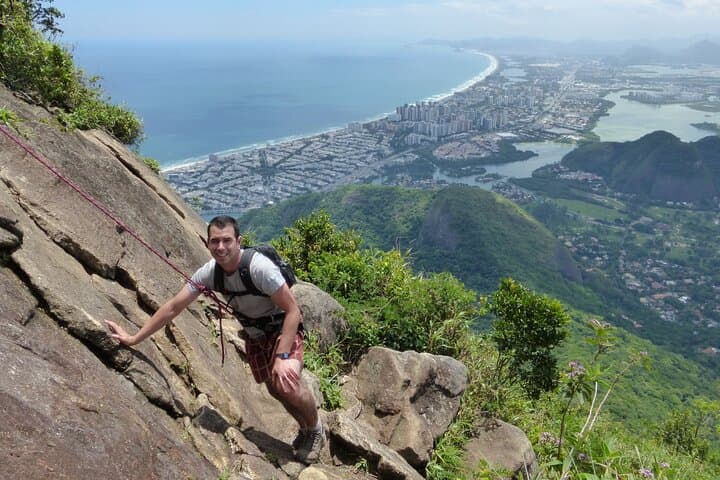
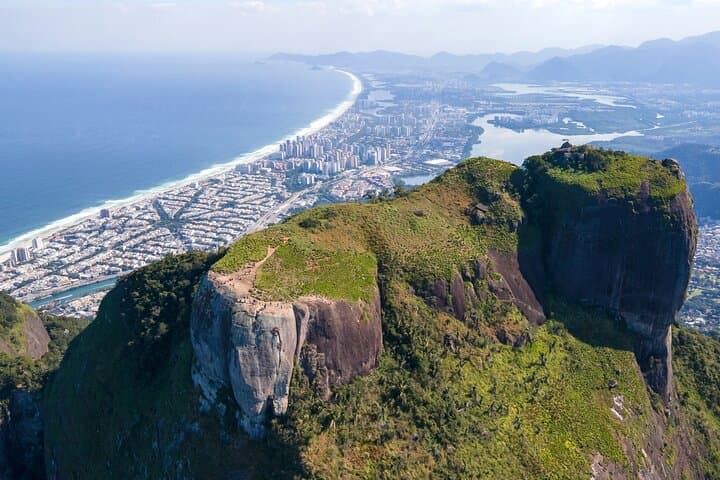
The trail forks into green and stone as the city shrinks below — surf, lagoon and distant Cristo look like models under the midday sun. Hikers begin in Barra da Tijuca and push through stands of Atlantic Forest, where vines tangle and the air smells damp and sharp. The route climbs toward Pedra da Gávea’s sheer flank, a coastal monolith that rises to 844 meters and dares climbers to keep moving.
Verified experiences and guided adventures in the surrounding area.
Operated by Rio Natural Ecotourism · Rio de Janeiro, Rio de Janeiro
The trail forks into green and stone as the city shrinks below — surf, lagoon and distant Cristo look like models under the midday sun. Hikers begin in Barra da Tijuca and push through stands of Atlantic Forest, where vines tangle and the air smells damp and sharp. The route climbs toward Pedra da Gávea’s sheer flank, a coastal monolith that rises to 844 meters and dares climbers to keep moving.
Geology here is blunt and ancient: a granitic mass shaped by wind and rain over millions of years, its face showing vertical joints and sculpted ledges. Culturally, Pedra da Gávea sits between Rio’s wealthy beaches and protected forest — a landmark for local climbers and a site of folklore that mixes indigenous stories with modern mystery. Wildlife is compact and bold: small mammals and canopy birds are common, and the forest’s humidity keeps the undergrowth green year-round.
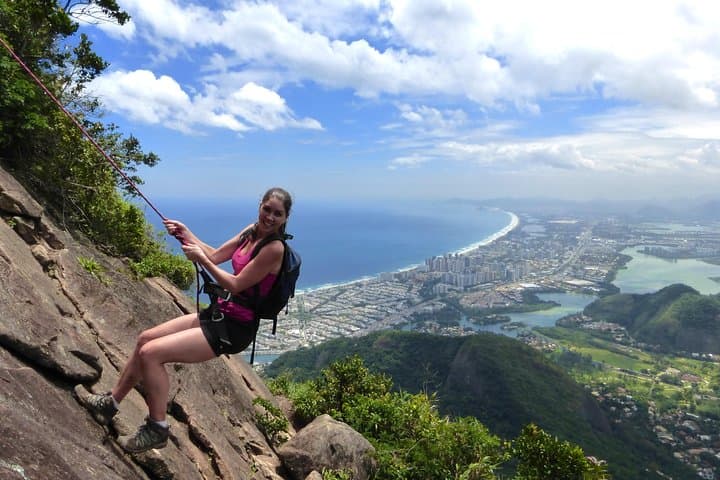
Practical guidance begins with pace: this is a challenging hike with steep scrambles and a rope-assisted section known as the Carrasqueira. Accredited guides and gear are standard for the exposed segments; expect 5–7 hours round-trip depending on group speed. Wear sturdy boots with good grip, carry 2–3 liters of water, and start early to avoid heat and afternoon storms. Bring layered clothing — conditions change quickly from shaded trail to wind-swept summit.
Leave no trace: stick to the route, pack out trash, and respect local rules to keep trails open. With preparation, Pedra da Gávea rewards effort with expansive city-and-sea panoramas that feel earned rather than given.
challenging.
5–7 hours.
Strong cardiovascular fitness and leg strength recommended; comfortable with exposed scrambling and sustained climbs.
Basic scrambling experience helps, but accredited guides provide ropes and instruction for exposed sections; prior climbing experience is beneficial but not mandatory.
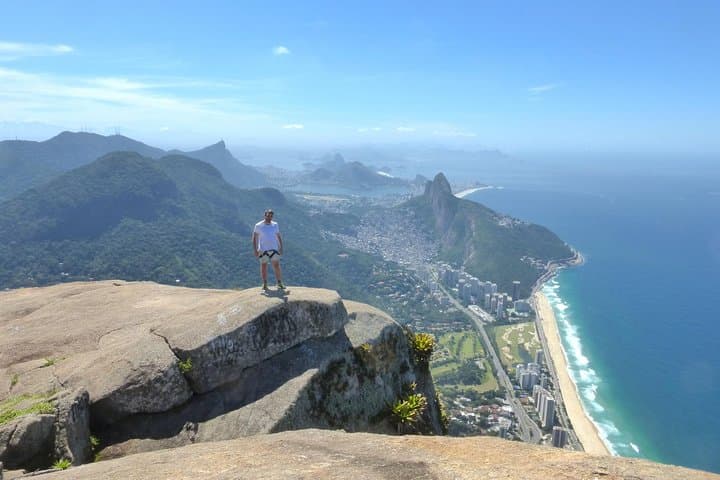
The summit is 844 meters above sea level with panoramic views of Rio’s beaches, Lagoa, Sugarloaf and Christ the Redeemer on clear days.
Solo hikers should be experienced and well-prepared; the route is commonly done with guides for safety on rope-assisted sections and navigation through dense forest.
Start early—before 7 AM—to avoid heat and afternoon storms and to ensure daylight for the descent.
Pedra da Gávea is a massive granitic monolith geologically distinct from surrounding ranges and has long featured in local folklore; the area has been part of Rio’s protected forest belts since early preservation efforts.
The trail passes through remnants of Atlantic Forest—stay on marked paths, avoid feeding wildlife, and pack out waste to minimize impact.
Rio Natural Ecotourism operates guided outdoor trips and adventures with an emphasis on safety, stewardship, and memorable experiences.
The trail forks into green and stone as the city shrinks below — surf, lagoon and distant Cristo look like models under the midday sun. Hikers begin in Barra da Tijuca and push through stands of Atlantic Forest, where vines tangle and the air smells damp and sharp. The route climbs toward Pedra da Gávea’s sheer flank, a coastal monolith that rises to 844 meters and dares climbers to keep moving.
The trail forks into green and stone as the city shrinks below — surf, lagoon and distant Cristo look like models under the midday sun. Hikers begin in Barra da Tijuca and push through stands of Atlantic Forest, where vines tangle and the air smells damp and sharp. The route climbs toward Pedra da Gávea’s sheer flank, a coastal monolith that rises to 844 meters and dares climbers to keep moving.
Geology here is blunt and ancient: a granitic mass shaped by wind and rain over millions of years, its face showing vertical joints and sculpted ledges. Culturally, Pedra da Gávea sits between Rio’s wealthy beaches and protected forest — a landmark for local climbers and a site of folklore that mixes indigenous stories with modern mystery. Wildlife is compact and bold: small mammals and canopy birds are common, and the forest’s humidity keeps the undergrowth green year-round.
Practical guidance begins with pace: this is a challenging hike with steep scrambles and a rope-assisted section known as the Carrasqueira. Accredited guides and gear are standard for the exposed segments; expect 5–7 hours round-trip depending on group speed. Wear sturdy boots with good grip, carry 2–3 liters of water, and start early to avoid heat and afternoon storms. Bring layered clothing — conditions change quickly from shaded trail to wind-swept summit.
Leave no trace: stick to the route, pack out trash, and respect local rules to keep trails open. With preparation, Pedra da Gávea rewards effort with expansive city-and-sea panoramas that feel earned rather than given.