THE ADVENTURE COLLECTIVE® · Independent discovery and booking for outdoor travel

Climb Pedra da Gávea for one of Rio’s most dramatic summit views—an 844 m granite monolith rising from the Atlantic Forest. This guided route combines steep trail, short assisted scrambling, and a guided descent for a full‑day adventure.
Climb Pedra da Gávea for one of Rio’s most dramatic summit views—an 844 m granite monolith rising from the Atlantic Forest. This guided route combines steep trail, short assisted scrambling, and a guided descent for a full‑day adventure.
A humid trail opens under Atlantic Forest canopy and the city shrinks below: vendors’ distant traffic, the glint of Guanabara Bay, and the vertical face of Pedra da Gávea drawing you upward.
Verified experiences and guided adventures in the surrounding area.
Operated by Nattrip - Tourism, Ecotourism and Adventure in Rio de Janeiro · Rio de Janeiro, Rio de Janeiro
A humid trail opens under Atlantic Forest canopy and the city shrinks below: vendors’ distant traffic, the glint of Guanabara Bay, and the vertical face of Pedra da Gávea drawing you upward.
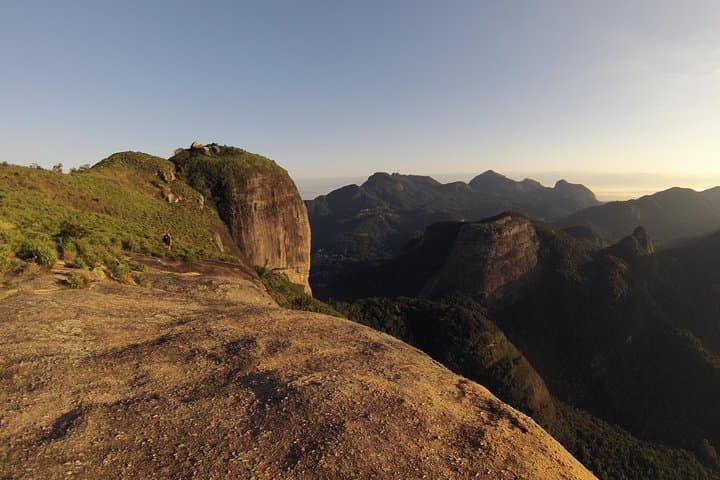
The route climbs roughly 2.5–3 hours to the 844‑meter summit, moving from packed dirt and rooty switchbacks into steeper granite slabs and a short, assisted climbing section known locally as Carrasqueira. Geologically, Pedra da Gávea is a massive inselberg of Precambrian gneiss and granite pushed above the coastal plain; culturally it’s one of Rio’s defining landmarks, visible from beaches and favela rooftops alike.
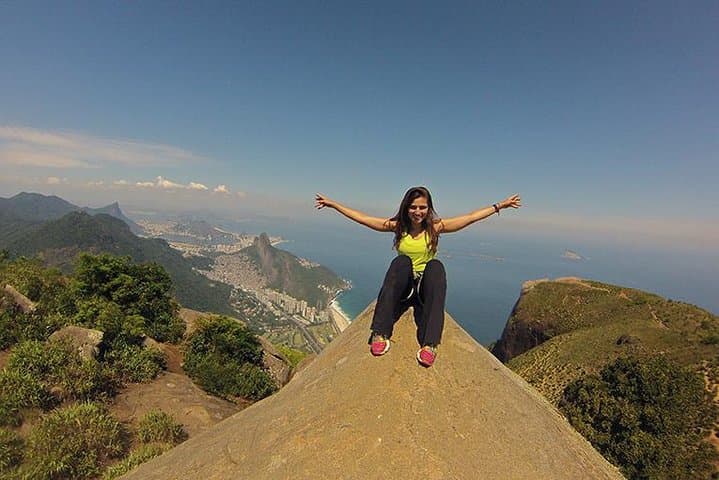
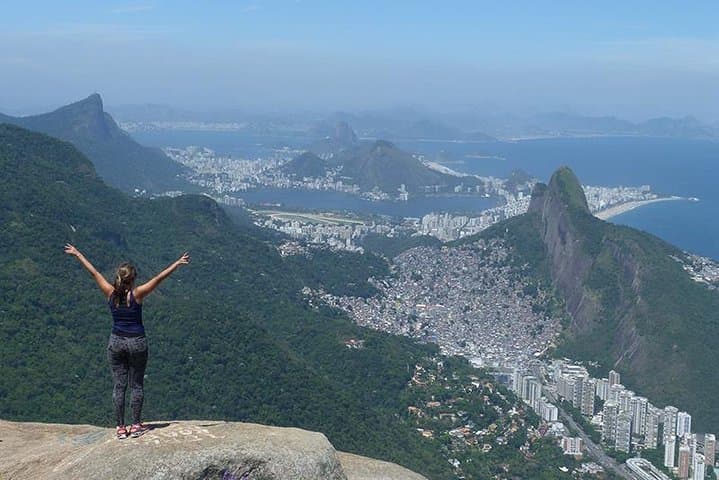
Hikers pass through recovered Tijuca Forest—one of the world’s largest urban reforestation projects—and may hear howler monkeys or spot marmosets between bromeliads. The summit opens into sweeping panoramas: Sugarloaf, Corcovado’s Christ the Redeemer, Ipanema, and the serrated ridgelines of Serra dos Órgãos stretching inland.
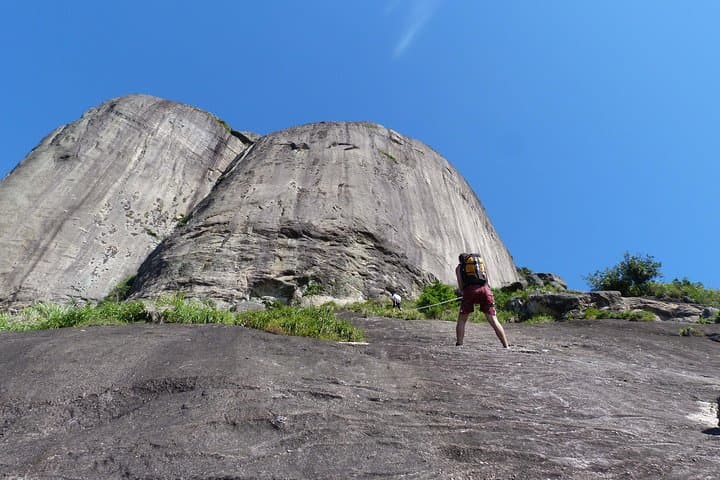
Practically, expect steep exposure, rock scrambling, and a controlled descent that resembles rappel but is guided for you. Guides provide equipment and handle the technical parts, but participants should be comfortable with heights and sustained uphill effort. Start early to avoid midday heat and thunderstorms, carry at least 2–3 liters of water, sun protection, and non‑slip hiking shoes.
This is a full‑day, high‑effort outing with high payoff: a skyline view that rewards fitness and focus, and a close look at the city where rainforest presses right up against surf and stone.
challenging.
6–8 hours.
Good cardiovascular fitness and comfort with sustained hiking, steep scrambles, and short assisted climbs are required.
Carrasqueira is a short natural rock scramble with exposure; guides assist the moves and manage safety equipment, but hikers should be steady on their feet and unafraid of heights.
No formal climbing experience is needed—the operator provides equipment and the guide controls technical sections; however, good fitness and comfort with exposure are necessary.
Minimum age is typically 10; travelers with serious heart, back, or pregnancy concerns are advised not to participate—check operator requirements before booking.
Options include private transfer (if selected) or public transit to Tijuca Park access points; confirm pickup details when you book as times can vary with local traffic.
Tijuca Forest is largely reforested 19th‑century land, restored to secure water supplies and preserve the city’s hinterland; Pedra da Gávea has long been a maritime landmark for sailors.
Stay on established trails and pack out all waste; Tijuca National Park manages visitor numbers and asks hikers to minimize noise and avoid feeding wildlife to reduce human impact.
Nattrip - Tourism, Ecotourism and Adventure in Rio de Janeiro operates guided outdoor trips and adventures with an emphasis on safety, stewardship, and memorable experiences.
A humid trail opens under Atlantic Forest canopy and the city shrinks below: vendors’ distant traffic, the glint of Guanabara Bay, and the vertical face of Pedra da Gávea drawing you upward.
A humid trail opens under Atlantic Forest canopy and the city shrinks below: vendors’ distant traffic, the glint of Guanabara Bay, and the vertical face of Pedra da Gávea drawing you upward.
The route climbs roughly 2.5–3 hours to the 844‑meter summit, moving from packed dirt and rooty switchbacks into steeper granite slabs and a short, assisted climbing section known locally as Carrasqueira. Geologically, Pedra da Gávea is a massive inselberg of Precambrian gneiss and granite pushed above the coastal plain; culturally it’s one of Rio’s defining landmarks, visible from beaches and favela rooftops alike.
Hikers pass through recovered Tijuca Forest—one of the world’s largest urban reforestation projects—and may hear howler monkeys or spot marmosets between bromeliads. The summit opens into sweeping panoramas: Sugarloaf, Corcovado’s Christ the Redeemer, Ipanema, and the serrated ridgelines of Serra dos Órgãos stretching inland.
Practically, expect steep exposure, rock scrambling, and a controlled descent that resembles rappel but is guided for you. Guides provide equipment and handle the technical parts, but participants should be comfortable with heights and sustained uphill effort. Start early to avoid midday heat and thunderstorms, carry at least 2–3 liters of water, sun protection, and non‑slip hiking shoes.
This is a full‑day, high‑effort outing with high payoff: a skyline view that rewards fitness and focus, and a close look at the city where rainforest presses right up against surf and stone.