THE ADVENTURE COLLECTIVE® · Independent discovery and booking for outdoor travel

Climb from the heart of Tijuca National Park to Pedra da Gávea's 842m summit for a 360° view of Rio de Janeiro. This guided hike combines rainforest singletrack, a short technical scramble (Carrasqueira) and multiple panoramic photo stops.
Climb from the heart of Tijuca National Park to Pedra da Gávea's 842m summit for a 360° view of Rio de Janeiro. This guided hike combines rainforest singletrack, a short technical scramble (Carrasqueira) and multiple panoramic photo stops.
A humid breath of Atlantic Forest meets the stone face of Pedra da Gávea as you step off the city streets and into Tijuca National Park. The trail climbs through dense forest, the light shifting through palms and bromeliads, before opening onto rocky ledges where the city falls away and the ocean presses the horizon.
Verified experiences and guided adventures in the surrounding area.
Operated by Rodrigo Indio Tours · Rio de Janeiro, Rio de Janeiro
A humid breath of Atlantic Forest meets the stone face of Pedra da Gávea as you step off the city streets and into Tijuca National Park. The trail climbs through dense forest, the light shifting through palms and bromeliads, before opening onto rocky ledges where the city falls away and the ocean presses the horizon.
Geology and history are part of the route: Pedra da Gávea is a granite-gneiss monolith rising to roughly 842 meters, carved by ancient forces and surrounded by reforested Tijuca—an area reshaped in the 19th century to protect Rio's watersheds. Local guides weave natural history and urban lore into the walk, including the famous summit face and panoramic sightlines to Cristo Redentor, Pão de Açúcar, Lagoa and Barra.
The trail mixes singletrack through humid forest with exposed slabs and the technical Carrasqueira chimney: a short vertical scramble where guided rope support and careful footwork replace formal climbing. Photographic stops are frequent; experienced guides often shoot your summit portrait so you can focus on the route.
Practical guidance: the full experience is a full-day outing (around 6 hours, allow 5–7 depending on pace) with ~700–850 m of elevation gain and uneven, often slick rock. Start early to avoid afternoon showers and haze, bring 2–3 liters of water, grippy footwear, gloves for the scramble, and layered rain protection. Follow your guide’s instructions on the Carrasqueira and stay on marked trails—this preserves fragile forest and keeps the route safe for everyone.
challenging.
6 hours.
Good cardio fitness and comfort with sustained uphill hiking and short exposed scrambling are recommended
Expect about 5–7 hours round-trip with roughly 700–850 m of elevation gain; the route is physically demanding with a short technical scramble that makes it challenging rather than just moderate.
No formal climbing experience is required; the technical chimney is negotiated with guided rope support and step-by-step coaching, but you should be comfortable with exposure and using hands on rock.
Not recommended for very young children, pregnant travelers, people with serious heart or spinal conditions, or those who are sedentary—participants should have moderate to strong fitness.
Drones in Tijuca National Park are regulated; the tour notes a drone option must be discussed with the guide beforehand and may require park authorization—assume no until confirmed.
Tijuca National Park was largely replanted in the 19th century to restore forest cover and protect Rio's water supply; Pedra da Gávea has long been a landmark and subject of local legends.
Stay on marked trails, carry out all trash and avoid feeding wildlife—the forest is a recovering urban ecosystem and heavy foot traffic can accelerate erosion.
Rodrigo Indio Tours operates guided outdoor trips and adventures with an emphasis on safety, stewardship, and memorable experiences.
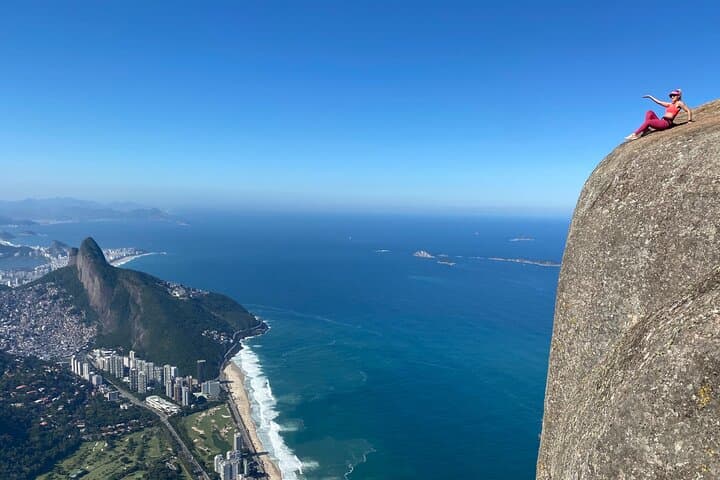
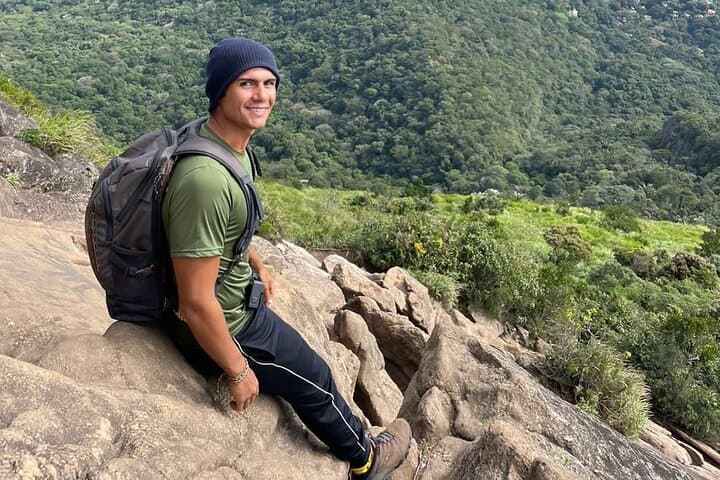
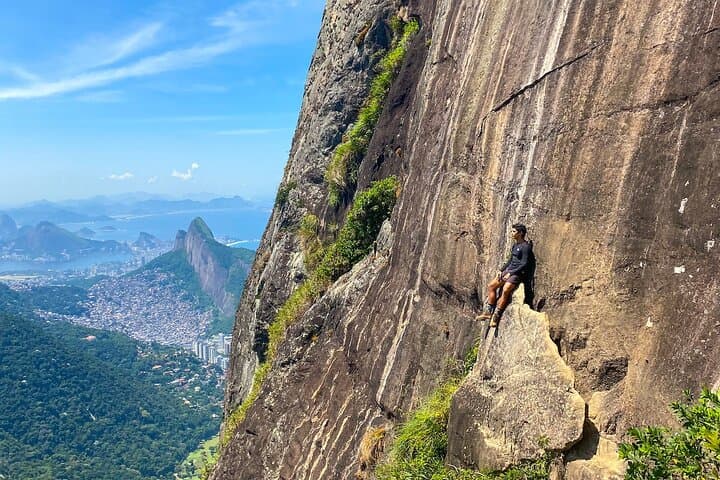
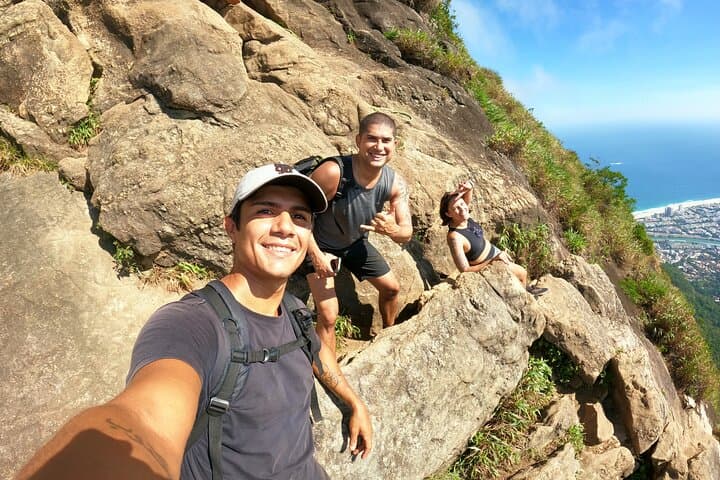
A humid breath of Atlantic Forest meets the stone face of Pedra da Gávea as you step off the city streets and into Tijuca National Park. The trail climbs through dense forest, the light shifting through palms and bromeliads, before opening onto rocky ledges where the city falls away and the ocean presses the horizon.
A humid breath of Atlantic Forest meets the stone face of Pedra da Gávea as you step off the city streets and into Tijuca National Park. The trail climbs through dense forest, the light shifting through palms and bromeliads, before opening onto rocky ledges where the city falls away and the ocean presses the horizon.
Geology and history are part of the route: Pedra da Gávea is a granite-gneiss monolith rising to roughly 842 meters, carved by ancient forces and surrounded by reforested Tijuca—an area reshaped in the 19th century to protect Rio's watersheds. Local guides weave natural history and urban lore into the walk, including the famous summit face and panoramic sightlines to Cristo Redentor, Pão de Açúcar, Lagoa and Barra.
The trail mixes singletrack through humid forest with exposed slabs and the technical Carrasqueira chimney: a short vertical scramble where guided rope support and careful footwork replace formal climbing. Photographic stops are frequent; experienced guides often shoot your summit portrait so you can focus on the route.
Practical guidance: the full experience is a full-day outing (around 6 hours, allow 5–7 depending on pace) with ~700–850 m of elevation gain and uneven, often slick rock. Start early to avoid afternoon showers and haze, bring 2–3 liters of water, grippy footwear, gloves for the scramble, and layered rain protection. Follow your guide’s instructions on the Carrasqueira and stay on marked trails—this preserves fragile forest and keeps the route safe for everyone.