THE ADVENTURE COLLECTIVE® · Independent discovery and booking for outdoor travel

A short but rewarding hike in Tijuca National Park that ends on a ridge used by paragliders, Pedra Bonita delivers one of Rio’s best panoramic viewpoints in about 2 hours. Plan for sun, wind, and crowds at peak times.
A short but rewarding hike in Tijuca National Park that ends on a ridge used by paragliders, Pedra Bonita delivers one of Rio’s best panoramic viewpoints in about 2 hours. Plan for sun, wind, and crowds at peak times.
Morning light breaks over Rio as hikers climb the final switchback toward Pedra Bonita’s broad ridge. The trail opens from forest shade into a wind-swept platform where hang gliders and paragliders ready themselves; the city falls away below in a patchwork of beaches, neighborhoods and blue Atlantic. The air often carries the distant roar of traffic and the closer chatter of birds and monkeys.
Verified experiences and guided adventures in the surrounding area.
Operated by RioXtreme · São Conrado, Rio de Janeiro
Morning light breaks over Rio as hikers climb the final switchback toward Pedra Bonita’s broad ridge. The trail opens from forest shade into a wind-swept platform where hang gliders and paragliders ready themselves; the city falls away below in a patchwork of beaches, neighborhoods and blue Atlantic. The air often carries the distant roar of traffic and the closer chatter of birds and monkeys.
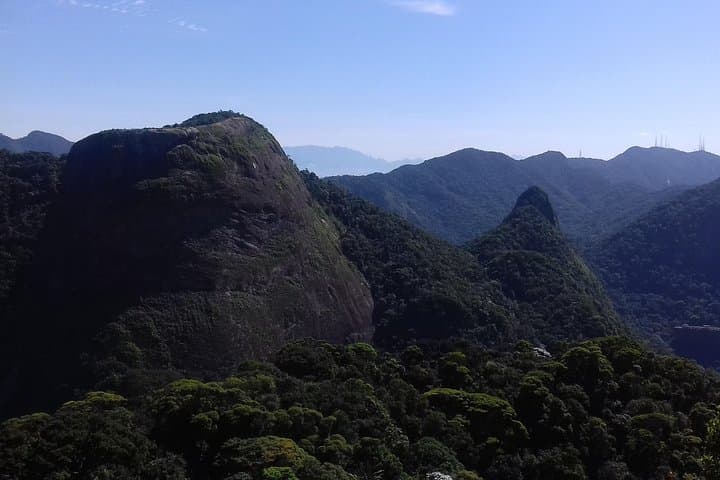
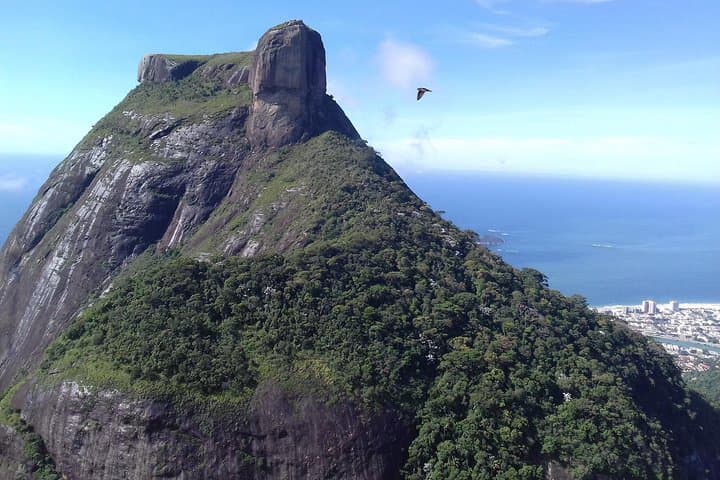
Located inside Tijuca National Park, Pedra Bonita (696 m / 2,284 ft) sits on volcanic-era rock that resists erosion, producing steep faces and sculpted outcrops. The park itself is a nineteenth-century reforestation project that reclaimed slopes once cleared for agriculture, creating one of the largest urban forests in the world. Culturally, the ridge is a weekend magnet for cariocas—pilots launching from the ramp, families visiting Vista Chinesa, and photographers chasing that sweeping perspective of Pedra da Gávea and São Conrado below.
Practically, expect a 3.5 km (2.1 mile) round-trip, about 270 m (886 ft) of ascent and roughly 2 hours on trail (≈1 hour up, 45 minutes down). Much of the approach is reached by vehicle, with a short, well-worn trail to the ridge. Trail terrain is packed dirt and exposed rock; good traction helps on the steeper steps. Bring water, sunscreen, and a wind layer—the ridge is exposed. Weekdays are quieter; weekends draw crowds and early pickups. Keep to established paths, observe paragliding safety zones, and carry out all trash so the forest and its wildlife stay healthy for the next group.
moderate.
2–3 hours.
Suitable for hikers with moderate fitness comfortable with short, steep sections and uneven footing
The round-trip is about 3.5 km (2.1 miles) with roughly 270 m (886 ft) of elevation gain; most people complete the trail in 2–3 hours and find it moderately challenging.
Yes—the ridge hosts an active paragliding ramp; visitors can watch launches but should stay behind marked safety zones and follow guide instructions.
Organized tours typically include private pickup in Rio’s South Zone; independent travelers can reach nearby parking areas by taxi or ride-hail.
The trail is family-friendly but can have short steep sections—children should be supervised and dogs must be kept under control to protect wildlife and other visitors.
Tijuca National Park was reforested in the 19th century under imperial orders after large areas were cleared; the project restored native Atlantic Forest vegetation on these slopes.
Visitors should stay on designated trails, avoid feeding wildlife, and pack out all trash—human impact is the main threat to this urban forest.
RioXtreme operates guided outdoor trips and adventures with an emphasis on safety, stewardship, and memorable experiences.
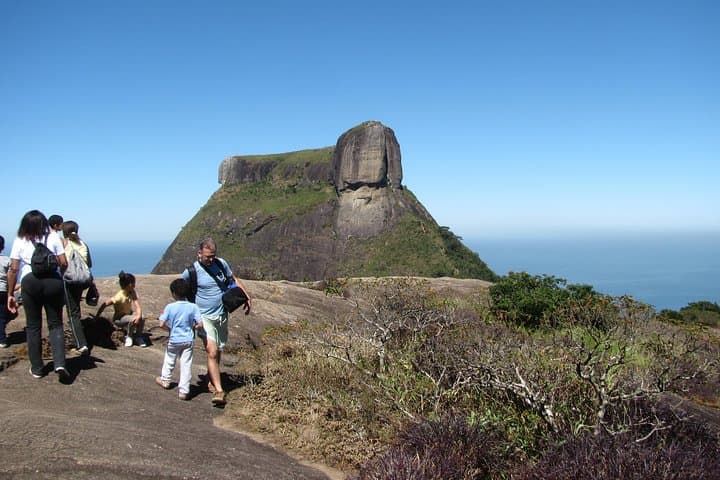
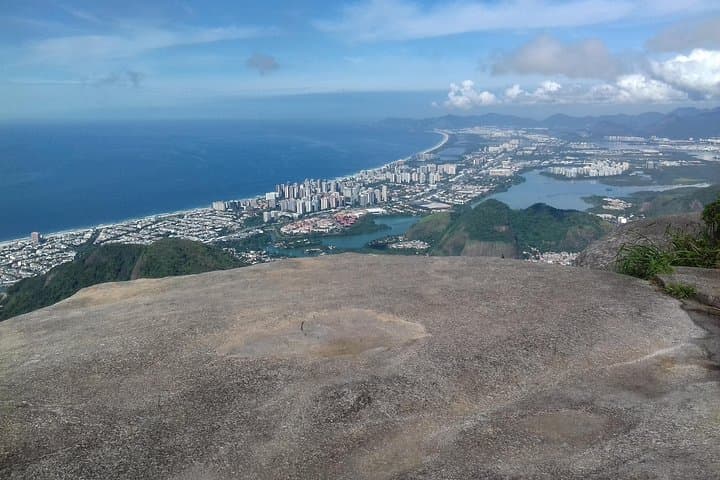
Morning light breaks over Rio as hikers climb the final switchback toward Pedra Bonita’s broad ridge. The trail opens from forest shade into a wind-swept platform where hang gliders and paragliders ready themselves; the city falls away below in a patchwork of beaches, neighborhoods and blue Atlantic. The air often carries the distant roar of traffic and the closer chatter of birds and monkeys.
Morning light breaks over Rio as hikers climb the final switchback toward Pedra Bonita’s broad ridge. The trail opens from forest shade into a wind-swept platform where hang gliders and paragliders ready themselves; the city falls away below in a patchwork of beaches, neighborhoods and blue Atlantic. The air often carries the distant roar of traffic and the closer chatter of birds and monkeys.
Located inside Tijuca National Park, Pedra Bonita (696 m / 2,284 ft) sits on volcanic-era rock that resists erosion, producing steep faces and sculpted outcrops. The park itself is a nineteenth-century reforestation project that reclaimed slopes once cleared for agriculture, creating one of the largest urban forests in the world. Culturally, the ridge is a weekend magnet for cariocas—pilots launching from the ramp, families visiting Vista Chinesa, and photographers chasing that sweeping perspective of Pedra da Gávea and São Conrado below.
Practically, expect a 3.5 km (2.1 mile) round-trip, about 270 m (886 ft) of ascent and roughly 2 hours on trail (≈1 hour up, 45 minutes down). Much of the approach is reached by vehicle, with a short, well-worn trail to the ridge. Trail terrain is packed dirt and exposed rock; good traction helps on the steeper steps. Bring water, sunscreen, and a wind layer—the ridge is exposed. Weekdays are quieter; weekends draw crowds and early pickups. Keep to established paths, observe paragliding safety zones, and carry out all trash so the forest and its wildlife stay healthy for the next group.