THE ADVENTURE COLLECTIVE® · Independent discovery and booking for outdoor travel

Explore Rio’s historic heart by electric pedicab — a low-impact, efficient way to see Lapa, Selarón, Cais do Valongo and more in a relaxed 3.5-hour loop. This tour combines layered history, urban art, and waterfront views with simple, practical guidance for first-time visitors.
Explore Rio’s historic heart by electric pedicab — a low-impact, efficient way to see Lapa, Selarón, Cais do Valongo and more in a relaxed 3.5-hour loop. This tour combines layered history, urban art, and waterfront views with simple, practical guidance for first-time visitors.
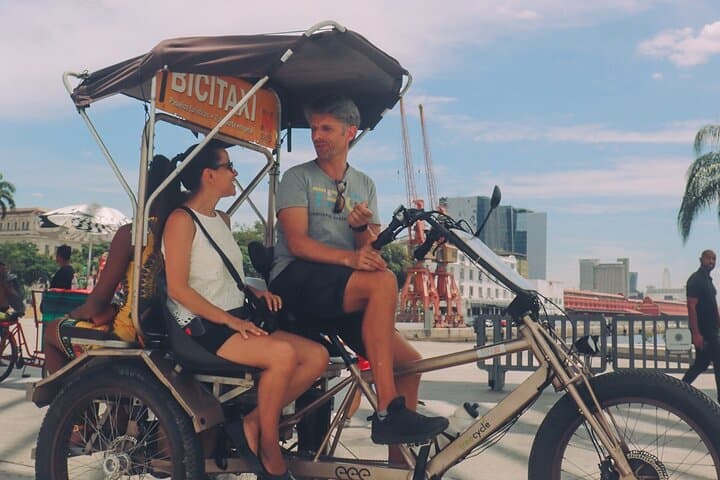
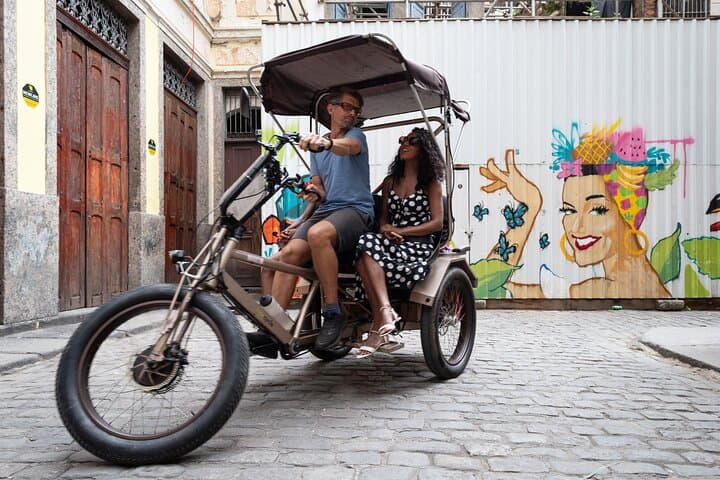
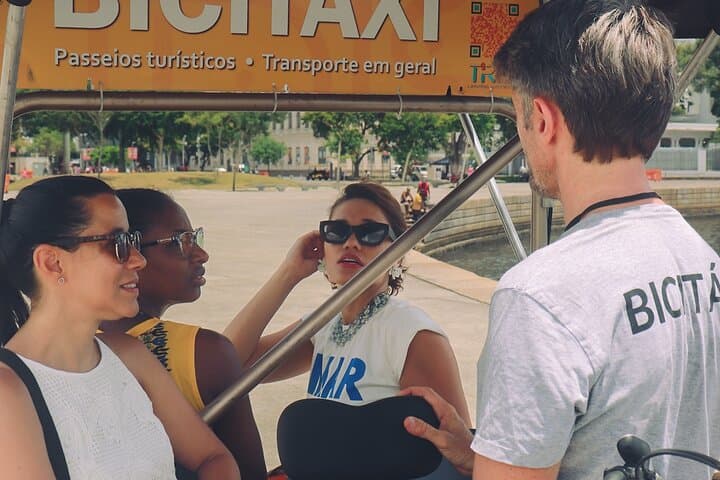
The motor hum of an electric pedicab slips through Cinelândia as the driver skirts columns and tiled façades, while Guanabara Bay watches the city’s edges. Riders move slower than traffic but faster than a walk, windows of the past opening at every turn: a neoclassical palace, a colorful stairway, an aqueduct that arches over a night filled with samba.
Verified experiences and guided adventures in the surrounding area.
Operated by Trio · Rio de Janeiro, Rio de Janeiro
The motor hum of an electric pedicab slips through Cinelândia as the driver skirts columns and tiled façades, while Guanabara Bay watches the city’s edges. Riders move slower than traffic but faster than a walk, windows of the past opening at every turn: a neoclassical palace, a colorful stairway, an aqueduct that arches over a night filled with samba.
This route threads together Rio’s layered history — colonial mercantile hubs, the 18th-century aqueduct repurposed into the Arcos da Lapa, and the more recent rediscovery of Cais do Valongo, the UNESCO-listed slave port. Geology is subtle here: landfill and old wharves meet granite outcrops that shaped the shoreline and the pattern of streets. Culture is immediate — street musicians, café chatter, and murals like Kobra’s Painel Etnias that confront visitors with global faces.
Practical guidance is straightforward. The pedicab covers about three and a half hours of stops and slow cruising, allowing photo breaks at Escadaria Selarón, Paço Imperial, and the Museum of Tomorrow precinct without the exhaustion of a walking tour. Expect cobblestones and narrow alleys where pedicabs have the advantage over cars; bring a small bag and secure pockets because busy plazas attract pickpockets. Hydrate and plan for sun or sudden coastal showers — weather shifts quickly on the bay.
The experience balances ease with context: it’s a transportive mash-up of architecture, urban archaeology, and living culture driven by a low-impact vehicle that lets the city speak directly to riders.
easy.
3.5 hours.
Suitable for most fitness levels; the pedicab removes most walking strain but expect short on-foot segments
The tour lasts about 3.5 hours (210 minutes) and includes multiple short stops for photos and short walks.
Pedicabs are not typically wheelchair-accessible; contact the operator ahead to discuss accessibility needs and possible alternatives.
Yes — guides can usually drop you off at museums, restaurants or cultural sites along the route upon request.
Guides commonly speak Portuguese and English; confirm language needs when booking if you require another language.
The route includes Cais do Valongo, a recently excavated 19th-century slave port now a UNESCO site, plus colonial-era buildings and the 18th-century Carioca Aqueduct (Arcos da Lapa).
The historic centre is undergoing preservation and sensitive redevelopment; using low-emission pedicabs reduces traffic impact, but visitors should respect protected sites and avoid littering.
Trio operates guided outdoor trips and adventures with an emphasis on safety, stewardship, and memorable experiences.

The motor hum of an electric pedicab slips through Cinelândia as the driver skirts columns and tiled façades, while Guanabara Bay watches the city’s edges. Riders move slower than traffic but faster than a walk, windows of the past opening at every turn: a neoclassical palace, a colorful stairway, an aqueduct that arches over a night filled with samba.
The motor hum of an electric pedicab slips through Cinelândia as the driver skirts columns and tiled façades, while Guanabara Bay watches the city’s edges. Riders move slower than traffic but faster than a walk, windows of the past opening at every turn: a neoclassical palace, a colorful stairway, an aqueduct that arches over a night filled with samba.
This route threads together Rio’s layered history — colonial mercantile hubs, the 18th-century aqueduct repurposed into the Arcos da Lapa, and the more recent rediscovery of Cais do Valongo, the UNESCO-listed slave port. Geology is subtle here: landfill and old wharves meet granite outcrops that shaped the shoreline and the pattern of streets. Culture is immediate — street musicians, café chatter, and murals like Kobra’s Painel Etnias that confront visitors with global faces.
Practical guidance is straightforward. The pedicab covers about three and a half hours of stops and slow cruising, allowing photo breaks at Escadaria Selarón, Paço Imperial, and the Museum of Tomorrow precinct without the exhaustion of a walking tour. Expect cobblestones and narrow alleys where pedicabs have the advantage over cars; bring a small bag and secure pockets because busy plazas attract pickpockets. Hydrate and plan for sun or sudden coastal showers — weather shifts quickly on the bay.
The experience balances ease with context: it’s a transportive mash-up of architecture, urban archaeology, and living culture driven by a low-impact vehicle that lets the city speak directly to riders.