THE ADVENTURE COLLECTIVE® · Independent discovery and booking for outdoor travel

Float through narrow channels in pedal-driven kayaks and watch monkeys, kingfishers and iguanas reveal themselves among the roots. This three-hour guided tour from Quepos offers close-up wildlife viewing and a primer on the mangrove ecosystem.
Float through narrow channels in pedal-driven kayaks and watch monkeys, kingfishers and iguanas reveal themselves among the roots. This three-hour guided tour from Quepos offers close-up wildlife viewing and a primer on the mangrove ecosystem.
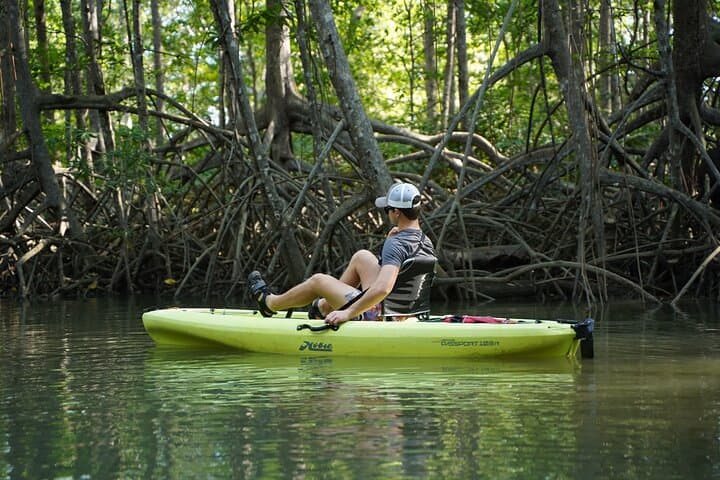
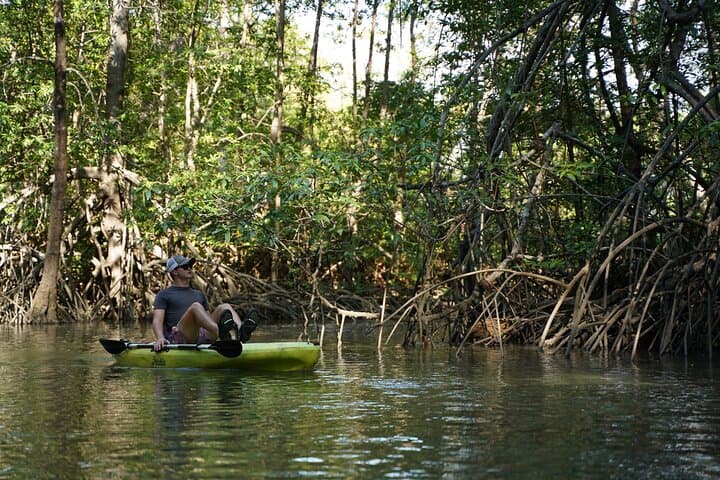
A low, humid dawn lifts off the bay and your pedal kayak slips between arching roots and mirrored water. Mangrove trunks lean over the channel like old sailors, their prop roots braiding a lattice that slows the tide and holds small worlds in place. Birds flare from branches; a monkey on the shoreline sizes you up and disappears into green.
Verified experiences and guided adventures in the surrounding area.
Operated by Paddle 9 · Quepos, Puntarenas
A low, humid dawn lifts off the bay and your pedal kayak slips between arching roots and mirrored water. Mangrove trunks lean over the channel like old sailors, their prop roots braiding a lattice that slows the tide and holds small worlds in place. Birds flare from branches; a monkey on the shoreline sizes you up and disappears into green.
The Damas mangroves are part of Costa Rica’s Pacific coastal plain — a flat, sediment-rich edge where rivers deposit silt and mangrove species (red, black, white) colonize shallow water. Local fishing villages have long relied on these stands for nurseries and protection from storm surge; today the area is a living classroom for conservation and eco-tourism.
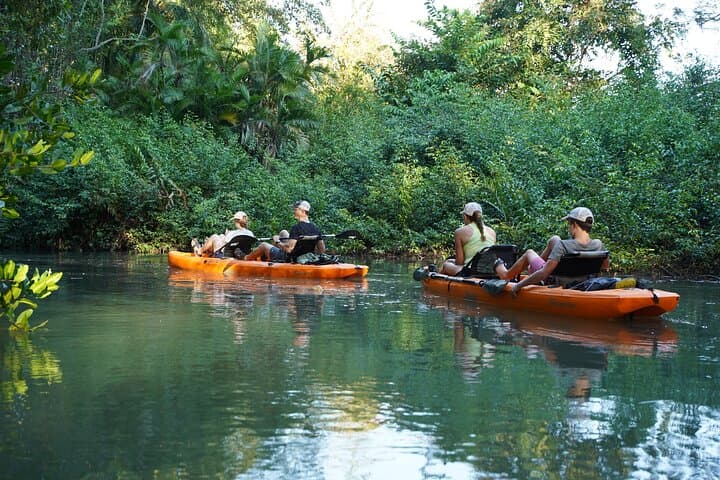
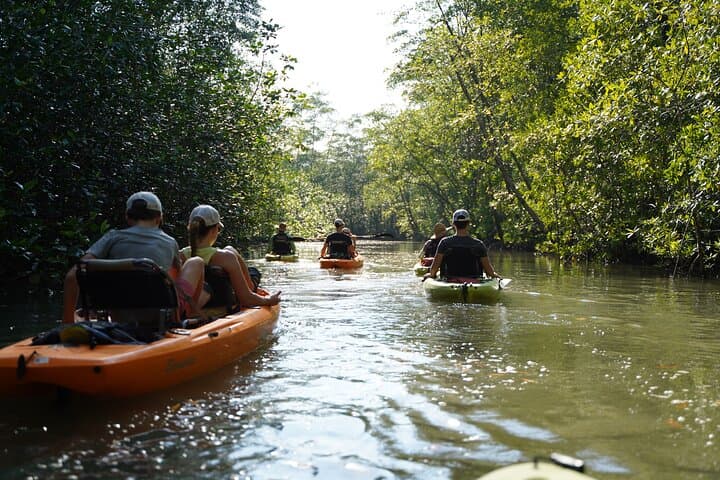
On this 3-hour pedal-kayak outing you’ll steer compact, stable pedal-drive kayaks through tight channels that motorboats can’t reach. Guides point out bird colonies, marine life glimpses and the distinctive pneumatophores that let mangroves breathe in low-oxygen mud. Wildlife is abundant but shy: sightings include monkeys, kingfishers and iguanas; you’ll move quietly to increase your chances.
Practical notes: tours depart from near Quepos/Manuel Antonio and include bottled water and basic gear. Expect easy paddling with seated pedaling — it’s low-impact but uses leg strength. Wear quick-dry clothing, reef-safe sunscreen and shoes that get wet. Be prepared for sun on exposed stretches and mosquitoes in shaded channels. Timing around low tide or early morning improves wildlife viewing and easier navigation.
This trip balances relaxed exploration with focused natural history: a short, accessible way to see why mangroves matter and why they keep pulling visitors back to Costa Rica’s coast.
easy.
3 hours.
Suitable for most fitness levels—requires moderate leg strength for pedaling while seated; minimal upper-body effort.
This tour is rated easy—pedal kayaks require leg movement but are stable and seated; participants of most fitness levels can join.
Guides maximize sightings but wildlife is not guaranteed; early departures and quiet paddling improve chances.
Specific limits depend on the operator, but infants must sit on laps; confirm pickup and safety rules at booking.
Tours may be canceled for heavy rain or unsafe conditions; operators typically offer refunds if canceled at least 24 hours prior.
Local communities have long used the mangroves for fish nurseries and protection from storms; recent eco-tourism helps fund conservation and education.
Mangroves store carbon and stabilize coastlines; tours emphasize low-impact viewing—avoid touching roots, feeding wildlife, or leaving waste.
Paddle 9 operates guided outdoor trips and adventures with an emphasis on safety, stewardship, and memorable experiences.
A low, humid dawn lifts off the bay and your pedal kayak slips between arching roots and mirrored water. Mangrove trunks lean over the channel like old sailors, their prop roots braiding a lattice that slows the tide and holds small worlds in place. Birds flare from branches; a monkey on the shoreline sizes you up and disappears into green.
A low, humid dawn lifts off the bay and your pedal kayak slips between arching roots and mirrored water. Mangrove trunks lean over the channel like old sailors, their prop roots braiding a lattice that slows the tide and holds small worlds in place. Birds flare from branches; a monkey on the shoreline sizes you up and disappears into green.
The Damas mangroves are part of Costa Rica’s Pacific coastal plain — a flat, sediment-rich edge where rivers deposit silt and mangrove species (red, black, white) colonize shallow water. Local fishing villages have long relied on these stands for nurseries and protection from storm surge; today the area is a living classroom for conservation and eco-tourism.
On this 3-hour pedal-kayak outing you’ll steer compact, stable pedal-drive kayaks through tight channels that motorboats can’t reach. Guides point out bird colonies, marine life glimpses and the distinctive pneumatophores that let mangroves breathe in low-oxygen mud. Wildlife is abundant but shy: sightings include monkeys, kingfishers and iguanas; you’ll move quietly to increase your chances.
Practical notes: tours depart from near Quepos/Manuel Antonio and include bottled water and basic gear. Expect easy paddling with seated pedaling — it’s low-impact but uses leg strength. Wear quick-dry clothing, reef-safe sunscreen and shoes that get wet. Be prepared for sun on exposed stretches and mosquitoes in shaded channels. Timing around low tide or early morning improves wildlife viewing and easier navigation.
This trip balances relaxed exploration with focused natural history: a short, accessible way to see why mangroves matter and why they keep pulling visitors back to Costa Rica’s coast.