THE ADVENTURE COLLECTIVE® · Independent discovery and booking for outdoor travel

Trade traffic for vineyard lanes on a guided ebike tour through Sonoma Valley. Cover short, scenic stretches between two wineries, enjoy a winery picnic and a behind-the-scenes cheese tour while learning about the region’s soils and winemaking traditions.
Trade traffic for vineyard lanes on a guided ebike tour through Sonoma Valley. Cover short, scenic stretches between two wineries, enjoy a winery picnic and a behind-the-scenes cheese tour while learning about the region’s soils and winemaking traditions.
Morning light spills across low, oak-studded ridges as riders step onto electric bikes and push off into Sonoma Valley’s slow rhythm. Vines angle toward the sun, gravel-scented breezes nudge past, and the valley’s patchwork of vineyards, picnic lawns and roadside orchards unfolds at a comfortable, motor-assisted pace.
Verified experiences and guided adventures in the surrounding area.
Morning light spills across low, oak-studded ridges as riders step onto electric bikes and push off into Sonoma Valley’s slow rhythm. Vines angle toward the sun, gravel-scented breezes nudge past, and the valley’s patchwork of vineyards, picnic lawns and roadside orchards unfolds at a comfortable, motor-assisted pace.
The valley carries layers of history: Coast Miwok and Patwin peoples first tended this land before Mission San Francisco Solano arrived in the 1820s and settlers expanded viticulture in the 19th century. Geologically, Sonoma sits on mixed volcanic and alluvial soils—the subtle seams in the ground give vineyards their differing personalities and wines their regional signatures. Today the ride threads past small-production wineries, heritage dairy operations and the Vella Cheese works where a behind-the-scenes tour adds a tactile note to tasting notes.
Expect paved county roads, quiet backstreets and short rolling climbs; guides average 3–5 miles of pedaling between stops so the day emphasizes tasting and conversation over distance. The group pace is relaxed and designed for riders with basic bike-handling skills; e-bikes provide pedal-assist on short grades. A winery picnic lunch breaks the day and tastings concentrate on regional varietals—Pinot Noir and Sonoma Chardonnay feature prominently.
Practical pointers: bring photo ID for tastings, hydrate between pours, and wear layered clothing for coastal breezes. Helmets are usually provided but confirm in advance. Ride windows are best in late morning to early afternoon to avoid afternoon heat and to catch wineries when cellars are open for tours.
easy.
5–6 hours.
Suitable for riders in light to moderate fitness who can handle 3–5 miles of pedaling between stops and short climbs with e-bike assist.
Yes, guided tours supply pedal-assist e-bikes with moderate power designed for short climbs; they augment pedaling rather than replace it.
Yes, the route is paced for casual riders with basic bike-handling skills; guides offer instruction and the e-bike assist makes hills manageable.
Bring a government-issued photo ID for alcohol tastings, and consider cash or card for optional purchases at wineries and the cheese stop.
Most operators can accommodate common restrictions if notified in advance—inform the tour provider at booking so they can plan the picnic accordingly.
Sonoma Valley’s modern wine industry grew after Mission San Francisco Solano (1823) and expanded through 19th-century settlers; pockets of volcanic and alluvial soils shaped vineyard choices.
Vineyards here face water and habitat pressures; many small producers use sustainable practices and riders should stay on roads, pack out trash, and respect private property.
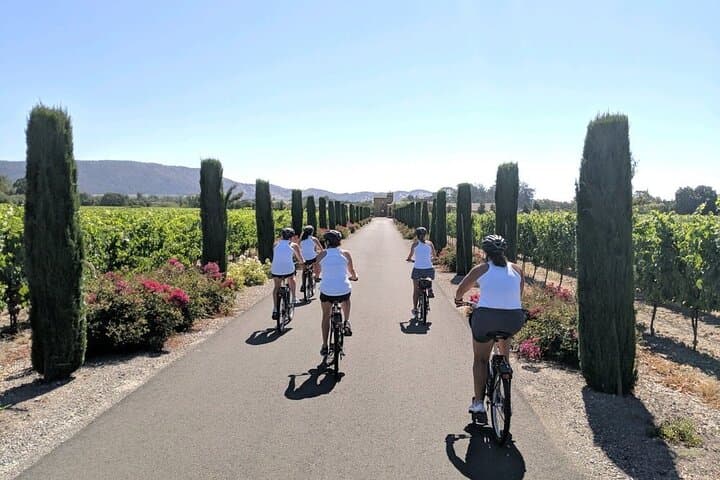
Morning light spills across low, oak-studded ridges as riders step onto electric bikes and push off into Sonoma Valley’s slow rhythm. Vines angle toward the sun, gravel-scented breezes nudge past, and the valley’s patchwork of vineyards, picnic lawns and roadside orchards unfolds at a comfortable, motor-assisted pace.
Morning light spills across low, oak-studded ridges as riders step onto electric bikes and push off into Sonoma Valley’s slow rhythm. Vines angle toward the sun, gravel-scented breezes nudge past, and the valley’s patchwork of vineyards, picnic lawns and roadside orchards unfolds at a comfortable, motor-assisted pace.
The valley carries layers of history: Coast Miwok and Patwin peoples first tended this land before Mission San Francisco Solano arrived in the 1820s and settlers expanded viticulture in the 19th century. Geologically, Sonoma sits on mixed volcanic and alluvial soils—the subtle seams in the ground give vineyards their differing personalities and wines their regional signatures. Today the ride threads past small-production wineries, heritage dairy operations and the Vella Cheese works where a behind-the-scenes tour adds a tactile note to tasting notes.
Expect paved county roads, quiet backstreets and short rolling climbs; guides average 3–5 miles of pedaling between stops so the day emphasizes tasting and conversation over distance. The group pace is relaxed and designed for riders with basic bike-handling skills; e-bikes provide pedal-assist on short grades. A winery picnic lunch breaks the day and tastings concentrate on regional varietals—Pinot Noir and Sonoma Chardonnay feature prominently.
Practical pointers: bring photo ID for tastings, hydrate between pours, and wear layered clothing for coastal breezes. Helmets are usually provided but confirm in advance. Ride windows are best in late morning to early afternoon to avoid afternoon heat and to catch wineries when cellars are open for tours.