THE ADVENTURE COLLECTIVE® · Independent discovery and booking for outdoor travel

A five-day loop through Pamukkale, Hierapolis, Ephesus and Cappadocia that pairs dramatic geology with layered history. Expect barefoot terraces, marble-lined streets and optional ballooning — all linked by included domestic flights.
A five-day loop through Pamukkale, Hierapolis, Ephesus and Cappadocia that pairs dramatic geology with layered history. Expect barefoot terraces, marble-lined streets and optional ballooning — all linked by included domestic flights.
You step off the minibus into a white slope that looks like a frozen waterfall — the travertines of Pamukkale catching the low sun and daring you to walk their calcium steps barefoot. Later, stone streets open into Celsus Library’s carved façade, where the wind seems to read inscriptions left by traders and pilgrims. Across five days this itinerary stitches thermal plains, Roman ruins and volcanic moonscapes into one compact sweep of western Turkey.
Verified experiences and guided adventures in the surrounding area.
Operated by Turkey Experiences · Pamukkale, Denizli Province
You step off the minibus into a white slope that looks like a frozen waterfall — the travertines of Pamukkale catching the low sun and daring you to walk their calcium steps barefoot. Later, stone streets open into Celsus Library’s carved façade, where the wind seems to read inscriptions left by traders and pilgrims. Across five days this itinerary stitches thermal plains, Roman ruins and volcanic moonscapes into one compact sweep of western Turkey.
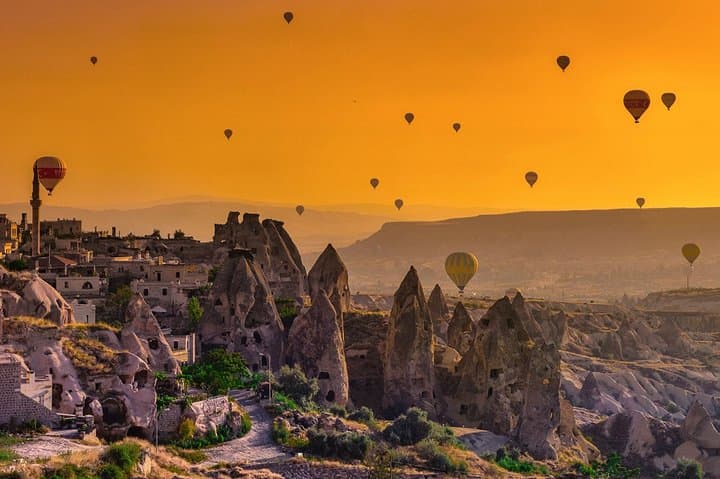
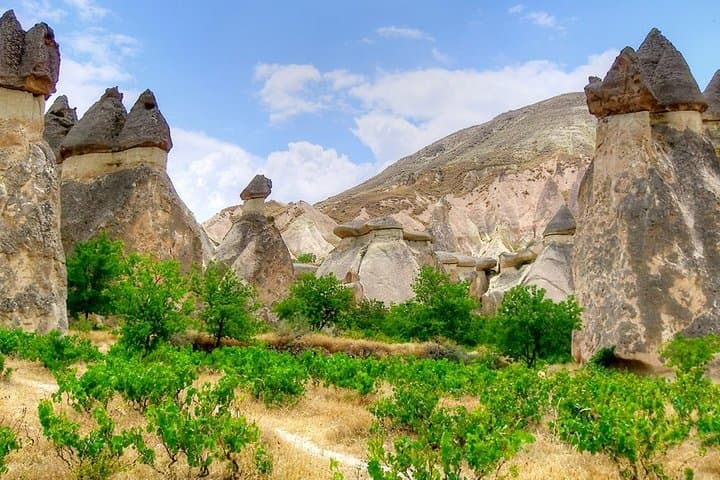
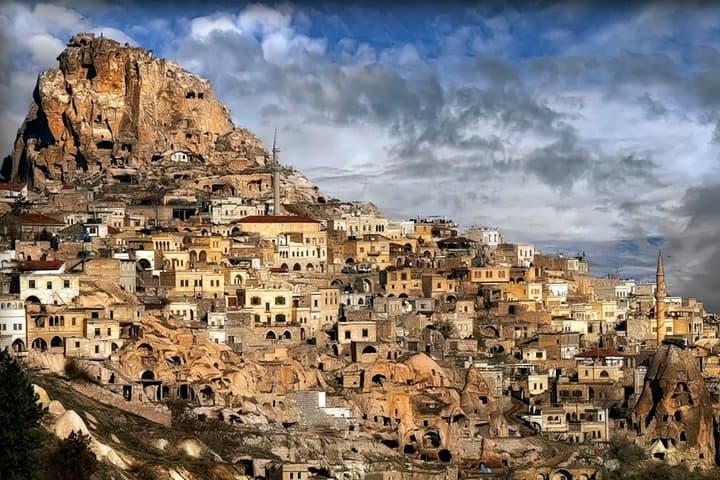
Geology and history are constant companions: Pamukkale’s terraces formed over millennia as mineral-rich springs cooled, while nearby Hierapolis rose as a healing sanctuary in Hellenistic and Roman times. Ephesus speaks of imperial trade and early Christianity; Laodicea’s ruins hint at a city that bridged Hellenistic kings and Byzantine bishops. In contrast, Cappadocia’s soft tuff was carved by volcanic ash and rain into chimneys and cave dwellings later hollowed by human hands — a landscape shaped by both fire and patience.
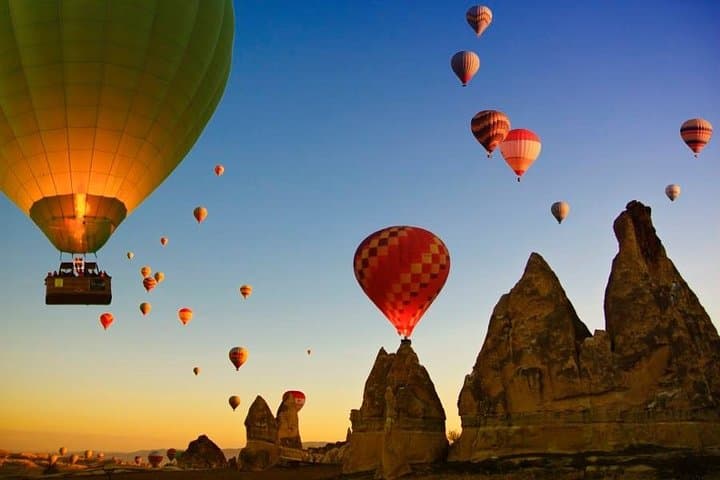
Local culture shows in small things: a village wine tasting in Şirince, a handcraft workshop explaining regional stones, and hot springs that still serve as communal baths. Practicalities matter here — expect early airport transfers, domestic flights included in the package, and several short but uneven walks through ruins and on travertines. Bring layered clothing for chilly mornings, waterproof shoes for wet terraces, and a compact camera for low-light theaters and sunrise balloon windows. Hydrate between sites, respect barefoot-only zones in Pamukkale, and allow extra time for optional experiences like hot-air ballooning in Cappadocia — weather permitting. This route is best for travelers with a moderate level of fitness who want concentrated access to Turkey’s geological oddities and archaeological highlights without long independent transfers.
moderate.
5 days.
Suitable for travelers with moderate fitness; involves multiple short walks, some uneven surfaces and barefoot walking over terraces.
No — the balloon flight in Cappadocia is an optional add-on available at a discounted rate; it’s weather-dependent and may be cancelled for safety.
You can wade and bathe in designated thermal pools and the paid Antique (Cleopatra) Pool, but walking areas across the travertines require bare feet to protect the formations.
Standard allowance is 15 kg checked plus 8 kg carry-on per person; inform the operator ahead of time if you need extra allowance (possible extra fee).
This tour is not available for children aged 5 and under and is not recommended for pregnant travelers or those with serious heart or back conditions; consult the operator for specifics.
Hierapolis was a Roman spa city built around thermal springs; Ephesus served as a major Roman port and commercial center and is home to the ruins of Celsus Library and a grand theater.
Pamukkale’s calcite terraces are fragile — authorities enforce barefoot-only zones and routed paths; follow signage, avoid soaps in thermal waters and limit single-use plastics to reduce impact.
Turkey Experiences operates guided outdoor trips and adventures with an emphasis on safety, stewardship, and memorable experiences.
You step off the minibus into a white slope that looks like a frozen waterfall — the travertines of Pamukkale catching the low sun and daring you to walk their calcium steps barefoot. Later, stone streets open into Celsus Library’s carved façade, where the wind seems to read inscriptions left by traders and pilgrims. Across five days this itinerary stitches thermal plains, Roman ruins and volcanic moonscapes into one compact sweep of western Turkey.
You step off the minibus into a white slope that looks like a frozen waterfall — the travertines of Pamukkale catching the low sun and daring you to walk their calcium steps barefoot. Later, stone streets open into Celsus Library’s carved façade, where the wind seems to read inscriptions left by traders and pilgrims. Across five days this itinerary stitches thermal plains, Roman ruins and volcanic moonscapes into one compact sweep of western Turkey.
Geology and history are constant companions: Pamukkale’s terraces formed over millennia as mineral-rich springs cooled, while nearby Hierapolis rose as a healing sanctuary in Hellenistic and Roman times. Ephesus speaks of imperial trade and early Christianity; Laodicea’s ruins hint at a city that bridged Hellenistic kings and Byzantine bishops. In contrast, Cappadocia’s soft tuff was carved by volcanic ash and rain into chimneys and cave dwellings later hollowed by human hands — a landscape shaped by both fire and patience.
Local culture shows in small things: a village wine tasting in Şirince, a handcraft workshop explaining regional stones, and hot springs that still serve as communal baths. Practicalities matter here — expect early airport transfers, domestic flights included in the package, and several short but uneven walks through ruins and on travertines. Bring layered clothing for chilly mornings, waterproof shoes for wet terraces, and a compact camera for low-light theaters and sunrise balloon windows. Hydrate between sites, respect barefoot-only zones in Pamukkale, and allow extra time for optional experiences like hot-air ballooning in Cappadocia — weather permitting. This route is best for travelers with a moderate level of fitness who want concentrated access to Turkey’s geological oddities and archaeological highlights without long independent transfers.