THE ADVENTURE COLLECTIVE® · Independent discovery and booking for outdoor travel

A compact, small-group half-day that pairs the USS Arizona Memorial’s powerful remembrance with a rapid Honolulu city loop—perfect for travelers who want context, calm, and history without the big-bus crowds. Includes hotel pickup and the Pearl Harbor audio guide.
A compact, small-group half-day that pairs the USS Arizona Memorial’s powerful remembrance with a rapid Honolulu city loop—perfect for travelers who want context, calm, and history without the big-bus crowds. Includes hotel pickup and the Pearl Harbor audio guide.
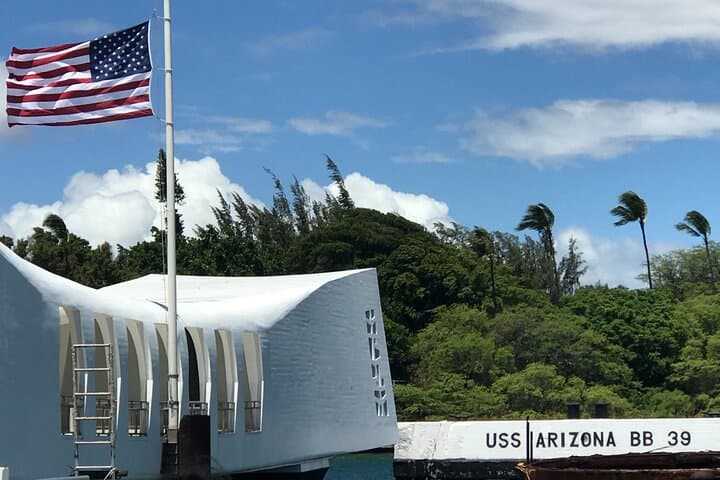
You step off the minivan at the Visitor Center and the harbor takes over the story: a flat, wide water that once carried battleships now mirrors the sky, and the boat that will carry you to the USS Arizona Memorial rocks like a small, purposeful promise. The short narrated crossing gives a raw vantage—glass-blue water, a low white structure hovering above a rusted hull—and for a few minutes all the facts of the date in 1941 condense into an uneasy silence.
Verified experiences and guided adventures in the surrounding area.
Operated by Daniels Hawaii - Tours & Activities · Honolulu, Hawaii
You step off the minivan at the Visitor Center and the harbor takes over the story: a flat, wide water that once carried battleships now mirrors the sky, and the boat that will carry you to the USS Arizona Memorial rocks like a small, purposeful promise. The short narrated crossing gives a raw vantage—glass-blue water, a low white structure hovering above a rusted hull—and for a few minutes all the facts of the date in 1941 condense into an uneasy silence.
The memorial itself is both architecture and archive: a low, open rectangle that frames the ocean and the sunken ship beneath. Names are carved in marble, droplets of oil still surface from the Arizona’s fuel bunkers, and the two on-site museums lay out the geopolitical path that led to that morning. Back in Honolulu, the tour shifts from the harbor to the city—ʻIolani Palace, the King Kamehameha statue and Aloha Tower—sites that trace Hawaiian governance, monarchy, and the islands’ role as a strategic crossroads.
Geologically, Oʻahu is an erosion-sculpted remnant of volcanic cones; Pearl Harbor sits where marine terraces and shallow basins collect the sea. Culturally, the tour threads native Hawaiian history and the late 19th-century overthrow with 20th-century militarization, offering a view of how local memory and national narratives intersect.
This small-group option keeps the scale human: groups are capped to avoid the bus-clustered feel, pickup is offered from Waikiki hotels, and the package includes the Pearl Harbor Chiefs audio guide and boat tickets (on a first-come, first-served basis). You get roughly three hours of self-guided time at Pearl Harbor’s museums and memorial, then a city loop past Chinatown, Aliʻiōlani Hale and the State Capitol with concise, contextual stops for photos and history.
Practicalities matter here. Boat operations are controlled by the U.S. Navy and can be suspended; if that happens you can still use the Visitor Center exhibits and continue the city portion. Expect a 5–6 hour outing, with pickup windows between about 6:30–10:30 a.m. depending on the day’s boat schedule. Dress for sun and wind on the boat—light layers, good walking shoes, and a hat are smart; bring a refillable water bottle.
On the cultural side, keep reverence in mind: the memorial is a resting place, not a tourist backdrop. Ask questions on the drive—guides often share neighborhood restaurant tips and the best times to visit quieter sites. If you’re short on time in Honolulu, this tour compresses the island’s most consequential civic and military sites into a single, thoughtful half-day experience.
easy.
5–6 hours.
Suitable for most fitness levels; requires short walks and standing in museum areas.
Boat tickets are included in this tour price but operate on a first-come, first-served basis and are subject to Navy scheduling; if boats are suspended you can still access the Visitor Center and exhibits.
You’ll have about three hours to explore the museums, exhibits, and visitor center at your own pace during the Pearl Harbor portion.
No—per Pearl Harbor Parks Department rules, guides cannot tour the Visitor Center or the USS Arizona Memorial with guests; the memorial portion is self-guided once you arrive.
The tour offers free pickup from many Waikiki hotels and can arrange pickup from the airport or cruise terminal for a surcharge—confirm your exact pickup location when booking.
Yes—infants and small children are accepted (stroller-friendly), but the memorial’s subject matter is solemn and may be upsetting for younger visitors.
Bring photo ID, sun protection, comfortable shoes, a refillable water bottle, and any necessary medications; cameras are allowed but be respectful at memorial sites.
Pearl Harbor’s transformation from a sheltered natural anchorage to the U.S. Pacific Fleet’s home reshaped Hawaii’s 20th-century economy and politics; ʻIolani Palace remains the only royal palace on U.S. soil.
The site is managed to balance commemoration with marine protection—avoid bringing plastics into the water areas and follow park rules to reduce visitor impact.
Daniels Hawaii - Tours & Activities operates guided outdoor trips and adventures with an emphasis on safety, stewardship, and memorable experiences.
You step off the minivan at the Visitor Center and the harbor takes over the story: a flat, wide water that once carried battleships now mirrors the sky, and the boat that will carry you to the USS Arizona Memorial rocks like a small, purposeful promise. The short narrated crossing gives a raw vantage—glass-blue water, a low white structure hovering above a rusted hull—and for a few minutes all the facts of the date in 1941 condense into an uneasy silence.
You step off the minivan at the Visitor Center and the harbor takes over the story: a flat, wide water that once carried battleships now mirrors the sky, and the boat that will carry you to the USS Arizona Memorial rocks like a small, purposeful promise. The short narrated crossing gives a raw vantage—glass-blue water, a low white structure hovering above a rusted hull—and for a few minutes all the facts of the date in 1941 condense into an uneasy silence.
The memorial itself is both architecture and archive: a low, open rectangle that frames the ocean and the sunken ship beneath. Names are carved in marble, droplets of oil still surface from the Arizona’s fuel bunkers, and the two on-site museums lay out the geopolitical path that led to that morning. Back in Honolulu, the tour shifts from the harbor to the city—ʻIolani Palace, the King Kamehameha statue and Aloha Tower—sites that trace Hawaiian governance, monarchy, and the islands’ role as a strategic crossroads.
Geologically, Oʻahu is an erosion-sculpted remnant of volcanic cones; Pearl Harbor sits where marine terraces and shallow basins collect the sea. Culturally, the tour threads native Hawaiian history and the late 19th-century overthrow with 20th-century militarization, offering a view of how local memory and national narratives intersect.
This small-group option keeps the scale human: groups are capped to avoid the bus-clustered feel, pickup is offered from Waikiki hotels, and the package includes the Pearl Harbor Chiefs audio guide and boat tickets (on a first-come, first-served basis). You get roughly three hours of self-guided time at Pearl Harbor’s museums and memorial, then a city loop past Chinatown, Aliʻiōlani Hale and the State Capitol with concise, contextual stops for photos and history.
Practicalities matter here. Boat operations are controlled by the U.S. Navy and can be suspended; if that happens you can still use the Visitor Center exhibits and continue the city portion. Expect a 5–6 hour outing, with pickup windows between about 6:30–10:30 a.m. depending on the day’s boat schedule. Dress for sun and wind on the boat—light layers, good walking shoes, and a hat are smart; bring a refillable water bottle.
On the cultural side, keep reverence in mind: the memorial is a resting place, not a tourist backdrop. Ask questions on the drive—guides often share neighborhood restaurant tips and the best times to visit quieter sites. If you’re short on time in Honolulu, this tour compresses the island’s most consequential civic and military sites into a single, thoughtful half-day experience.