THE ADVENTURE COLLECTIVE® · Independent discovery and booking for outdoor travel

Visit the Pearl Harbor Visitor Center, watch the documentary, and board the Navy shuttle to the USS Arizona Memorial before touring Honolulu’s historic landmarks. This half-day excursion pairs solemn remembrance with clear context and practical logistics.
Visit the Pearl Harbor Visitor Center, watch the documentary, and board the Navy shuttle to the USS Arizona Memorial before touring Honolulu’s historic landmarks. This half-day excursion pairs solemn remembrance with clear context and practical logistics.
The harbor is quiet before the morning heat lifts off Waikīkī — water holding the rusted ribs of a battleship while tour buses hum toward the Visitor Center. You arrive among low concrete memorials and interpretive displays; film footage and artifacts orient you to December 7, 1941, and a short Navy shuttle cuts across the water to the white span of the USS Arizona Memorial where names and oil-slick memories mark the sea.
Verified experiences and guided adventures in the surrounding area.
Operated by Aloha Hawaii Tours · Honolulu, Hawaii
The harbor is quiet before the morning heat lifts off Waikīkī — water holding the rusted ribs of a battleship while tour buses hum toward the Visitor Center. You arrive among low concrete memorials and interpretive displays; film footage and artifacts orient you to December 7, 1941, and a short Navy shuttle cuts across the water to the white span of the USS Arizona Memorial where names and oil-slick memories mark the sea.
Pearl Harbor sits on young volcanic crust carved from shield eruptions of Oʻahu’s ancient calderas; the harbor itself was shaped by subsidence and historic reef growth. The Visitor Center walks you through U.S. and Hawaiian perspectives of WWII; the subsequent city drive sketches Honolulu’s layered history — from the Hawaiian monarchy at ʻIolani Palace to Kamehameha’s golden likeness and the mission-era Kawaiahaʻo Church.
Expect a measured half-day rhythm: exhibits and short film, a guided harbor boat to the Memorial (National Park Service permitting), then a narrated drive past civic landmarks. The tour balances reverence with context — staff emphasize respectful behavior at the memorial and strict no-bag policies that protect artifacts and site operations.
Practical planning: book morning departures to avoid crowds and heat, bring only allowed items (wallet, camera, bottled water), and wear comfortable shoes for walking exhibits and standing on the boat. If you use a wheelchair or stroller, the route is accessible; allow time afterward for reflection or a quieter stop at the USS Bowfin Submarine Museum nearby. Humidity and sudden showers are possible year-round — a light shell and sun protection make the visit comfortable.
easy.
5–6 hours.
Suitable for most fitness levels; involves standing for the film, walking through museum areas, and boarding the harbor shuttle.
Yes — this tour includes admission and the Navy shuttle boat to the USS Arizona Memorial, subject to National Park Service availability.
No — a no-bag policy is enforced; permitted items include wallets, cameras, phones, bottled water, and medicine in clear bags; paid bag storage is available outside the main gate.
Yes — the Visitor Center, transport, and memorial access are wheelchair and stroller accessible; indicate needs at booking for assistance.
Round-trip hotel pickup from Waikīkī is provided with pickup windows typically between 6:30–8:30 AM depending on the tour; confirm your exact pickup time after booking.
Pearl Harbor transformed Oʻahu’s shoreline from traditional Hawaiian land use into a strategic U.S. naval base; the USS Arizona Memorial commemorates the lives lost on December 7, 1941.
The National Park Service manages the memorial with strict visitor limits and no-bag policies to protect artifacts; visitors are encouraged to stay on designated paths and avoid disturbing marine life.
Aloha Hawaii Tours operates guided outdoor trips and adventures with an emphasis on safety, stewardship, and memorable experiences.
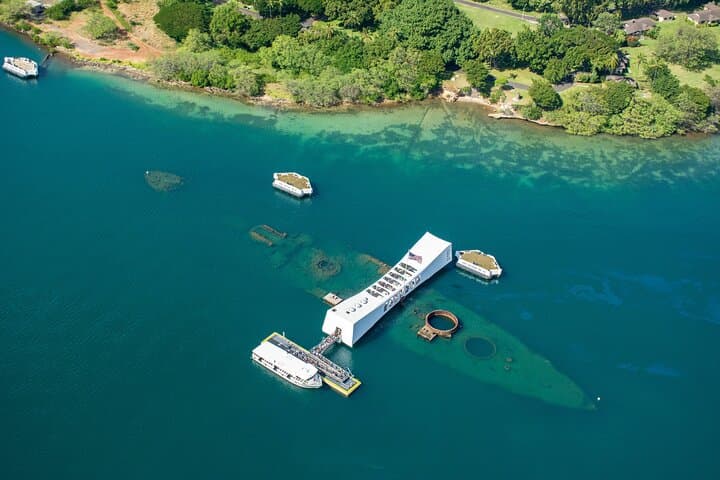

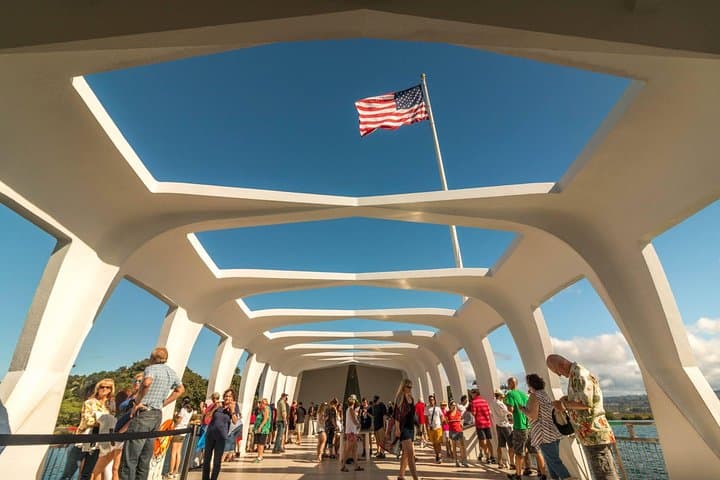

The harbor is quiet before the morning heat lifts off Waikīkī — water holding the rusted ribs of a battleship while tour buses hum toward the Visitor Center. You arrive among low concrete memorials and interpretive displays; film footage and artifacts orient you to December 7, 1941, and a short Navy shuttle cuts across the water to the white span of the USS Arizona Memorial where names and oil-slick memories mark the sea.
The harbor is quiet before the morning heat lifts off Waikīkī — water holding the rusted ribs of a battleship while tour buses hum toward the Visitor Center. You arrive among low concrete memorials and interpretive displays; film footage and artifacts orient you to December 7, 1941, and a short Navy shuttle cuts across the water to the white span of the USS Arizona Memorial where names and oil-slick memories mark the sea.
Pearl Harbor sits on young volcanic crust carved from shield eruptions of Oʻahu’s ancient calderas; the harbor itself was shaped by subsidence and historic reef growth. The Visitor Center walks you through U.S. and Hawaiian perspectives of WWII; the subsequent city drive sketches Honolulu’s layered history — from the Hawaiian monarchy at ʻIolani Palace to Kamehameha’s golden likeness and the mission-era Kawaiahaʻo Church.
Expect a measured half-day rhythm: exhibits and short film, a guided harbor boat to the Memorial (National Park Service permitting), then a narrated drive past civic landmarks. The tour balances reverence with context — staff emphasize respectful behavior at the memorial and strict no-bag policies that protect artifacts and site operations.
Practical planning: book morning departures to avoid crowds and heat, bring only allowed items (wallet, camera, bottled water), and wear comfortable shoes for walking exhibits and standing on the boat. If you use a wheelchair or stroller, the route is accessible; allow time afterward for reflection or a quieter stop at the USS Bowfin Submarine Museum nearby. Humidity and sudden showers are possible year-round — a light shell and sun protection make the visit comfortable.