THE ADVENTURE COLLECTIVE® · Independent discovery and booking for outdoor travel

Explore Pearl Harbor at your own pace with an official multimedia guide narrated by Jamie Lee Curtis, park rangers, and survivors. Learn the history along the shoreline and in two museums—just note that boat tickets to the USS Arizona Memorial are separate.
Explore Pearl Harbor at your own pace with an official multimedia guide narrated by Jamie Lee Curtis, park rangers, and survivors. Learn the history along the shoreline and in two museums—just note that boat tickets to the USS Arizona Memorial are separate.
You step off the shuttle and the harbor opens: low waves lap a darkened shoreline, the memorial floats like a pale promise on the water, and the air smells faintly of salt and diesel. The Captain's Official self-guided multimedia tour hands you a device and a steady voice—Jamie Lee Curtis alongside National Park Rangers and survivors—so you can move through the Visitor Center, two museums, and the shoreline "Path of Attack" at your own pace.
Verified experiences and guided adventures in the surrounding area.
Operated by Pacific Historic Parks · Honolulu, Hawaii
You step off the shuttle and the harbor opens: low waves lap a darkened shoreline, the memorial floats like a pale promise on the water, and the air smells faintly of salt and diesel. The Captain's Official self-guided multimedia tour hands you a device and a steady voice—Jamie Lee Curtis alongside National Park Rangers and survivors—so you can move through the Visitor Center, two museums, and the shoreline "Path of Attack" at your own pace.
This place marks December 7, 1941, when the attack changed U.S. history; the USS Arizona remains an underwater grave and focal point. Geologically, Pearl Harbor sits in a broad inlet on Oahu's south shore, shaped by coral growth and coastal plain processes that formed a protected anchorage—which is part of why it became a fleet base. Locally, the site is both a place of remembrance and an active cultural landscape for Hawaiians and service families.
Practical guidance is straightforward: the multimedia device and earphones are included and easy to use, but boat tickets to visit the Arizona’s memorial platform are separate—reserve at recreation.gov or join the standby queue. Expect 1–3 hours for a thorough visit; surfaces and transportation are wheelchair accessible, but the Visitor Center enforces a strict no-bag policy. Wear sun protection and comfortable shoes for the shoreline walk; bring water and time to pause at interpretive exhibits. Respect the memorial as hallowed ground—photograph with restraint and follow staff instructions. For a focused, self-paced visit that balances explanation with space to reflect, this multimedia tour delivers context-rich storytelling right where history happened.
easy.
1–3 hours.
Suitable for most fitness levels; minimal walking with some standing at exhibits and along the shoreline.
No; boat tickets are not included. Reserve them in advance at recreation.gov (small fee) or join the free in-person standby queue at the Visitor Center.
Yes; the Visitor Center, many exhibits, and transportation options are wheelchair accessible, but check current accessibility details for any shoreline or boat access restrictions.
Plan 1–3 hours to move through both museums, the Visitor Center, and the shoreline Path of Attack at a measured pace.
Cameras are allowed, but there is a strict no-bag policy for most items over small dimensions; paid storage is available nearby for larger bags.
Pearl Harbor was attacked on December 7, 1941, an event that propelled the U.S. into World War II; the Arizona remains a sunken war grave and memorial.
The site balances heavy visitation with preservation; follow guidelines, avoid disturbing artifacts, and respect the memorial as a protected, sacred place.
Pacific Historic Parks operates guided outdoor trips and adventures with an emphasis on safety, stewardship, and memorable experiences.

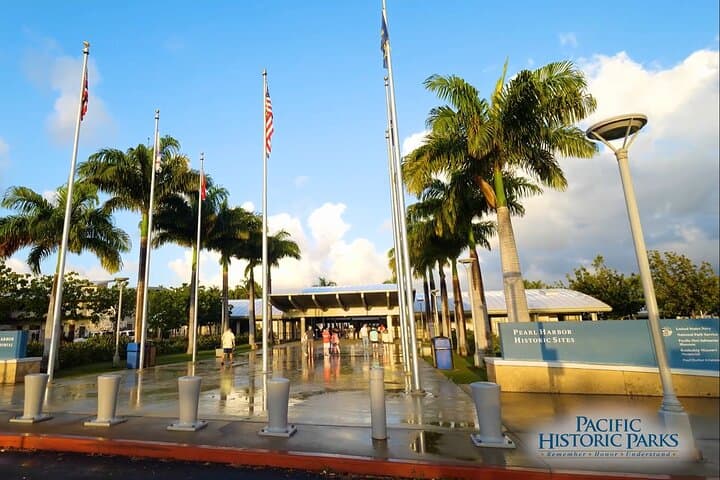
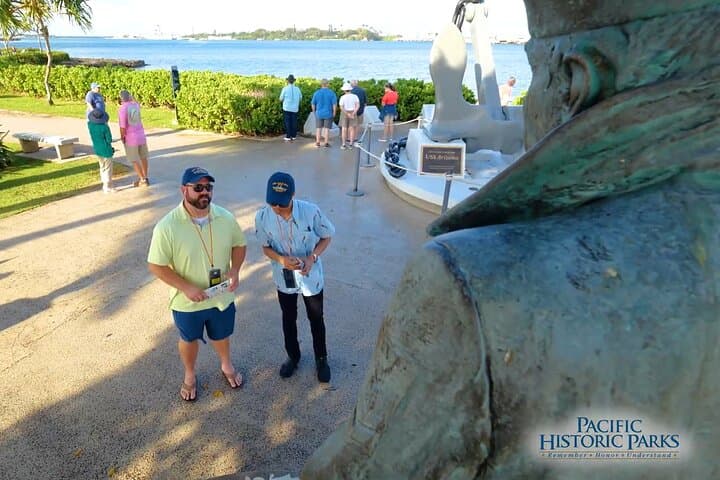
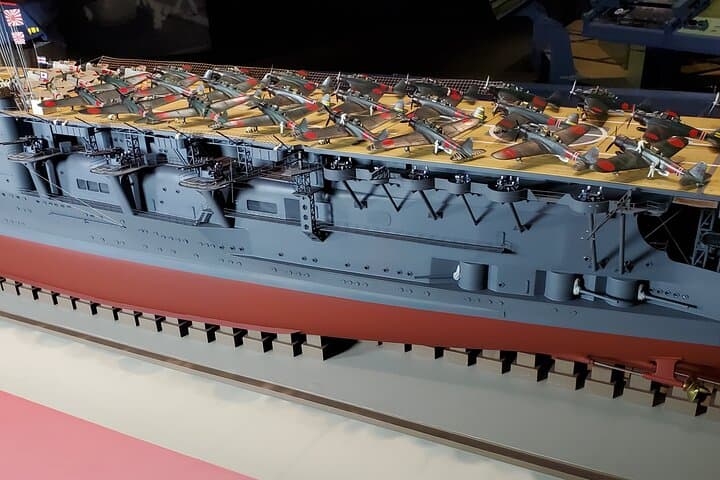
You step off the shuttle and the harbor opens: low waves lap a darkened shoreline, the memorial floats like a pale promise on the water, and the air smells faintly of salt and diesel. The Captain's Official self-guided multimedia tour hands you a device and a steady voice—Jamie Lee Curtis alongside National Park Rangers and survivors—so you can move through the Visitor Center, two museums, and the shoreline "Path of Attack" at your own pace.
You step off the shuttle and the harbor opens: low waves lap a darkened shoreline, the memorial floats like a pale promise on the water, and the air smells faintly of salt and diesel. The Captain's Official self-guided multimedia tour hands you a device and a steady voice—Jamie Lee Curtis alongside National Park Rangers and survivors—so you can move through the Visitor Center, two museums, and the shoreline "Path of Attack" at your own pace.
This place marks December 7, 1941, when the attack changed U.S. history; the USS Arizona remains an underwater grave and focal point. Geologically, Pearl Harbor sits in a broad inlet on Oahu's south shore, shaped by coral growth and coastal plain processes that formed a protected anchorage—which is part of why it became a fleet base. Locally, the site is both a place of remembrance and an active cultural landscape for Hawaiians and service families.
Practical guidance is straightforward: the multimedia device and earphones are included and easy to use, but boat tickets to visit the Arizona’s memorial platform are separate—reserve at recreation.gov or join the standby queue. Expect 1–3 hours for a thorough visit; surfaces and transportation are wheelchair accessible, but the Visitor Center enforces a strict no-bag policy. Wear sun protection and comfortable shoes for the shoreline walk; bring water and time to pause at interpretive exhibits. Respect the memorial as hallowed ground—photograph with restraint and follow staff instructions. For a focused, self-paced visit that balances explanation with space to reflect, this multimedia tour delivers context-rich storytelling right where history happened.