THE ADVENTURE COLLECTIVE® · Independent discovery and booking for outdoor travel

Board a seaplane at Juneau and fly over Admiralty Island to Chichagof Island for close, responsible viewing of brown bears fishing below a waterfall. Expect 2.5–4 hours onshore observation with expert guides and scenic flightseeing over the Tongass.
Board a seaplane at Juneau and fly over Admiralty Island to Chichagof Island for close, responsible viewing of brown bears fishing below a waterfall. Expect 2.5–4 hours onshore observation with expert guides and scenic flightseeing over the Tongass.
The floatplane drops you onto a glassy inlet; cold spray kisses the windows as the propeller slows. You step from the plane onto a rocky shore and the river—fed by a cascade above—seems to dare you closer. Across the channel, hulking brown bears patrol the shallows, fishing with a slow, deliberate patience that makes the world around them feel very small and precise.
Verified experiences and guided adventures in the surrounding area.
Operated by Wild Coast Excursions · Juneau, Alaska
The floatplane drops you onto a glassy inlet; cold spray kisses the windows as the propeller slows. You step from the plane onto a rocky shore and the river—fed by a cascade above—seems to dare you closer. Across the channel, hulking brown bears patrol the shallows, fishing with a slow, deliberate patience that makes the world around them feel very small and precise.
This trip threads natural history and local culture: the Tongass National Forest’s wet coastal temperate rainforest carves fjords and channels, glaciers trace the high ridgelines, and Tlingit place names and stories still mark the islands. Geologically, the islands are sculpted by glacial carving and active coastal processes—waterfalls spill where ice once flowed and salmon runs pulse through shallow rivers that concentrate bear activity.
Expect 2.5–4 hours of guided bear observation at a small river mouth below a waterfall, with expert local narration about bear behavior and salmon ecology. The operator flies from Ward Air at Juneau Airport, crossing Admiralty Island and returning on a scenic flight over the Tongass.
Practical guidance: wear sturdy waterproof footwear and a warm, layered shell; rubber boots and rain gear are provided, but bring your own if you prefer. Binoculars or a telephoto lens make wildlife viewing comfortable without approaching animals. Be ready to disembark into shallow water and walk on slippery cobbles for roughly half a mile; stable, confident footing matters more than long-distance fitness. Flights can be canceled for weather—pack patience and plan buffer time in your schedule. Respect viewing distances, listen to guides, and treat the coastline as shared habitat—this is high-quality, low-impact wildlife watching.
moderate.
5–6 hours (including flights and transit).
Should be comfortable stepping into shallow water and walking half a mile on uneven, slippery cobbles; no long-distance hiking required.
Guides position guests at a safe, regulated distance—you’ll be near enough for good viewing and photography, but far enough to avoid disturbing the bears.
Yes—trips are described as suitable for most fitness levels, but participants must be able to step into shallow water and navigate uneven beach rocks.
Flights may be canceled for safety and visibility; operators typically notify guests and may offer rescheduling or refunds per policy.
Round-trip seaplane flights from Juneau, a shore-side guided bear viewing session, lunch, landing fees, and provided rain gear and rubber boots are included.
The region lies within Tlingit traditional territory; coastal travel and salmon harvest have shaped local culture for millennia.
Operators emphasize low-impact viewing and are carbon-negative; follow guide instructions, avoid noise, and never approach or feed wildlife to minimize disturbance.
Wild Coast Excursions operates guided outdoor trips and adventures with an emphasis on safety, stewardship, and memorable experiences.


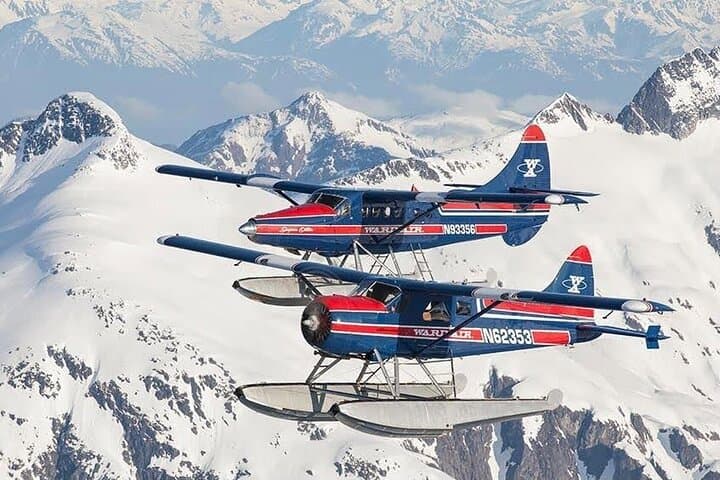
The floatplane drops you onto a glassy inlet; cold spray kisses the windows as the propeller slows. You step from the plane onto a rocky shore and the river—fed by a cascade above—seems to dare you closer. Across the channel, hulking brown bears patrol the shallows, fishing with a slow, deliberate patience that makes the world around them feel very small and precise.
The floatplane drops you onto a glassy inlet; cold spray kisses the windows as the propeller slows. You step from the plane onto a rocky shore and the river—fed by a cascade above—seems to dare you closer. Across the channel, hulking brown bears patrol the shallows, fishing with a slow, deliberate patience that makes the world around them feel very small and precise.
This trip threads natural history and local culture: the Tongass National Forest’s wet coastal temperate rainforest carves fjords and channels, glaciers trace the high ridgelines, and Tlingit place names and stories still mark the islands. Geologically, the islands are sculpted by glacial carving and active coastal processes—waterfalls spill where ice once flowed and salmon runs pulse through shallow rivers that concentrate bear activity.
Expect 2.5–4 hours of guided bear observation at a small river mouth below a waterfall, with expert local narration about bear behavior and salmon ecology. The operator flies from Ward Air at Juneau Airport, crossing Admiralty Island and returning on a scenic flight over the Tongass.
Practical guidance: wear sturdy waterproof footwear and a warm, layered shell; rubber boots and rain gear are provided, but bring your own if you prefer. Binoculars or a telephoto lens make wildlife viewing comfortable without approaching animals. Be ready to disembark into shallow water and walk on slippery cobbles for roughly half a mile; stable, confident footing matters more than long-distance fitness. Flights can be canceled for weather—pack patience and plan buffer time in your schedule. Respect viewing distances, listen to guides, and treat the coastline as shared habitat—this is high-quality, low-impact wildlife watching.