THE ADVENTURE COLLECTIVE® · Independent discovery and booking for outdoor travel

Spend an overnight under open sky at Pawna Lake—BBQ, live music and lakefront campfire against the backdrop of Lonavala’s forts. This guide explains what to expect, how to prepare and how to get the most from an easy, scenic overnight.
Spend an overnight under open sky at Pawna Lake—BBQ, live music and lakefront campfire against the backdrop of Lonavala’s forts. This guide explains what to expect, how to prepare and how to get the most from an easy, scenic overnight.
A low sun throws long shadows across Pawna’s water and the campsite hums with snapping twigs and distant conversation. You arrive by jeep as the lake flattens into a slow mirror; tents sit on gravel terraces above the shore and the hills around Lonavala press close like patient hosts.
Verified experiences and guided adventures in the surrounding area.
Operated by Adventure Club Pune · Kamshet, Maharashtra
A low sun throws long shadows across Pawna’s water and the campsite hums with snapping twigs and distant conversation. You arrive by jeep as the lake flattens into a slow mirror; tents sit on gravel terraces above the shore and the hills around Lonavala press close like patient hosts.
The Pawna basin was formed when engineers dammed seasonal streams to form a reservoir feeding the Deccan plateau. Forts—Tung, Tikona, Lohagad—stood watch over trade routes here for centuries; at night the hills feel like old ramparts holding back the sky. Geology is simple but stark: lateritic slopes, exposed rock steps and low scrub that green up dramatically after monsoon.
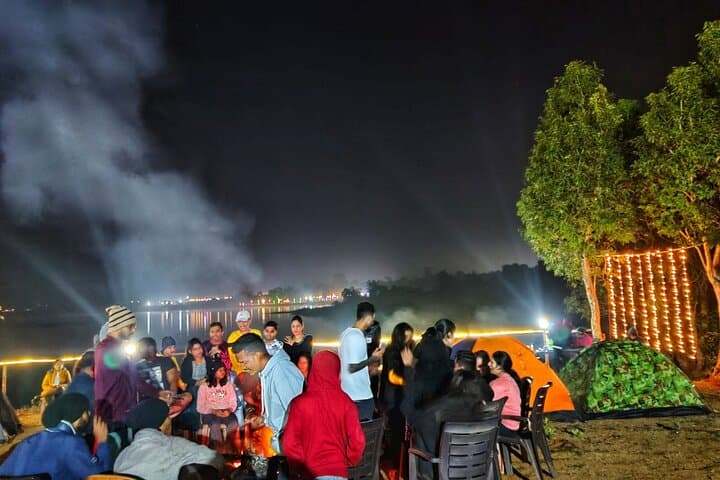
Culture at the campsite blends weekend-music energy with village rhythms: live bands, BBQ aromas and the occasional temple bell from a distant hamlet. Wildlife is quiet—peafowl call at first light, langurs flick through trees—and the lake’s edge attracts waterfowl in cooler months.
Practically, expect uneven ground, limited lighting after dark, and communal facilities. Bring layered clothes for sharp overnight drops in temperature, a headlamp for late arrivals, and water in reusable bottles. Time your trip for sunset; the best photography window is the hour after golden hour when reflections sharpen.
Plan arrival by 3–4 PM for orientation and dinner, and budget local transport from Kamshet or Lonavala. Respect quiet hours, pack out trash, avoid open fireworks near grass, and treat the reservoir and its shores as a fragile recreational resource—leave it better than you found it.
easy.
18 hours (overnight).
Suitable for most fitness levels; minimal hiking required, mostly short walks on uneven ground
Public trains to Kamshet or Lonavala are common; from either station you can take an auto, taxi or pre-arranged jeep transfer to the campsite (Kamshet is nearer).
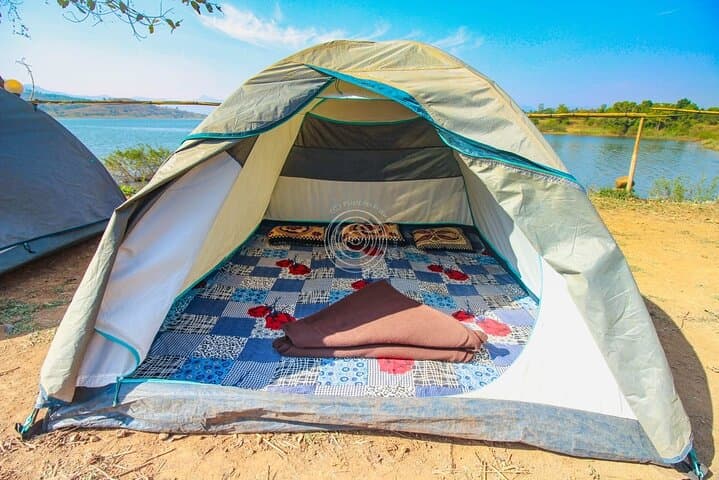
Basic shared facilities are typically provided; bring biodegradable toiletries and a towel as amenities vary by operator.
Service animals are allowed per the operator, but confirm in advance and bring necessary documentation and cleanup supplies.
Swimming is generally not recommended due to variable depths and reservoir conditions—follow host guidance and avoid entering after dusk.
The Pawna reservoir sits among forts and trade routes used in the Maratha era; many nearby hills hold fortifications dating to regional conflicts in the 17th–18th centuries.
The lake is a managed reservoir—tourism pressures fragile shoreline vegetation; practice Leave No Trace, avoid single-use plastics and follow campsite fire rules.
Adventure Club Pune operates guided outdoor trips and adventures with an emphasis on safety, stewardship, and memorable experiences.
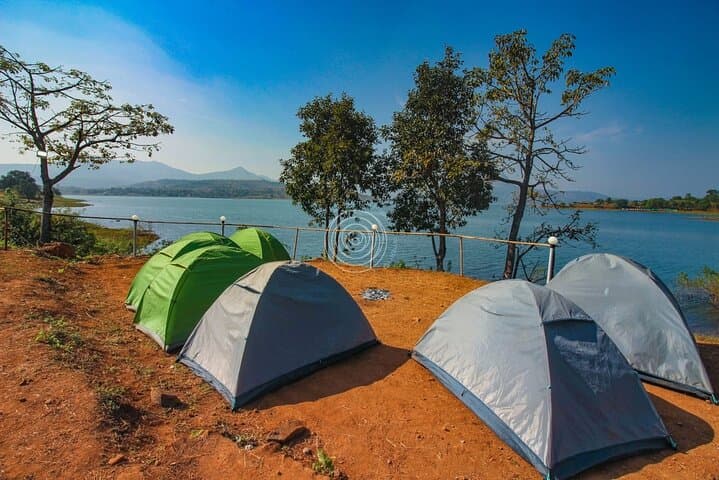
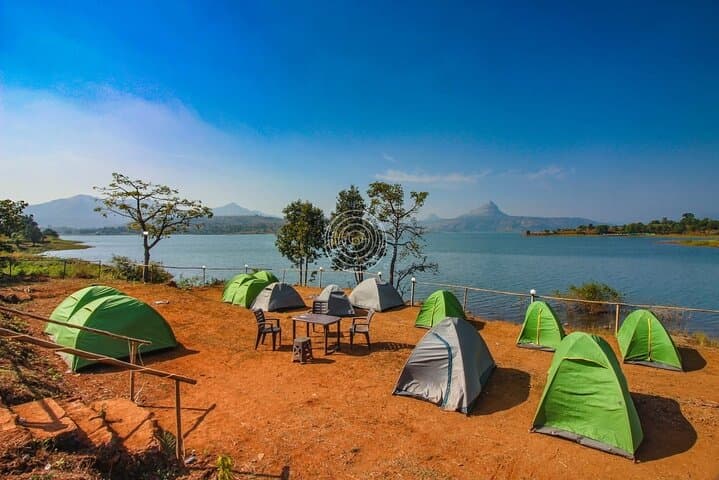
A low sun throws long shadows across Pawna’s water and the campsite hums with snapping twigs and distant conversation. You arrive by jeep as the lake flattens into a slow mirror; tents sit on gravel terraces above the shore and the hills around Lonavala press close like patient hosts.
A low sun throws long shadows across Pawna’s water and the campsite hums with snapping twigs and distant conversation. You arrive by jeep as the lake flattens into a slow mirror; tents sit on gravel terraces above the shore and the hills around Lonavala press close like patient hosts.
The Pawna basin was formed when engineers dammed seasonal streams to form a reservoir feeding the Deccan plateau. Forts—Tung, Tikona, Lohagad—stood watch over trade routes here for centuries; at night the hills feel like old ramparts holding back the sky. Geology is simple but stark: lateritic slopes, exposed rock steps and low scrub that green up dramatically after monsoon.
Culture at the campsite blends weekend-music energy with village rhythms: live bands, BBQ aromas and the occasional temple bell from a distant hamlet. Wildlife is quiet—peafowl call at first light, langurs flick through trees—and the lake’s edge attracts waterfowl in cooler months.
Practically, expect uneven ground, limited lighting after dark, and communal facilities. Bring layered clothes for sharp overnight drops in temperature, a headlamp for late arrivals, and water in reusable bottles. Time your trip for sunset; the best photography window is the hour after golden hour when reflections sharpen.
Plan arrival by 3–4 PM for orientation and dinner, and budget local transport from Kamshet or Lonavala. Respect quiet hours, pack out trash, avoid open fireworks near grass, and treat the reservoir and its shores as a fragile recreational resource—leave it better than you found it.