THE ADVENTURE COLLECTIVE® · Independent discovery and booking for outdoor travel

Step off the ship and climb Skala’s stone alleys to a Byzantine fortress and a small limestone cave where tradition says John received the Book of Revelation. This 2–3 hour guided shore tour combines compact cultural sites with practical logistics for cruise passengers.
Step off the ship and climb Skala’s stone alleys to a Byzantine fortress and a small limestone cave where tradition says John received the Book of Revelation. This 2–3 hour guided shore tour combines compact cultural sites with practical logistics for cruise passengers.
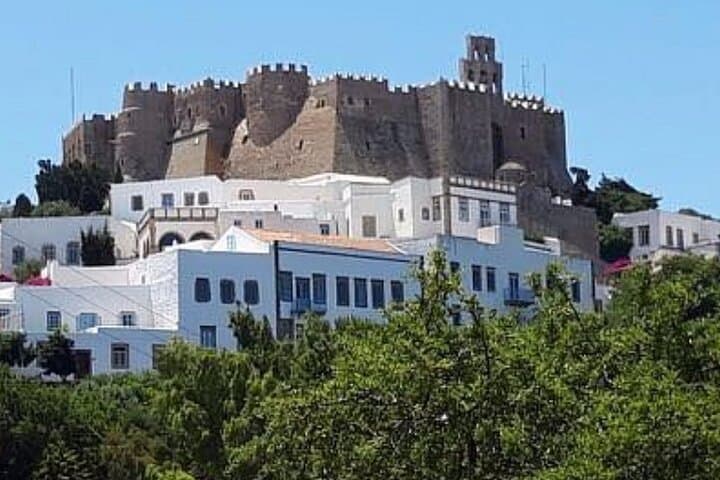
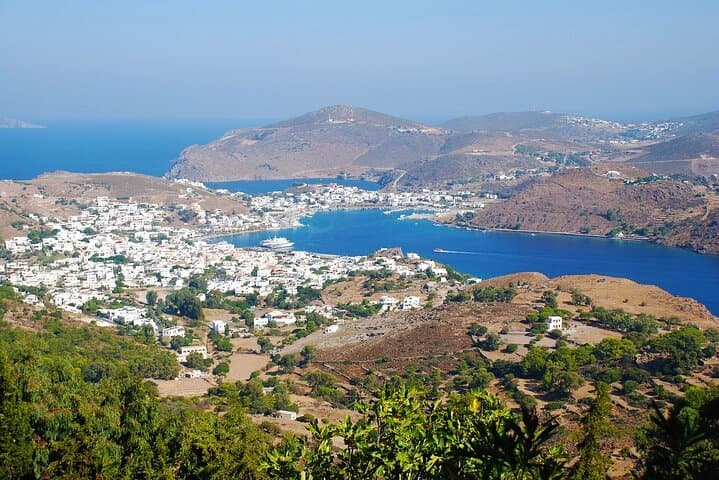
A morning on Patmos begins at the salt-bright quay of Skala, where the island’s compact streets climb in tight stone steps toward a fortress that still looks prepared for siege. Walk upward and the air changes—less sea breeze, more history—as you approach the Monastery of St. John the Theologian, its towering walls casting long, cool shadows across a courtyard worn by pilgrims.
Verified experiences and guided adventures in the surrounding area.
Operated by Private Tours Greece · Patmos, South Aegean
A morning on Patmos begins at the salt-bright quay of Skala, where the island’s compact streets climb in tight stone steps toward a fortress that still looks prepared for siege. Walk upward and the air changes—less sea breeze, more history—as you approach the Monastery of St. John the Theologian, its towering walls casting long, cool shadows across a courtyard worn by pilgrims.
Founded in 1088 by Ossios Christodoulos under Byzantine patronage, the monastery reads as both defensive keep and retreat: walls exceed 15 meters, and the complex measures roughly 53 by 70 meters. Nearby, the Cave of the Apocalypse sits low in the island’s limestone, a small chamber where tradition holds John the Evangelist received and transcribed revelations. That blend of Byzantine architecture and karst geology creates a compact cultural landscape—chapels, icons, carved stone and the constant presence of the Aegean beyond.
Expect narrow, cobbled lanes and many stone steps between port and Chora; the tour typically runs 2–3 hours and balances short walks with seated time inside historic spaces. Practicalities: cover shoulders and knees for religious sites, wear sturdy walking shoes for uneven paving, and bring water and sun protection—shaded seating is limited. Photography and quiet reflection are common; follow site signage and your guide’s directions. The itinerary usually includes port pickup and return, entry fees and an English-speaking guide, making this a straightforward shore excursion for travelers interested in history, faith and compact island scenery.
easy.
2–3 hours.
Suitable for most travelers with basic mobility; involves short walks and stair sections between port and sites.
The guided shore excursion runs approximately 2–3 hours, including port pickup and return.
Entry/admission fees are included in the tour price, and a licensed English-speaking guide accompanies the group.
Yes—pickup and drop-off at the cruise port are included, but the route includes stairs and uneven surfaces which may limit full wheelchair access.
Photography rules vary by site; interior spaces in the monastery and cave may restrict flash or close-up photos—follow posted signs and the guide’s instructions.
Patmos gained prominence in the Byzantine era as a monastic center after Ossios Christodoulos founded the Monastery of St. John in 1088; the island’s spiritual legacy centers on the Cave of the Apocalypse where Revelation is traditionally linked to John.
Patmos balances pilgrimage and tourism—respect site rules, avoid touching fragile frescoes or icons, and carry out waste; local sustainability depends on preserving these historic spaces.
Private Tours Greece operates guided outdoor trips and adventures with an emphasis on safety, stewardship, and memorable experiences.
A morning on Patmos begins at the salt-bright quay of Skala, where the island’s compact streets climb in tight stone steps toward a fortress that still looks prepared for siege. Walk upward and the air changes—less sea breeze, more history—as you approach the Monastery of St. John the Theologian, its towering walls casting long, cool shadows across a courtyard worn by pilgrims.
A morning on Patmos begins at the salt-bright quay of Skala, where the island’s compact streets climb in tight stone steps toward a fortress that still looks prepared for siege. Walk upward and the air changes—less sea breeze, more history—as you approach the Monastery of St. John the Theologian, its towering walls casting long, cool shadows across a courtyard worn by pilgrims.
Founded in 1088 by Ossios Christodoulos under Byzantine patronage, the monastery reads as both defensive keep and retreat: walls exceed 15 meters, and the complex measures roughly 53 by 70 meters. Nearby, the Cave of the Apocalypse sits low in the island’s limestone, a small chamber where tradition holds John the Evangelist received and transcribed revelations. That blend of Byzantine architecture and karst geology creates a compact cultural landscape—chapels, icons, carved stone and the constant presence of the Aegean beyond.
Expect narrow, cobbled lanes and many stone steps between port and Chora; the tour typically runs 2–3 hours and balances short walks with seated time inside historic spaces. Practicalities: cover shoulders and knees for religious sites, wear sturdy walking shoes for uneven paving, and bring water and sun protection—shaded seating is limited. Photography and quiet reflection are common; follow site signage and your guide’s directions. The itinerary usually includes port pickup and return, entry fees and an English-speaking guide, making this a straightforward shore excursion for travelers interested in history, faith and compact island scenery.