THE ADVENTURE COLLECTIVE® · Independent discovery and booking for outdoor travel

Explore two UNESCO heritage cities and a Himalayan viewpoint in a day. This practical guide explains what to expect — from carved courtyards in Patan and Bhaktapur to sunrise prospects at Nagarkot — and how to prepare.
Explore two UNESCO heritage cities and a Himalayan viewpoint in a day. This practical guide explains what to expect — from carved courtyards in Patan and Bhaktapur to sunrise prospects at Nagarkot — and how to prepare.
You step out of the car and the valley opens: terracotta roofs, carved wooden windows, incense drifting from courtyards. This full-day loop threads two of the Kathmandu Valley’s most complete medieval cities — Patan (Lalitpur) and Bhaktapur — then climbs to Nagarkot, where the horizon dares you to pick out the Himalaya’s white teeth on a clear morning.
Verified experiences and guided adventures in the surrounding area.
Operated by Swami Narayan Travels Pvt Ltd · Kathmandu, Bagmati Province
You step out of the car and the valley opens: terracotta roofs, carved wooden windows, incense drifting from courtyards. This full-day loop threads two of the Kathmandu Valley’s most complete medieval cities — Patan (Lalitpur) and Bhaktapur — then climbs to Nagarkot, where the horizon dares you to pick out the Himalaya’s white teeth on a clear morning.
Patan and Bhaktapur are UNESCO-listed centers of Newar craftsmanship. Stone and wood speak of Malla kings, temples rise from brick platforms, and narrow lanes funnel life toward Durbar Squares where bronze images and courtyard workshops still shape metal and clay as they have for centuries. Geologically the valley sits in a high intermontane basin; Nagarkot’s ridge at roughly 2,100–2,200 m gives a direct line of sight to the high Himalaya — including Everest on exceptionally clear days.
Culturally, expect ritual offerings, shops selling paubha paintings, and vendors making curd and local breads. The rhythm is mostly easy walking with short stair climbs and uneven paving; driving links the sites.
Practical guidance: plan the tour for early morning light at Nagarkot, carry cash for small temple donations and museum admissions, and bring layers — temperatures can drop significantly between Kathmandu and the ridge. Comfortable walking shoes, sun protection, and a charged camera are musts. If visibility is poor, the heritage towns still reward with architecture and living crafts that don’t depend on mountain views, making this a versatile day of history, landscape, and hands-on culture.
easy.
4–6 hours.
Suitable for most fitness levels; requires short periods of walking on uneven surfaces and some stair climbs.
This tour typically does not include museum or monument entrance fees; bring cash to pay admissions at Patan and Bhaktapur where required.
Driving from central Kathmandu to Patan takes 15–30 minutes; Bhaktapur is roughly 20–40 minutes from central Kathmandu; Nagarkot is a 45–60 minute drive from the valley depending on traffic.
Yes — the itinerary is low-impact with short walks; however, those with mobility issues should note uneven ground and steps at heritage sites.
Clear days in late autumn (October–November) and winter (December–February) offer the best chances for long-range visibility early in the morning.
Patan and Bhaktapur are core Newar cities with Durbar Squares that preserve Malla-period palaces, temples, and artisanal guilds—both are UNESCO World Heritage Sites.
Visitor impact is managed by local conservation rules and UNESCO protections; stick to marked paths, avoid littering, and support local artisans to keep traditional crafts viable.
Swami Narayan Travels Pvt Ltd operates guided outdoor trips and adventures with an emphasis on safety, stewardship, and memorable experiences.
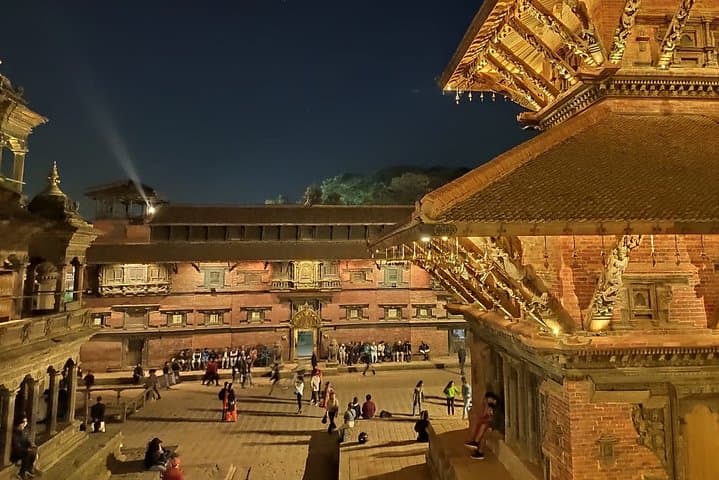
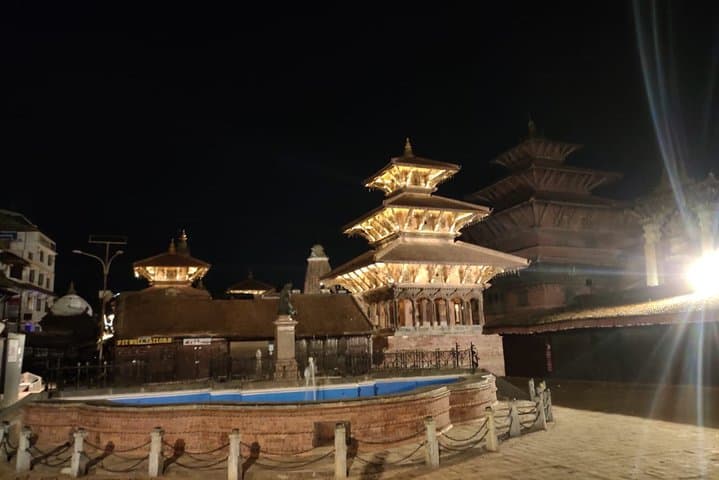
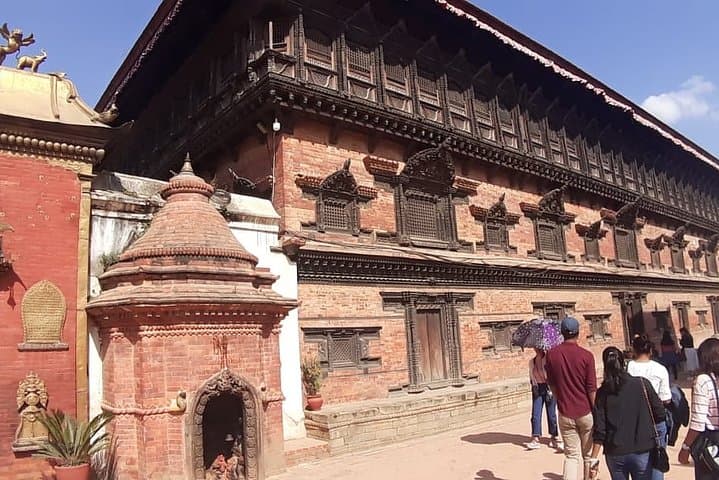
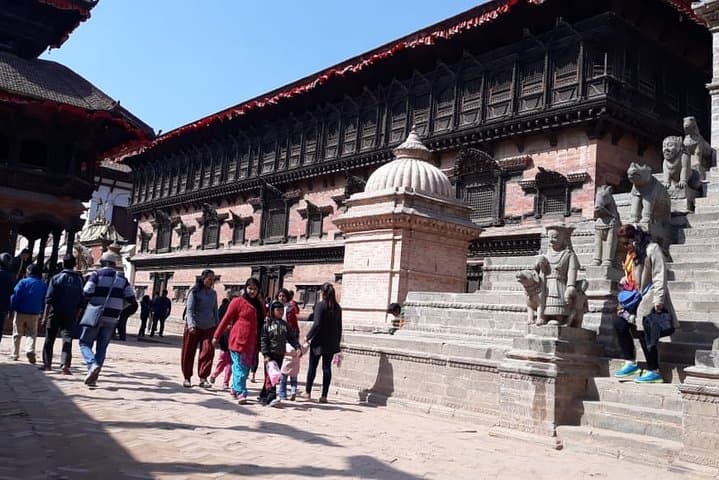
You step out of the car and the valley opens: terracotta roofs, carved wooden windows, incense drifting from courtyards. This full-day loop threads two of the Kathmandu Valley’s most complete medieval cities — Patan (Lalitpur) and Bhaktapur — then climbs to Nagarkot, where the horizon dares you to pick out the Himalaya’s white teeth on a clear morning.
You step out of the car and the valley opens: terracotta roofs, carved wooden windows, incense drifting from courtyards. This full-day loop threads two of the Kathmandu Valley’s most complete medieval cities — Patan (Lalitpur) and Bhaktapur — then climbs to Nagarkot, where the horizon dares you to pick out the Himalaya’s white teeth on a clear morning.
Patan and Bhaktapur are UNESCO-listed centers of Newar craftsmanship. Stone and wood speak of Malla kings, temples rise from brick platforms, and narrow lanes funnel life toward Durbar Squares where bronze images and courtyard workshops still shape metal and clay as they have for centuries. Geologically the valley sits in a high intermontane basin; Nagarkot’s ridge at roughly 2,100–2,200 m gives a direct line of sight to the high Himalaya — including Everest on exceptionally clear days.
Culturally, expect ritual offerings, shops selling paubha paintings, and vendors making curd and local breads. The rhythm is mostly easy walking with short stair climbs and uneven paving; driving links the sites.
Practical guidance: plan the tour for early morning light at Nagarkot, carry cash for small temple donations and museum admissions, and bring layers — temperatures can drop significantly between Kathmandu and the ridge. Comfortable walking shoes, sun protection, and a charged camera are musts. If visibility is poor, the heritage towns still reward with architecture and living crafts that don’t depend on mountain views, making this a versatile day of history, landscape, and hands-on culture.