THE ADVENTURE COLLECTIVE® · Independent discovery and booking for outdoor travel

Climb to Veste Oberhaus for an hour-long tour that pairs medieval fortifications with one of Germany’s most striking river junctions. See St. George’s Chapel and the Linde Battery terrace where the Danube, Inn and Ilz meet in three distinct colors.
Climb to Veste Oberhaus for an hour-long tour that pairs medieval fortifications with one of Germany’s most striking river junctions. See St. George’s Chapel and the Linde Battery terrace where the Danube, Inn and Ilz meet in three distinct colors.
You step out of the narrow cobbled lanes of Passau and climb toward a fortress perched above the city; wind and river smells mix as the Danube, Inn and Ilz come into view below.
Verified experiences and guided adventures in the surrounding area.
Operated by BlackBuck Travels · Passau, Bavaria
You step out of the narrow cobbled lanes of Passau and climb toward a fortress perched above the city; wind and river smells mix as the Danube, Inn and Ilz come into view below.
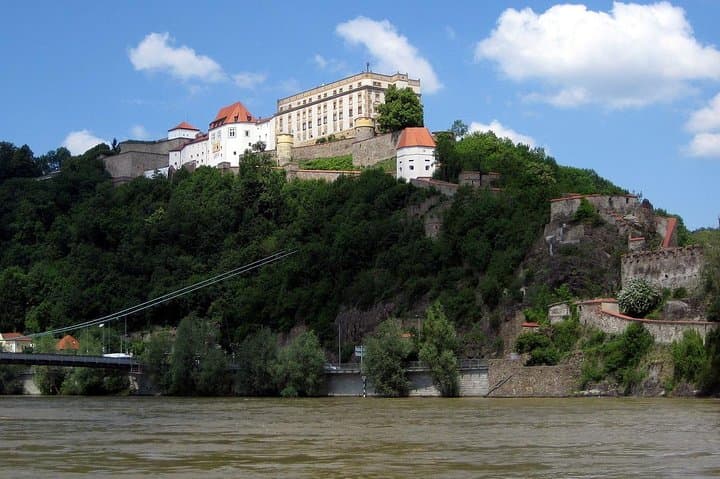
The tour centers on Veste Oberhaus, a medieval fortification started in 1219 by Prince-Bishop Ulrich II. Its stone walls and terraces occupy St. Georgsberg, a 105-meter rise above the river junction, where steep cliffs still define the skyline and the chapel of St. George marks centuries of faith and local lore.
Geologically, the vantage point highlights three distinct river colors where different sediment loads meet—an instructive moment in fluvial dynamics visible from the Linde Battery terrace. Culturally, Passau is a borderland city shaped by trade along these rivers; the fort’s history includes sieges, civic rebellions, and military reuse into the modern era.
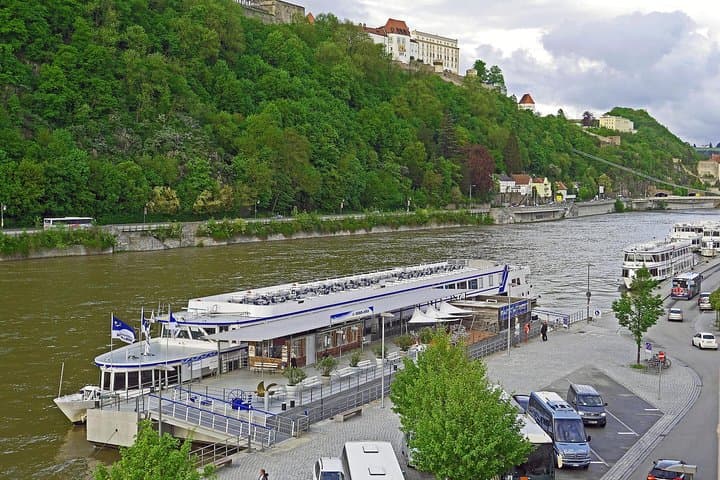
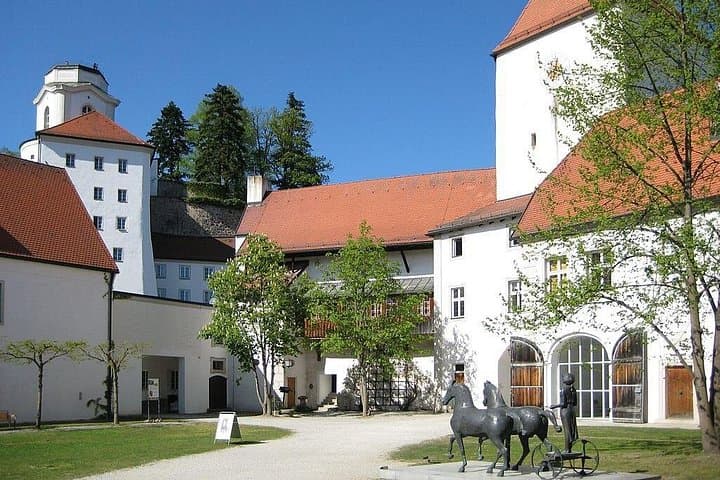
Expect a brisk, interpretive walk with stops at museum displays, the St. George’s Chapel, and a lookout that frames the Dreiflüsseeck (three-river corner). Guides typically point out the fortress’s military architecture, the town’s baroque skyline and the visible contrasts among the rivers.
Practicalities: the route is short and mostly paved with some steps—good walking shoes and a light jacket are enough. Visit in the morning for lower crowds and crisper light on the waterways. Photography is straightforward from the terraces; respect museum rules inside the fortress. The tour is suitable for most fitness levels and makes a compact cultural-and-nature half-hour of high-return sightseeing.
easy.
1 hour.
Suitable for most fitness levels; ability to climb stairs and walk short inclines required
The guided experience lasts about 60 minutes and focuses on the fortress, the chapel and the Linde Battery viewpoint.
Yes—it's rated easy, but participants should be able to manage stairs and short inclines; strollers may be difficult on steps.
This tour itinerary lists admission as included for the fortress and associated museum stops.
Yes—Passau has local bus options and the fortress is reachable on foot from the city center; check local timetables for connections.
Veste Oberhaus was established in 1219 by Prince-Bishop Ulrich II and later served multiple military and civic roles; the chapel of St. George reflects medieval devotional practice at the fort.
The confluence is sensitive to river traffic and runoff—stay on marked paths, avoid disturbing riverbanks, and carry out waste to limit impact.
BlackBuck Travels operates guided outdoor trips and adventures with an emphasis on safety, stewardship, and memorable experiences.
You step out of the narrow cobbled lanes of Passau and climb toward a fortress perched above the city; wind and river smells mix as the Danube, Inn and Ilz come into view below.
You step out of the narrow cobbled lanes of Passau and climb toward a fortress perched above the city; wind and river smells mix as the Danube, Inn and Ilz come into view below.
The tour centers on Veste Oberhaus, a medieval fortification started in 1219 by Prince-Bishop Ulrich II. Its stone walls and terraces occupy St. Georgsberg, a 105-meter rise above the river junction, where steep cliffs still define the skyline and the chapel of St. George marks centuries of faith and local lore.
Geologically, the vantage point highlights three distinct river colors where different sediment loads meet—an instructive moment in fluvial dynamics visible from the Linde Battery terrace. Culturally, Passau is a borderland city shaped by trade along these rivers; the fort’s history includes sieges, civic rebellions, and military reuse into the modern era.
Expect a brisk, interpretive walk with stops at museum displays, the St. George’s Chapel, and a lookout that frames the Dreiflüsseeck (three-river corner). Guides typically point out the fortress’s military architecture, the town’s baroque skyline and the visible contrasts among the rivers.
Practicalities: the route is short and mostly paved with some steps—good walking shoes and a light jacket are enough. Visit in the morning for lower crowds and crisper light on the waterways. Photography is straightforward from the terraces; respect museum rules inside the fortress. The tour is suitable for most fitness levels and makes a compact cultural-and-nature half-hour of high-return sightseeing.