THE ADVENTURE COLLECTIVE® · Independent discovery and booking for outdoor travel

Explore Parma on a self-guided scavenger hunt using the World City Trail app. Solve location-based riddles to visit the city’s top sights—at your own pace, with no guide required.
Explore Parma on a self-guided scavenger hunt using the World City Trail app. Solve location-based riddles to visit the city’s top sights—at your own pace, with no guide required.
The cobbled alleys of Parma open like a riddle as you lift your phone and begin the World City Trail game. Sunlight hits the pink stone of the Baptistery, a breeze off the Parma river nudges you toward Piazza Garibaldi, and narrow streets dare you to look up for carved façades and hidden plaques.
Verified experiences and guided adventures in the surrounding area.
Operated by World City Trail · Parma, Emilia-Romagna
The cobbled alleys of Parma open like a riddle as you lift your phone and begin the World City Trail game. Sunlight hits the pink stone of the Baptistery, a breeze off the Parma river nudges you toward Piazza Garibaldi, and narrow streets dare you to look up for carved façades and hidden plaques.
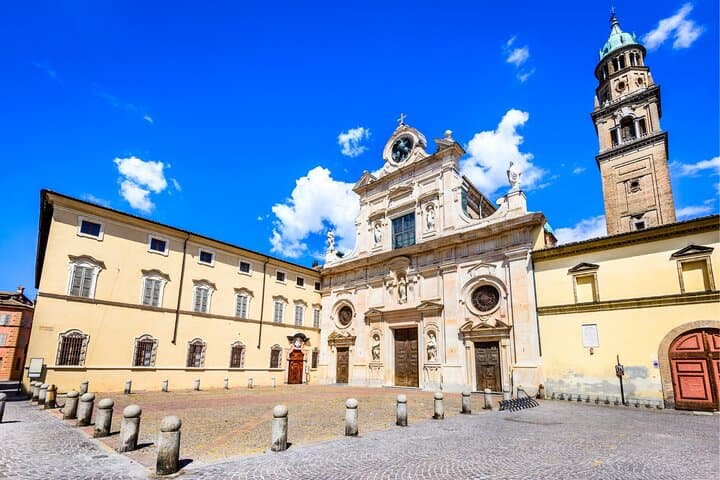
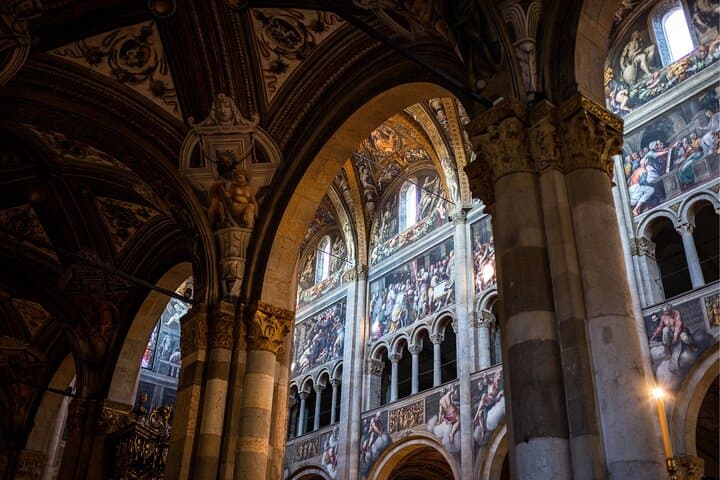
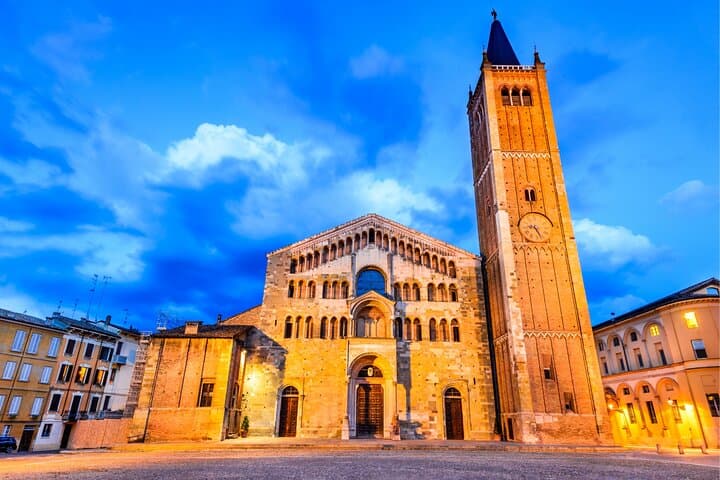
This self-guided scavenger hunt threads together Parma’s compact civic heart: Parco Ducale, Palazzo della Pilotta and its Teatro Farnese, the Verdi monument and the Romanesque Cattedrale. The city grew from a Roman settlement into a Renaissance court and later the Duchy of Parma; each square holds layers of civic life and artisan craft. The local geology—soft Po Valley clay and nearby Apennine limestone—has shaped the city’s low, broad profile and the warm, worn stone underfoot.
Culturally, expect opera references at every corner: Giuseppe Verdi’s legacy is woven into street names, statues and the Teatro Regio program. The scavenger hunt emphasizes exterior clues, so you can experience monuments without paying admission, and pause or resume the route whenever you like.
Practical guidance: the route totals about 2.9 km with roughly 26 minutes of walking distance but plan 90–120 minutes for puzzles, photos, and breaks. Use a charged smartphone and mobile data, wear comfortable walking shoes, and pick a morning slot to avoid midday crowds and heat in summer. Bring a small bottle of water, and watch for scooters—Parma is a living city, not a museum.
easy.
1.5–2 hours.
Suitable for light walkers and families; basic mobility to walk on uneven pavements is required
No—this is entirely self-guided. Start whenever you like; there is no on-site host.
The puzzles use outdoor features only; entering museums or theaters is optional and may require separate tickets.
Much of the route is on paved streets, but some cobbles and slight curbs may pose challenges; it’s rated physically easy but not fully wheelchair-accessible.
Clues are available in English, German, French, Italian, Spanish and Dutch via the World City Trail app.
Parma began as a Roman colony and later flourished as a ducal capital; its civic architecture reflects Renaissance patronage and a long operatic tradition linked to Verdi.
The historic center is fragile—stick to marked paths, avoid touching carved stonework, and use public bins to keep piazzas clean.
World City Trail operates guided outdoor trips and adventures with an emphasis on safety, stewardship, and memorable experiences.
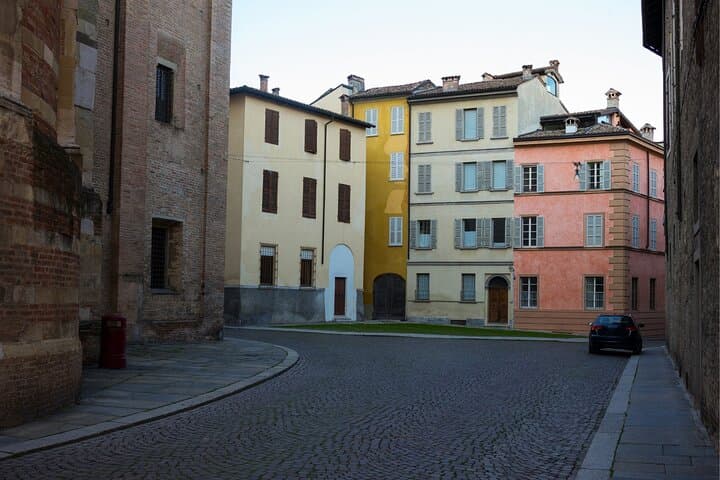
The cobbled alleys of Parma open like a riddle as you lift your phone and begin the World City Trail game. Sunlight hits the pink stone of the Baptistery, a breeze off the Parma river nudges you toward Piazza Garibaldi, and narrow streets dare you to look up for carved façades and hidden plaques.
The cobbled alleys of Parma open like a riddle as you lift your phone and begin the World City Trail game. Sunlight hits the pink stone of the Baptistery, a breeze off the Parma river nudges you toward Piazza Garibaldi, and narrow streets dare you to look up for carved façades and hidden plaques.
This self-guided scavenger hunt threads together Parma’s compact civic heart: Parco Ducale, Palazzo della Pilotta and its Teatro Farnese, the Verdi monument and the Romanesque Cattedrale. The city grew from a Roman settlement into a Renaissance court and later the Duchy of Parma; each square holds layers of civic life and artisan craft. The local geology—soft Po Valley clay and nearby Apennine limestone—has shaped the city’s low, broad profile and the warm, worn stone underfoot.
Culturally, expect opera references at every corner: Giuseppe Verdi’s legacy is woven into street names, statues and the Teatro Regio program. The scavenger hunt emphasizes exterior clues, so you can experience monuments without paying admission, and pause or resume the route whenever you like.
Practical guidance: the route totals about 2.9 km with roughly 26 minutes of walking distance but plan 90–120 minutes for puzzles, photos, and breaks. Use a charged smartphone and mobile data, wear comfortable walking shoes, and pick a morning slot to avoid midday crowds and heat in summer. Bring a small bottle of water, and watch for scooters—Parma is a living city, not a museum.