THE ADVENTURE COLLECTIVE® · Independent discovery and booking for outdoor travel

Skip the queues and head straight to Gaudí’s mosaic terraces with a Time‑Saver ticket. This guide covers what to expect on the walk, local history, best times to visit and practical tips to make the most of Park Güell.
Skip the queues and head straight to Gaudí’s mosaic terraces with a Time‑Saver ticket. This guide covers what to expect on the walk, local history, best times to visit and practical tips to make the most of Park Güell.
You step through the stone gatehouse and the city opens beneath you — sun on broken-tile benches, pines whispering on the slope, and Barcelona sprawled toward the sea. Park Güell is a place of angles and arcs: Gaudí’s mosaics curl like waves, columns rise like tree trunks, and the main terrace offers panoramic lines of rooftops and the Mediterranean horizon.
Verified experiences and guided adventures in the surrounding area.
Operated by 1Day Tickets · Barcelona, Catalonia
You step through the stone gatehouse and the city opens beneath you — sun on broken-tile benches, pines whispering on the slope, and Barcelona sprawled toward the sea. Park Güell is a place of angles and arcs: Gaudí’s mosaics curl like waves, columns rise like tree trunks, and the main terrace offers panoramic lines of rooftops and the Mediterranean horizon.
Built in the early 20th century for noble patron Eusebi Güell, the park began as an ambitious housing project and became one of Gaudí’s most public works. Geological terraces cut into El Carmel hill create the park’s stepped promenades; the local sandstone and Mediterranean pines shape the walk, while the microclimate keeps summers hot and winters mild. Culturally, the park sits in Gràcia, a neighborhood that still retains village streets and lively squares.
Practical guidance: the Time-Saver ticket gives priority admission to the Monumental Zone, so you skip the main ticket line and spend more time on the terrace and Hypostyle Room. Expect paved paths, short flights of stone steps and modest uphill walks when moving between zones — plan 1–3 hours for a relaxed visit. Access by Metro L3 (Vallcarca or Lesseps) requires an uphill walk or a short bus ride; arrive early or late afternoon to avoid peak crowds and harsh light. Bring water, sun protection, and a camera; respect the mosaics and the daily visitor limits. The park is open year-round and rewards both quick visits and slow exploration.
easy.
1–3 hours.
Suitable for most fitness levels; expect short uphill walks and stairs when moving between terraces
Yes — a timed ticket is required for the Monumental Zone where Gaudí’s main works and terrace are located; general green areas of the park are accessible but the prime sections require admission.
Plan 1–3 hours depending on how much time you spend on the terrace, exploring pathways, and visiting the Gaudí House Museum inside the park.
Some paths are stroller-accessible, but the Monumental Zone includes steps and uneven surfaces; check entry points and consider assistance for steep sections.
Metro L3 stations Vallcarca and Lesseps are the nearest; both require an uphill walk or a short bus/taxi to reach the park entrance.
Commissioned by industrialist Eusebi Güell and designed by Antoni Gaudí in the early 1900s, the site was repurposed from a housing project into a public park and is part of the UNESCO-listed Works of Antoni Gaudí.
The Monumental Zone has timed entries and visitor limits to protect mosaic surfaces and vegetation; follow marked paths, avoid touching frescoes and do not feed wildlife.
1Day Tickets operates guided outdoor trips and adventures with an emphasis on safety, stewardship, and memorable experiences.
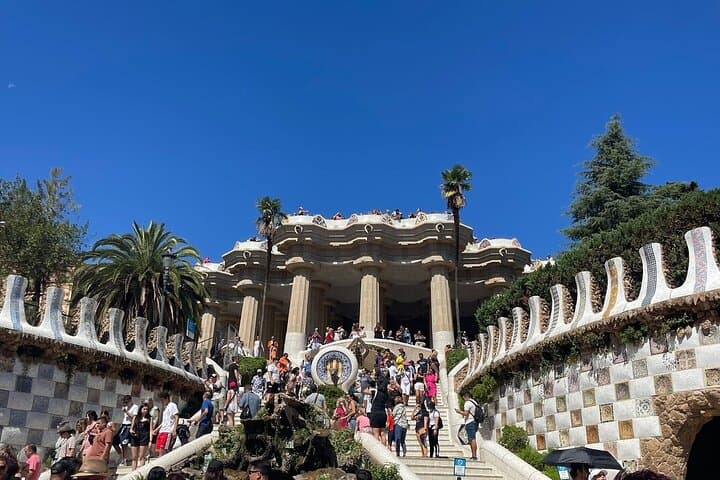
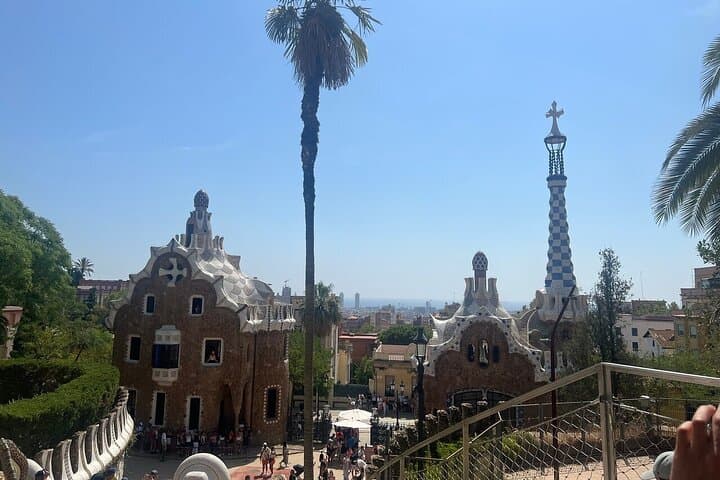
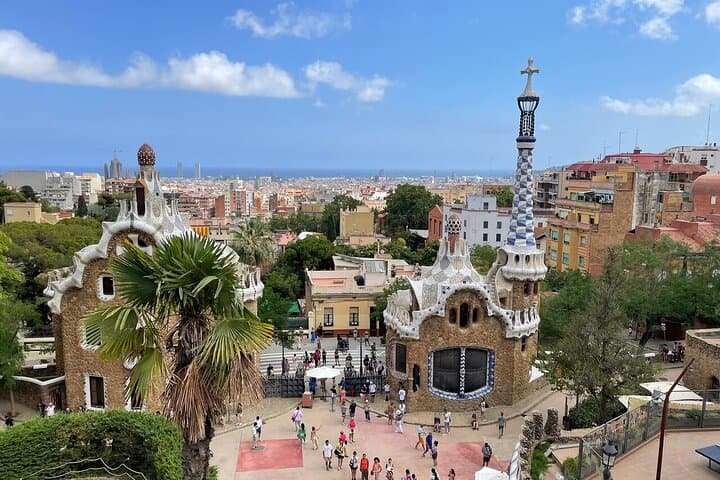
You step through the stone gatehouse and the city opens beneath you — sun on broken-tile benches, pines whispering on the slope, and Barcelona sprawled toward the sea. Park Güell is a place of angles and arcs: Gaudí’s mosaics curl like waves, columns rise like tree trunks, and the main terrace offers panoramic lines of rooftops and the Mediterranean horizon.
You step through the stone gatehouse and the city opens beneath you — sun on broken-tile benches, pines whispering on the slope, and Barcelona sprawled toward the sea. Park Güell is a place of angles and arcs: Gaudí’s mosaics curl like waves, columns rise like tree trunks, and the main terrace offers panoramic lines of rooftops and the Mediterranean horizon.
Built in the early 20th century for noble patron Eusebi Güell, the park began as an ambitious housing project and became one of Gaudí’s most public works. Geological terraces cut into El Carmel hill create the park’s stepped promenades; the local sandstone and Mediterranean pines shape the walk, while the microclimate keeps summers hot and winters mild. Culturally, the park sits in Gràcia, a neighborhood that still retains village streets and lively squares.
Practical guidance: the Time-Saver ticket gives priority admission to the Monumental Zone, so you skip the main ticket line and spend more time on the terrace and Hypostyle Room. Expect paved paths, short flights of stone steps and modest uphill walks when moving between zones — plan 1–3 hours for a relaxed visit. Access by Metro L3 (Vallcarca or Lesseps) requires an uphill walk or a short bus ride; arrive early or late afternoon to avoid peak crowds and harsh light. Bring water, sun protection, and a camera; respect the mosaics and the daily visitor limits. The park is open year-round and rewards both quick visits and slow exploration.