THE ADVENTURE COLLECTIVE® · Independent discovery and booking for outdoor travel

Skip the queue and follow an official guide through Gaudí’s most imaginative public park. This 75-minute tour decodes the mosaics, viaducts, and viewpoints while giving practical tips for getting the best photos and avoiding crowds.
Skip the queue and follow an official guide through Gaudí’s most imaginative public park. This 75-minute tour decodes the mosaics, viaducts, and viewpoints while giving practical tips for getting the best photos and avoiding crowds.
You step through the gate and the city exhales behind you—tiles glitter, terraces curve like a slow wave, and Barcelona spreads below in ordered blocks and sun-swiped roofs. Park Güell demands attention: Gaudí’s ceramics catch the light while stone viaducts and serpentine benches shape walkways that move you through architecture as if it were landscape.
Verified experiences and guided adventures in the surrounding area.
Operated by NHUE · Barcelona, Catalonia
You step through the gate and the city exhales behind you—tiles glitter, terraces curve like a slow wave, and Barcelona spreads below in ordered blocks and sun-swiped roofs. Park Güell demands attention: Gaudí’s ceramics catch the light while stone viaducts and serpentine benches shape walkways that move you through architecture as if it were landscape.
Built in the early 20th century for industrialist Eusebi Güell, the site began as an ambitious garden city project. Gaudí folded Catalan modernism into natural forms, using local stone and the trencadís mosaic technique to blur building and cliff. The park sits on the southern slope of El Carmel; the sandstone and Miocene clays beneath give the paths their gentle contour and the exposed rock its warm tones.
Culture here is civic and public: a place designed to be used, argued over, and photographed. Expect clusters of international visitors at the main terrace but quieter nooks along the viaducts and the Gaudí House Museum where daily life and design history meet.
Practical guidance: the guided 75-minute tour explains the key spaces and the stories behind motifs, and skip-the-line tickets save time in high season. Wear shoes with grip—the steps and uneven paving reward care—and bring water and a light layer for coastal breezes. Arrive 15 minutes early for check-in and, if you want photos without crowds, aim for the first tour after opening. Respect barriers and local rules: staying on paths preserves the mosaics and the plantings that anchor this urban experiment.
moderate.
1–1.5 hours.
Moderate fitness required—expect walking, stairs, and short uphill stretches.
Skip-the-line tickets prioritize entry but arrival on time is required; the guide manages group access so late arrivals may lose the benefit.
Yes—the tour accepts mobile tickets; keep your phone charged and the ticket accessible for scanning.
Significant parts of Park Güell include steps and uneven surfaces; accessibility is limited—contact the operator for details on specific access options.
Photography is allowed in public areas, but please avoid climbing on mosaics or entering restricted sections; tripods may be limited during busy times.
Park Güell was commissioned by Eusebi Güell in the early 1900s as a private residential project; Gaudí turned it into an integrated landscape and architectural experiment that later became public.
Entrance fees and regulated access help manage visitor impact—stick to paths and avoid touching mosaics to preserve fragile materials.
NHUE operates guided outdoor trips and adventures with an emphasis on safety, stewardship, and memorable experiences.
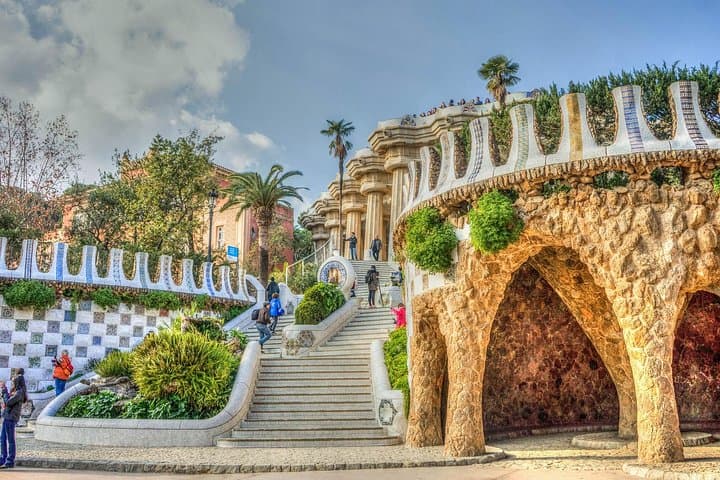
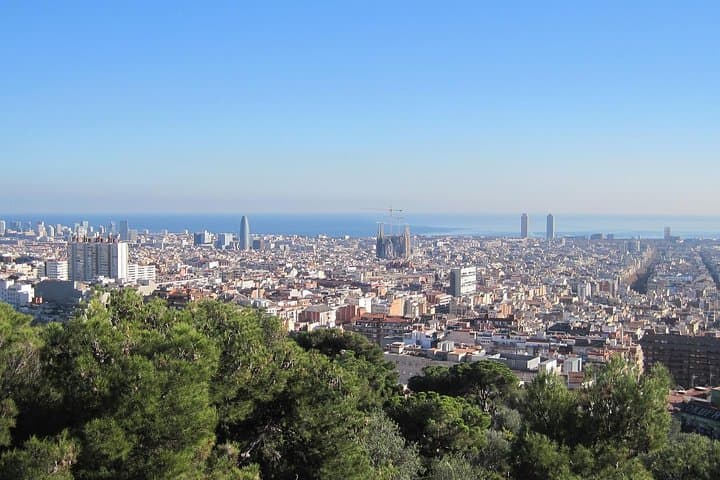


You step through the gate and the city exhales behind you—tiles glitter, terraces curve like a slow wave, and Barcelona spreads below in ordered blocks and sun-swiped roofs. Park Güell demands attention: Gaudí’s ceramics catch the light while stone viaducts and serpentine benches shape walkways that move you through architecture as if it were landscape.
You step through the gate and the city exhales behind you—tiles glitter, terraces curve like a slow wave, and Barcelona spreads below in ordered blocks and sun-swiped roofs. Park Güell demands attention: Gaudí’s ceramics catch the light while stone viaducts and serpentine benches shape walkways that move you through architecture as if it were landscape.
Built in the early 20th century for industrialist Eusebi Güell, the site began as an ambitious garden city project. Gaudí folded Catalan modernism into natural forms, using local stone and the trencadís mosaic technique to blur building and cliff. The park sits on the southern slope of El Carmel; the sandstone and Miocene clays beneath give the paths their gentle contour and the exposed rock its warm tones.
Culture here is civic and public: a place designed to be used, argued over, and photographed. Expect clusters of international visitors at the main terrace but quieter nooks along the viaducts and the Gaudí House Museum where daily life and design history meet.
Practical guidance: the guided 75-minute tour explains the key spaces and the stories behind motifs, and skip-the-line tickets save time in high season. Wear shoes with grip—the steps and uneven paving reward care—and bring water and a light layer for coastal breezes. Arrive 15 minutes early for check-in and, if you want photos without crowds, aim for the first tour after opening. Respect barriers and local rules: staying on paths preserves the mosaics and the plantings that anchor this urban experiment.