THE ADVENTURE COLLECTIVE® · Independent discovery and booking for outdoor travel

Explore Gaudí’s sculpted park with an expert guide in a semi-private group. Learn how engineering, ceramics and Mediterranean landscape combine to create Park Güell’s most photogenic viewpoints—and get practical tips to make the most of a one-hour visit.
Explore Gaudí’s sculpted park with an expert guide in a semi-private group. Learn how engineering, ceramics and Mediterranean landscape combine to create Park Güell’s most photogenic viewpoints—and get practical tips to make the most of a one-hour visit.
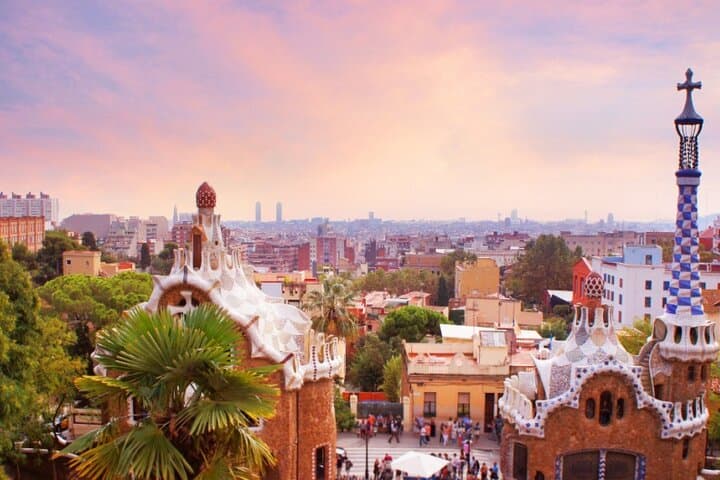
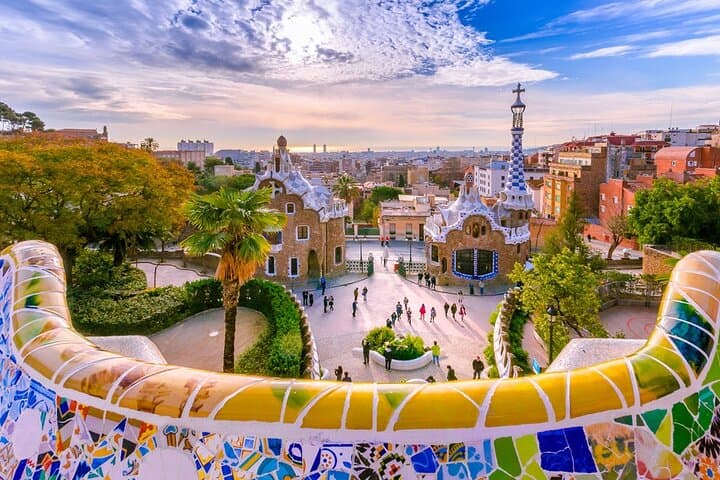
Morning light slices between pine branches as the city falls away and the park’s mosaic dragon appears around the first curve—this is Park Güell the way visitors remember it: color, curve, and a keen sense that the land itself has been shaped into architecture.
Verified experiences and guided adventures in the surrounding area.
Operated by LivTours · Barcelona, Catalonia
Morning light slices between pine branches as the city falls away and the park’s mosaic dragon appears around the first curve—this is Park Güell the way visitors remember it: color, curve, and a keen sense that the land itself has been shaped into architecture.
Built in the early 20th century by Antoni Gaudí for Count Eusebi Güell, Park Güell began as part of an ambitious Garden City plan. The site sits on a limestone ridge molded by Miocene sediments and coastal processes; Gaudí worked with the slope, terracing roads and viaducts so carriages and people could move the hill comfortably. The result blends Catalan Modernisme, local craft glazes, and Mediterranean plantings that frame sweeping views of Barcelona and the sea.
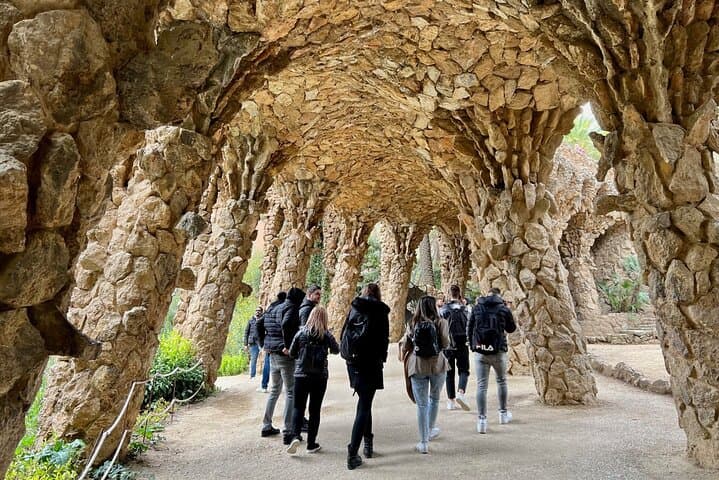
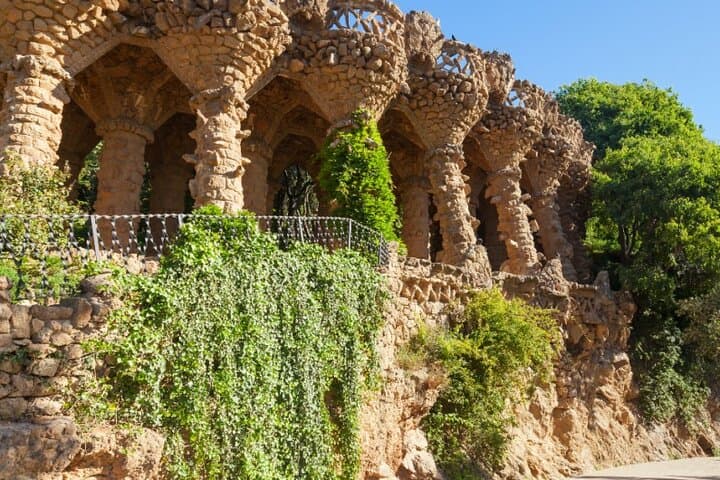
A guided hour here focuses on the dragon staircase, the serpentine bench on the main terrace, and the hidden viaducts where Gaudí used stepping stones and local sandstone. Guides explain structural tricks—tree-like columns, catenary arches—and point out Catalan ceramic techniques and cultural context: an industrial-age elite funding utopian urban experiments.
Practically: this is a short, mostly paved walk with steps and changes in grade—suitable for most fitness levels. Arrive early to avoid the midday heat and the crowds that make photography and quiet observation harder. Wear comfortable walking shoes, bring sun protection and a water bottle, and stay on designated paths to protect the fragile mosaics and plantings. For photographers and history buffs alike, a focused guided hour here unpacks Gaudí’s engineering and gives you the best vantage points without the overwhelm of self-navigation.
easy.
1 hour.
Suitable for most fitness levels; involves some stairs and short uphill sections
The tour runs approximately one hour and focuses on Park Güell’s main highlights with skip-the-line entry included.
Yes—routes are largely paved and manageable, though there are steps and short slopes; notify the operator of mobility needs when booking.
Yes, the tour includes skip-the-line admission to Park Güell as noted in the inclusions.
Some paths and viaducts are narrow or stepped; a lightweight stroller may be difficult—consider a carrier for infants.
Commissioned by Count Eusebi Güell and designed by Antoni Gaudí in the early 1900s as part of a Garden City project, Park Güell showcases Modernisme architecture adapted to local terrain.
High visitor numbers strain mosaics and plantings—stay on marked paths, avoid touching tiles, and follow guide instructions to protect the site.
LivTours operates guided outdoor trips and adventures with an emphasis on safety, stewardship, and memorable experiences.
Morning light slices between pine branches as the city falls away and the park’s mosaic dragon appears around the first curve—this is Park Güell the way visitors remember it: color, curve, and a keen sense that the land itself has been shaped into architecture.
Morning light slices between pine branches as the city falls away and the park’s mosaic dragon appears around the first curve—this is Park Güell the way visitors remember it: color, curve, and a keen sense that the land itself has been shaped into architecture.
Built in the early 20th century by Antoni Gaudí for Count Eusebi Güell, Park Güell began as part of an ambitious Garden City plan. The site sits on a limestone ridge molded by Miocene sediments and coastal processes; Gaudí worked with the slope, terracing roads and viaducts so carriages and people could move the hill comfortably. The result blends Catalan Modernisme, local craft glazes, and Mediterranean plantings that frame sweeping views of Barcelona and the sea.
A guided hour here focuses on the dragon staircase, the serpentine bench on the main terrace, and the hidden viaducts where Gaudí used stepping stones and local sandstone. Guides explain structural tricks—tree-like columns, catenary arches—and point out Catalan ceramic techniques and cultural context: an industrial-age elite funding utopian urban experiments.
Practically: this is a short, mostly paved walk with steps and changes in grade—suitable for most fitness levels. Arrive early to avoid the midday heat and the crowds that make photography and quiet observation harder. Wear comfortable walking shoes, bring sun protection and a water bottle, and stay on designated paths to protect the fragile mosaics and plantings. For photographers and history buffs alike, a focused guided hour here unpacks Gaudí’s engineering and gives you the best vantage points without the overwhelm of self-navigation.