THE ADVENTURE COLLECTIVE® · Independent discovery and booking for outdoor travel

Choose a themed, private 3-hour walking tour that turns Parisian streets into a compact history lesson. Start at the Louvre and tailor the route — from Impressionists in Montmartre to the wartime Right Bank — for a focused, accessible city experience.
Choose a themed, private 3-hour walking tour that turns Parisian streets into a compact history lesson. Start at the Louvre and tailor the route — from Impressionists in Montmartre to the wartime Right Bank — for a focused, accessible city experience.
Stand in front of the Louvre’s glass pyramid and feel the city open beneath your feet: cobblestones hum, the Seine dares you to cross, and arcades funnel the day's light into narrow theaters of history.
Verified experiences and guided adventures in the surrounding area.
Operated by Tour Up in Europe · Paris, Île-de-France
Stand in front of the Louvre’s glass pyramid and feel the city open beneath your feet: cobblestones hum, the Seine dares you to cross, and arcades funnel the day's light into narrow theaters of history.
This three-hour private walking tour threads through Parisian eras — from Roman Lutetia carved into limestone bedrock to Haussmann’s wide boulevards that rewrote the city's circulation. Guides place painters, philosophers and revolutionaries into the streets where they actually lived: Impressionists sketching along Montmartre, Sartre and Beauvoir at a Saint‑Germain café, or the wartime traces on the Right Bank.
Geology and urban planning matter here: the city sits on Paris Basin limestone with hidden quarries and raised river terraces that shaped neighborhoods and city lines. Cultural notes arrive in short, focused stops — a cemetery's stones that recount social change, a market alley that explains culinary history, or a bohemian square that still hums with jazz.
Practical edge: the tour is private, two hours of steady walking with frequent stops; it’s fully wheelchair-accessible when requested and can be customized to focus on art, food, history or a specific arrondissement. Meet at the Louvre Carousel Arch; bring a charged phone for contact and a Metro pass if you plan to extend the day.
Timing matters — mornings slice through crowds, late afternoons catch warmer light on stone. Expect urban pacing, accessible routes, and a guide who turns streets into an intelligible map of Parisian life and labor.
easy.
2 hours.
Light walking fitness; suitable for most people who can walk on paved city streets for up to two hours with breaks.
No, the tour provides narration and external stops; museum admissions are separate unless pre-arranged in a customized itinerary.
Yes — guides can focus on Impressionists, medieval Paris, WWII history, food routes, or any listed topic with advance notice.
Meetings are typically at the Louvre Carousel Arch, and the guide will contact guests in advance to confirm exact details.
Yes, the operator lists wheelchair and stroller accessibility and can modify routes to accommodate mobility needs when informed ahead of time.
Paris grew from a small Roman town (Lutetia) on the Île de la Cité; later urban redesigns under Haussmann in the 19th century created the boulevards travelers recognize today.
High foot traffic impacts historic stone and narrow lanes; stick to paved paths, support local businesses and avoid littering to reduce your footprint.
Tour Up in Europe operates guided outdoor trips and adventures with an emphasis on safety, stewardship, and memorable experiences.
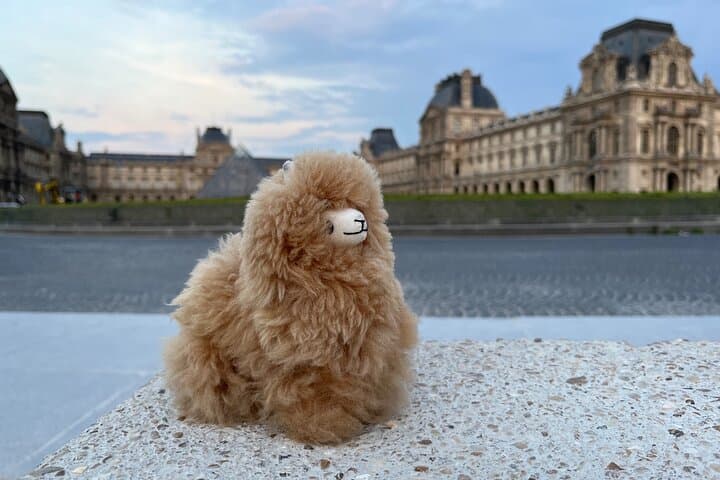
Stand in front of the Louvre’s glass pyramid and feel the city open beneath your feet: cobblestones hum, the Seine dares you to cross, and arcades funnel the day's light into narrow theaters of history.
Stand in front of the Louvre’s glass pyramid and feel the city open beneath your feet: cobblestones hum, the Seine dares you to cross, and arcades funnel the day's light into narrow theaters of history.
This three-hour private walking tour threads through Parisian eras — from Roman Lutetia carved into limestone bedrock to Haussmann’s wide boulevards that rewrote the city's circulation. Guides place painters, philosophers and revolutionaries into the streets where they actually lived: Impressionists sketching along Montmartre, Sartre and Beauvoir at a Saint‑Germain café, or the wartime traces on the Right Bank.
Geology and urban planning matter here: the city sits on Paris Basin limestone with hidden quarries and raised river terraces that shaped neighborhoods and city lines. Cultural notes arrive in short, focused stops — a cemetery's stones that recount social change, a market alley that explains culinary history, or a bohemian square that still hums with jazz.
Practical edge: the tour is private, two hours of steady walking with frequent stops; it’s fully wheelchair-accessible when requested and can be customized to focus on art, food, history or a specific arrondissement. Meet at the Louvre Carousel Arch; bring a charged phone for contact and a Metro pass if you plan to extend the day.
Timing matters — mornings slice through crowds, late afternoons catch warmer light on stone. Expect urban pacing, accessible routes, and a guide who turns streets into an intelligible map of Parisian life and labor.