THE ADVENTURE COLLECTIVE® · Independent discovery and booking for outdoor travel

Cover Paris’s must‑see sights by bike, from the Louvre’s glass pyramid to the Eiffel Tower, finishing with a cheese-and-wine picnic near the museum. This four‑hour guided ride blends local flavors, city history, and easy urban cycling for newcomers and repeat visitors alike.
Cover Paris’s must‑see sights by bike, from the Louvre’s glass pyramid to the Eiffel Tower, finishing with a cheese-and-wine picnic near the museum. This four‑hour guided ride blends local flavors, city history, and easy urban cycling for newcomers and repeat visitors alike.
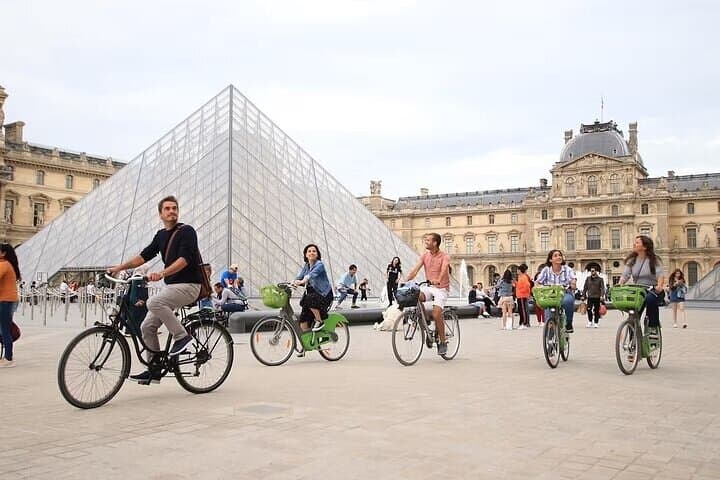
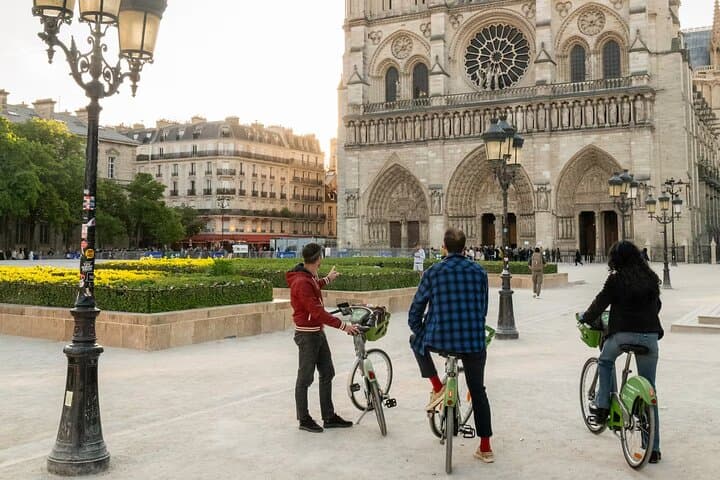
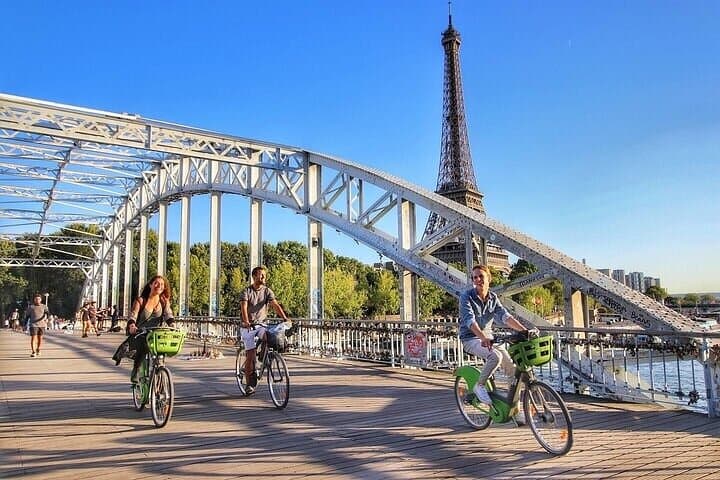
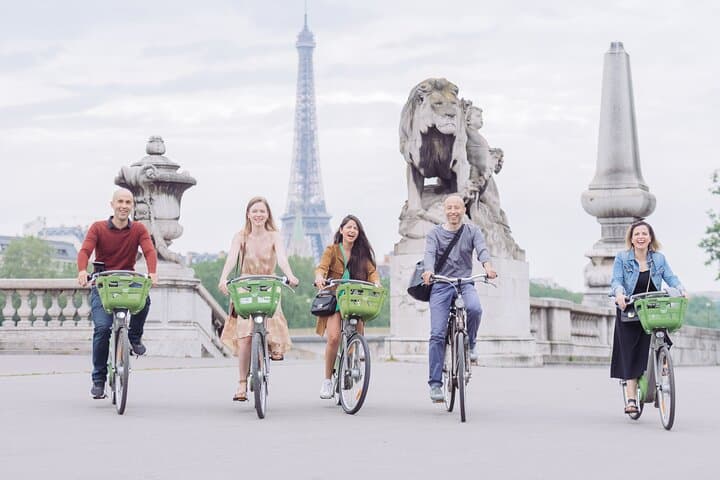
The Seine slips past your wheels as the city wakes—glass pyramid glinting, café terraces unfurling napkins and chairs. On two wheels you move faster than a walking tour but slow enough to drink in façades: the iron lattice of the Eiffel Tower across the river, the flying buttresses of Notre‑Dame, and bourgeois streets where artisans still open shop each morning.
Verified experiences and guided adventures in the surrounding area.
Operated by Uncrowds · Paris, Île-de-France
The Seine slips past your wheels as the city wakes—glass pyramid glinting, café terraces unfurling napkins and chairs. On two wheels you move faster than a walking tour but slow enough to drink in façades: the iron lattice of the Eiffel Tower across the river, the flying buttresses of Notre‑Dame, and bourgeois streets where artisans still open shop each morning.
Paris grew from the Roman town of Lutetia along the Seine; much of the city’s plan follows medieval streets and Haussmann’s 19th‑century reordering. Bridges like the ornate Pont Alexandre III were built for world fairs and now frame views of the Grand Palais and the river. Geologically the Île‑de‑France sits on sedimentary plains; the city’s flat profile makes cycling friendly and views wide.
Culture arrives in small bites: a boulangerie where crust and crumb are judged with the same care as a museum piece, a fromager who explains pasteurization and terroir, and a guide who threads history, architecture and local etiquette into the ride. The tour’s picnic near the Louvre lets you sit on stone steps and watch Paris move—students, picnickers, and the occasional street musician.
Practical notes: expect about 8–10 km of easy urban cycling with frequent stops, minimal elevation, and several short traffic crossings. Helmets and bikes are supplied; bring a light rain jacket and closed‑toe shoes. Start times avoid peak traffic and maximize daylight; the operator limits groups to keep the pace steady. Hydrate often, respect bike lanes and pedestrians, and carry ID for the wine purchase during the cheese stop. This four‑hour outing is a focused, efficient way to feel Parisian on arrival.
easy.
4 hours.
Suitable for casual cyclists and anyone comfortable pedaling short urban distances; frequent stops reduce continuous exertion.
No—this is an easy urban ride with guided pacing, frequent stops, and mostly flat streets suitable for casual cyclists.
Helmets are typically available with the bike rental; confirm with the operator if you require a specific size.
Yes—the tour includes a picnic with four cheeses, a baguette, and wine; coffee or tea is also offered earlier in the itinerary.
The operator may cancel or reschedule in heavy rain; check the 24‑hour cancellation policy for a full refund if needed.
The route threads sites shaped by Roman Lutetia, medieval cathedral building, and Haussmann’s 19th‑century rebuilding; the Louvre itself began as a royal fortress before becoming a palace and museum.
Cycling reduces your carbon footprint in a compact city; stay on designated lanes, avoid littering at picnic sites, and support small local shops to keep tourism sustainable.
Uncrowds operates guided outdoor trips and adventures with an emphasis on safety, stewardship, and memorable experiences.
The Seine slips past your wheels as the city wakes—glass pyramid glinting, café terraces unfurling napkins and chairs. On two wheels you move faster than a walking tour but slow enough to drink in façades: the iron lattice of the Eiffel Tower across the river, the flying buttresses of Notre‑Dame, and bourgeois streets where artisans still open shop each morning.
The Seine slips past your wheels as the city wakes—glass pyramid glinting, café terraces unfurling napkins and chairs. On two wheels you move faster than a walking tour but slow enough to drink in façades: the iron lattice of the Eiffel Tower across the river, the flying buttresses of Notre‑Dame, and bourgeois streets where artisans still open shop each morning.
Paris grew from the Roman town of Lutetia along the Seine; much of the city’s plan follows medieval streets and Haussmann’s 19th‑century reordering. Bridges like the ornate Pont Alexandre III were built for world fairs and now frame views of the Grand Palais and the river. Geologically the Île‑de‑France sits on sedimentary plains; the city’s flat profile makes cycling friendly and views wide.
Culture arrives in small bites: a boulangerie where crust and crumb are judged with the same care as a museum piece, a fromager who explains pasteurization and terroir, and a guide who threads history, architecture and local etiquette into the ride. The tour’s picnic near the Louvre lets you sit on stone steps and watch Paris move—students, picnickers, and the occasional street musician.
Practical notes: expect about 8–10 km of easy urban cycling with frequent stops, minimal elevation, and several short traffic crossings. Helmets and bikes are supplied; bring a light rain jacket and closed‑toe shoes. Start times avoid peak traffic and maximize daylight; the operator limits groups to keep the pace steady. Hydrate often, respect bike lanes and pedestrians, and carry ID for the wine purchase during the cheese stop. This four‑hour outing is a focused, efficient way to feel Parisian on arrival.