THE ADVENTURE COLLECTIVE® · Independent discovery and booking for outdoor travel

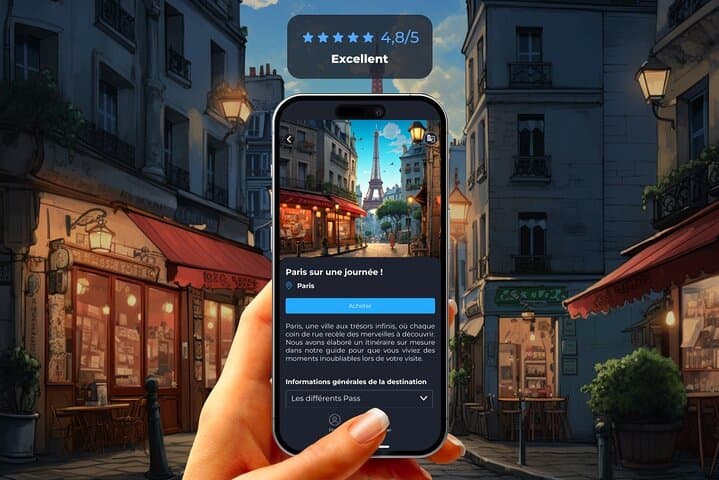
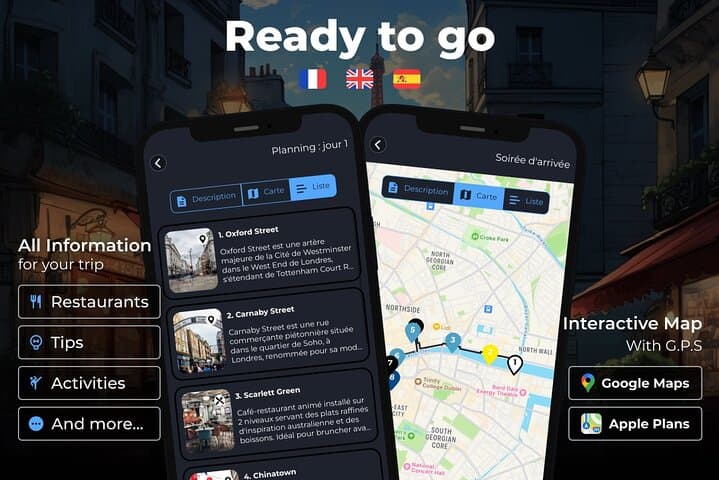
Explore Paris on your own terms with a downloadable two-day digital guide that maps 50+ landmarks, local restaurants and secret viewpoints. Offline maps and GPS guidance let you wander from the Louvre to Montmartre without missing key history or practical tips.
Explore Paris on your own terms with a downloadable two-day digital guide that maps 50+ landmarks, local restaurants and secret viewpoints. Offline maps and GPS guidance let you wander from the Louvre to Montmartre without missing key history or practical tips.
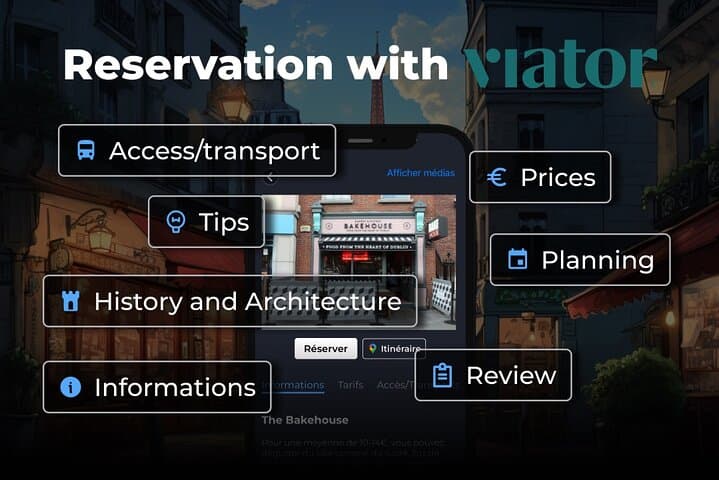
You tap the guide open over a café table and the city shifts: the Seine pulls you forward, outer lights of the streetlamps beginning to hum as you plan a two-day loop.
Verified experiences and guided adventures in the surrounding area.
Operated by Henri Trip · Paris, Île-de-France
You tap the guide open over a café table and the city shifts: the Seine pulls you forward, outer lights of the streetlamps beginning to hum as you plan a two-day loop.
This digital guide stitches together over 50 points of interest—from the Louvre and Île de la Cité to Sacré‑Cœur and the Grand Palais—so you can move through Paris at your pace. The route traces layers of history: Roman Lutetia’s river crossings, Gothic vaults of Notre‑Dame, Haussmann’s wide boulevards and the Belle Époque galleries that framed the 1900 Universal Exhibition. Underfoot, Paris sits on compacted Lutetian limestone—cellars, quarries and catacombs are part of the city’s geological story.
Culture here is public and immediate: boulangeries open at dawn, bookshops on rue de la Bûcherie keep slow hours, and the gardens host chess players and morning runners. The guide’s GPS-forward format helps you bridge dense museum days with quieter corners—the covered passages, a less-crowded viewpoint behind the Institut de France, or a late-afternoon stroll along Canal Saint‑Martin.
Practical edge: download the guide for true offline use, charge a power bank for long days, and time major monuments for early mornings to avoid queues. Wear supportive walking shoes; the streets are largely flat but cobbles and museum lines demand patience. The guide is wheelchair- and stroller-accessible in many places, but check each POI’s accessibility notes before you go. Take breaks at small cafés to refill water, keep belongings secure, and let the guide reroute you when you choose to linger—Paris rewards a curious, measured pace.
easy.
2 days.
Comfortable walking ability for multiple hours each day; able to handle cobblestones and stairs at some sites
You will receive an email with instructions and a link to download the mobile guide; follow the steps to enable offline maps before leaving Wi‑Fi.
Many routes and listed POIs include stroller- and wheelchair-access notes, but some historic sites and passages have stairs—check each point’s accessibility details in the guide.
Yes—the guide is flexible: you can begin at any point of interest, follow GPS directions between sites, and adapt the plan across multiple days.
No—this digital guide provides descriptions, timetables and reservation tips but does not include museum entrance fees or bookings.
Paris began as the Roman settlement of Lutetia on the Île de la Cité; subsequent medieval, Renaissance and Haussmann rebuilds layered the city’s streets and monuments.
Favor public transit, walking and responsible use of green spaces; many museums and sites have digital ticketing to reduce paper waste and manage crowding.
Henri Trip operates guided outdoor trips and adventures with an emphasis on safety, stewardship, and memorable experiences.

You tap the guide open over a café table and the city shifts: the Seine pulls you forward, outer lights of the streetlamps beginning to hum as you plan a two-day loop.
You tap the guide open over a café table and the city shifts: the Seine pulls you forward, outer lights of the streetlamps beginning to hum as you plan a two-day loop.
This digital guide stitches together over 50 points of interest—from the Louvre and Île de la Cité to Sacré‑Cœur and the Grand Palais—so you can move through Paris at your pace. The route traces layers of history: Roman Lutetia’s river crossings, Gothic vaults of Notre‑Dame, Haussmann’s wide boulevards and the Belle Époque galleries that framed the 1900 Universal Exhibition. Underfoot, Paris sits on compacted Lutetian limestone—cellars, quarries and catacombs are part of the city’s geological story.
Culture here is public and immediate: boulangeries open at dawn, bookshops on rue de la Bûcherie keep slow hours, and the gardens host chess players and morning runners. The guide’s GPS-forward format helps you bridge dense museum days with quieter corners—the covered passages, a less-crowded viewpoint behind the Institut de France, or a late-afternoon stroll along Canal Saint‑Martin.
Practical edge: download the guide for true offline use, charge a power bank for long days, and time major monuments for early mornings to avoid queues. Wear supportive walking shoes; the streets are largely flat but cobbles and museum lines demand patience. The guide is wheelchair- and stroller-accessible in many places, but check each POI’s accessibility notes before you go. Take breaks at small cafés to refill water, keep belongings secure, and let the guide reroute you when you choose to linger—Paris rewards a curious, measured pace.