THE ADVENTURE COLLECTIVE® · Independent discovery and booking for outdoor travel

Turn Paris’s 19th-century covered passages into a crime scene: a 2.5-hour, self-led Vidocq detective game that uses observation and puzzles to guide teams through mosaics, ironwork, and hidden courtyards. Learn local history while racing other groups to solve the mystery.
Turn Paris’s 19th-century covered passages into a crime scene: a 2.5-hour, self-led Vidocq detective game that uses observation and puzzles to guide teams through mosaics, ironwork, and hidden courtyards. Learn local history while racing other groups to solve the mystery.
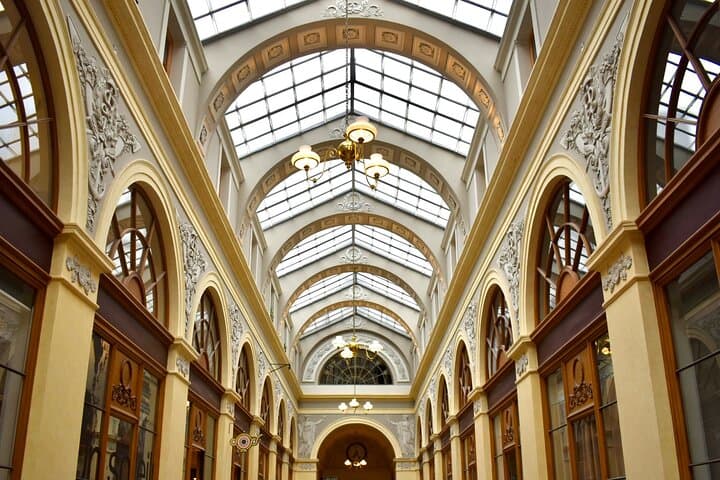
You step beneath a row of glass-and-iron canopies and the city narrows to a single thread of warm light and whispered footsteps. The covered passages of Paris open like a book of old commerce: tile mosaics underfoot, bent brass signage, and shopfronts that lean toward the center as if listening. This is where the Vidocq investigation begins—an interactive, self-led detective game that turns a 2.5-hour stroll into a mission to read clues, interrogate details, and outrun competing teams.
Verified experiences and guided adventures in the surrounding area.
Operated by Paris Ma Belle · Paris, Île-de-France
You step beneath a row of glass-and-iron canopies and the city narrows to a single thread of warm light and whispered footsteps. The covered passages of Paris open like a book of old commerce: tile mosaics underfoot, bent brass signage, and shopfronts that lean toward the center as if listening. This is where the Vidocq investigation begins—an interactive, self-led detective game that turns a 2.5-hour stroll into a mission to read clues, interrogate details, and outrun competing teams.
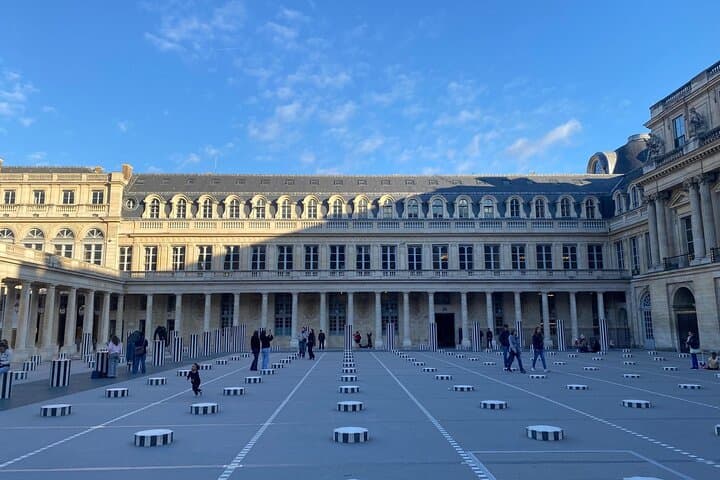
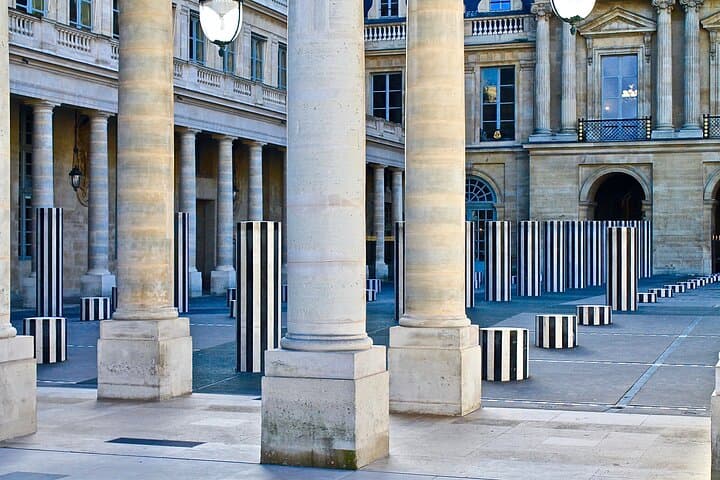
The passages themselves are 19th-century urban solutions—early shopping arcades built to protect pedestrians from rain and dust and to concentrate luxury trades out of the main boulevards. You’ll pass architectural details from iron ribs to encaustic tiles, and skirt the edges of the Palais-Royal precinct, one of Paris’s political and cultural crossroads since the 17th century.
Practical navigation is simple: the route is compact, mostly flat, and entirely on paved, pedestrian surfaces; wheelchair access is possible in many passages but watch for thresholds. Teams of three to six share a logbook and puzzle sheets; the game rewards observation, lateral thinking, and a charged phone for photos and timing. Expect lively indoor/outdoor transitions, small crowds on weekends, and shopkeepers who may become part of the story.
Bring comfortable shoes, a pocket notebook, and a portable charger. Start mid-afternoon to catch the passages in golden light but leave time to explore nearby arcades afterward. This is less a race for speed and more a test of attention—the city’s small details will be your best witnesses.
easy.
2–2.5 hours.
Suitable for all fitness levels; requires standing and walking on paved surfaces for the duration.
Teams are 3 to 6 people; single travelers or couples will be grouped or join an existing team depending on bookings.
Many passages are wheelchair- and stroller-accessible, but some thresholds and narrow sections may require assistance; notify organizers of accessibility needs when booking.
The game instructor and materials are available in French and English, but confirm language availability when booking.
Yes—minors can take part but must be accompanied by an adult as stated in the booking requirements.
Covered passages were built in the early 19th century to provide weather-protected shopping, concentrating craftspeople and early department-style retail outside the noisy boulevards.
The passages are protected historic structures; stay on paths, avoid leaning on fragile shopfronts, and respect private entrances to preserve decorative tiles and ironwork.
Paris Ma Belle operates guided outdoor trips and adventures with an emphasis on safety, stewardship, and memorable experiences.
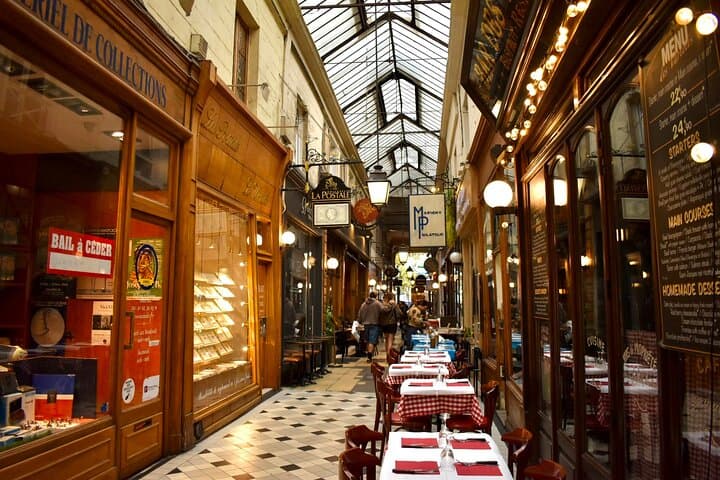
You step beneath a row of glass-and-iron canopies and the city narrows to a single thread of warm light and whispered footsteps. The covered passages of Paris open like a book of old commerce: tile mosaics underfoot, bent brass signage, and shopfronts that lean toward the center as if listening. This is where the Vidocq investigation begins—an interactive, self-led detective game that turns a 2.5-hour stroll into a mission to read clues, interrogate details, and outrun competing teams.
You step beneath a row of glass-and-iron canopies and the city narrows to a single thread of warm light and whispered footsteps. The covered passages of Paris open like a book of old commerce: tile mosaics underfoot, bent brass signage, and shopfronts that lean toward the center as if listening. This is where the Vidocq investigation begins—an interactive, self-led detective game that turns a 2.5-hour stroll into a mission to read clues, interrogate details, and outrun competing teams.
The passages themselves are 19th-century urban solutions—early shopping arcades built to protect pedestrians from rain and dust and to concentrate luxury trades out of the main boulevards. You’ll pass architectural details from iron ribs to encaustic tiles, and skirt the edges of the Palais-Royal precinct, one of Paris’s political and cultural crossroads since the 17th century.
Practical navigation is simple: the route is compact, mostly flat, and entirely on paved, pedestrian surfaces; wheelchair access is possible in many passages but watch for thresholds. Teams of three to six share a logbook and puzzle sheets; the game rewards observation, lateral thinking, and a charged phone for photos and timing. Expect lively indoor/outdoor transitions, small crowds on weekends, and shopkeepers who may become part of the story.
Bring comfortable shoes, a pocket notebook, and a portable charger. Start mid-afternoon to catch the passages in golden light but leave time to explore nearby arcades afterward. This is less a race for speed and more a test of attention—the city’s small details will be your best witnesses.