THE ADVENTURE COLLECTIVE® · Independent discovery and booking for outdoor travel

Walk Paris’s oldest quarters after dark: a three‑hour private route from Notre Dame to the Louvre that pairs illuminated monuments with local stories, a café stop, and accessible riverfront strolling.
Walk Paris’s oldest quarters after dark: a three‑hour private route from Notre Dame to the Louvre that pairs illuminated monuments with local stories, a café stop, and accessible riverfront strolling.
Late evening in Paris compresses centuries into a single stroll: gaslight-like LEDs frame Gothic arches, the Seine slips black and reflective beneath Pont Neuf, and cobblestones underfoot keep the cadence of the city’s older pulse.
Verified experiences and guided adventures in the surrounding area.
Operated by AWESOME GUIDE · Paris, Île-de-France
Late evening in Paris compresses centuries into a single stroll: gaslight-like LEDs frame Gothic arches, the Seine slips black and reflective beneath Pont Neuf, and cobblestones underfoot keep the cadence of the city’s older pulse.
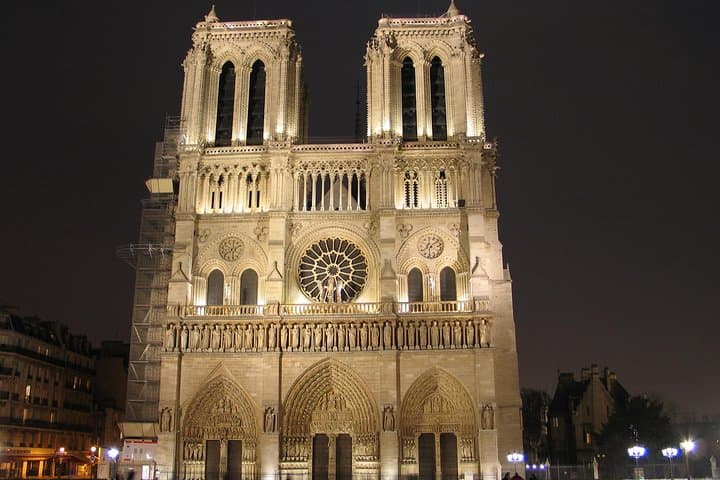
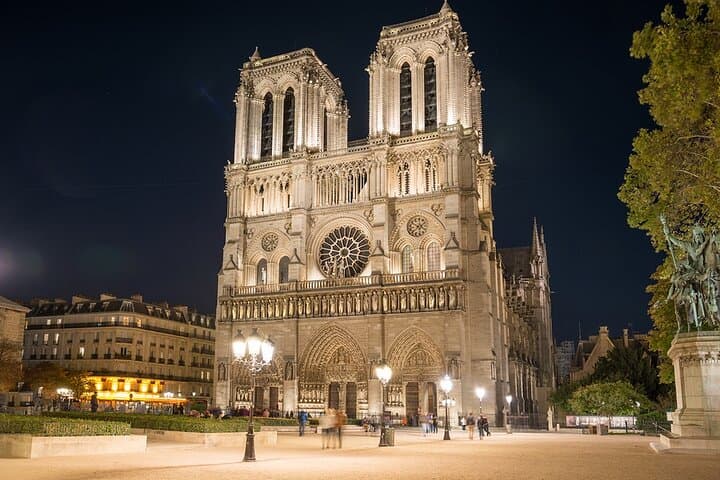
This private three-hour walking tour threads the Latin Quarter and Saint-Germain-des-Prés—two districts that escaped much of Haussmann’s 19th-century remaking—so visitors move through medieval alleys, university facades and cafés where scholars once argued politics and poetry. The route starts outside Notre Dame on Île de la Cité, a natural river island whose fluvial geology shaped the city’s growth, then follows the riverbank past lit bridges, the Pantheon, and finishes outside the Louvre Pyramid. Cultural layers are visible: Roman foundations below, medieval churches above, and Enlightenment-era boulevards nearby.
Expect 3–4 km of mostly paved streets and stone steps, low elevation change, and intermittent cobbles—easy to moderate underfoot, but slick when wet. The guide pauses at viewpoints for history, architecture and anecdotes; one cafe break gives a taste of local life and an opportunity to ask questions about Parisian customs, wartime history and the art world.
Practical notes: wear supportive shoes and a windproof layer, carry a small light or phone lamp for narrow alleys, and keep a small amount of cash for the café. Public transit options are close to the start and finish; safety-wise, stay aware of pockets and be mindful of quieter streets after midnight. For photographers, the illuminated facades reward longer exposures—bring a compact tripod or stabilize on a low wall.
moderate.
3 hours.
Moderate fitness: able to walk 3–4 km over paved and cobbled surfaces and stand for short talks
The tour starts outside Notre Dame Cathedral (Île de la Cité) and finishes outside the Louvre Pyramid on the Right Bank.
Many areas along the route are wheelchair accessible, but some side streets have cobbles and steps—contact the operator to confirm accessibility needs.
Yes—there are regular photo stops at river viewpoints and a scheduled break in a typical Parisian café for refreshments.
Tipping is appreciated for private guiding: 5–10% or a cash tip based on satisfaction is customary but not mandatory.
The Latin Quarter and Saint‑Germain retain medieval street patterns and university history; Haussmann’s renovations deliberately left these quarters intact, preserving narrow lanes and older architecture.
Night tours should minimize noise and light disturbance in residential areas; support local cafés and avoid littering to reduce the tour’s impact.
AWESOME GUIDE operates guided outdoor trips and adventures with an emphasis on safety, stewardship, and memorable experiences.
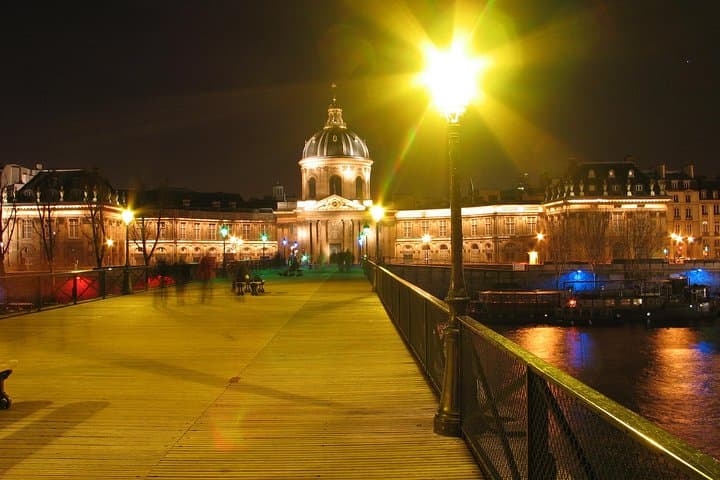
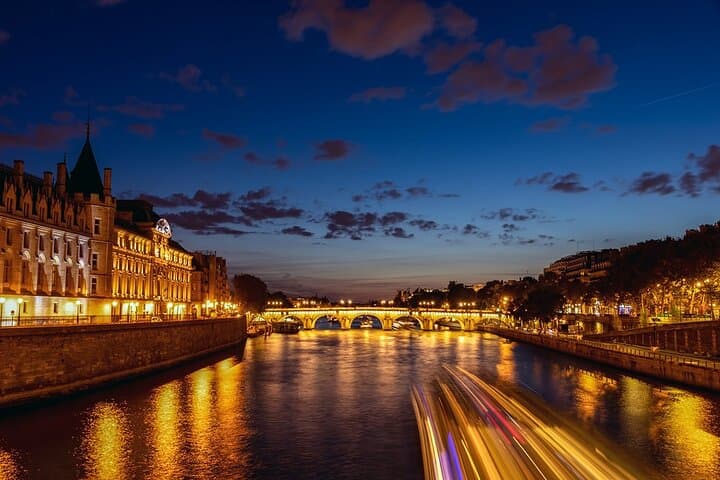
Late evening in Paris compresses centuries into a single stroll: gaslight-like LEDs frame Gothic arches, the Seine slips black and reflective beneath Pont Neuf, and cobblestones underfoot keep the cadence of the city’s older pulse.
Late evening in Paris compresses centuries into a single stroll: gaslight-like LEDs frame Gothic arches, the Seine slips black and reflective beneath Pont Neuf, and cobblestones underfoot keep the cadence of the city’s older pulse.
This private three-hour walking tour threads the Latin Quarter and Saint-Germain-des-Prés—two districts that escaped much of Haussmann’s 19th-century remaking—so visitors move through medieval alleys, university facades and cafés where scholars once argued politics and poetry. The route starts outside Notre Dame on Île de la Cité, a natural river island whose fluvial geology shaped the city’s growth, then follows the riverbank past lit bridges, the Pantheon, and finishes outside the Louvre Pyramid. Cultural layers are visible: Roman foundations below, medieval churches above, and Enlightenment-era boulevards nearby.
Expect 3–4 km of mostly paved streets and stone steps, low elevation change, and intermittent cobbles—easy to moderate underfoot, but slick when wet. The guide pauses at viewpoints for history, architecture and anecdotes; one cafe break gives a taste of local life and an opportunity to ask questions about Parisian customs, wartime history and the art world.
Practical notes: wear supportive shoes and a windproof layer, carry a small light or phone lamp for narrow alleys, and keep a small amount of cash for the café. Public transit options are close to the start and finish; safety-wise, stay aware of pockets and be mindful of quieter streets after midnight. For photographers, the illuminated facades reward longer exposures—bring a compact tripod or stabilize on a low wall.