THE ADVENTURE COLLECTIVE® · Independent discovery and booking for outdoor travel

Soar 40–50 meters above Naama Bay for a bird’s-eye view of Sharm El Sheikh’s reefs and limestone cliffs. This beginner-friendly parasail offers a short but spectacular airborne window—ideal for capturing the Red Sea from a new angle.
Soar 40–50 meters above Naama Bay for a bird’s-eye view of Sharm El Sheikh’s reefs and limestone cliffs. This beginner-friendly parasail offers a short but spectacular airborne window—ideal for capturing the Red Sea from a new angle.
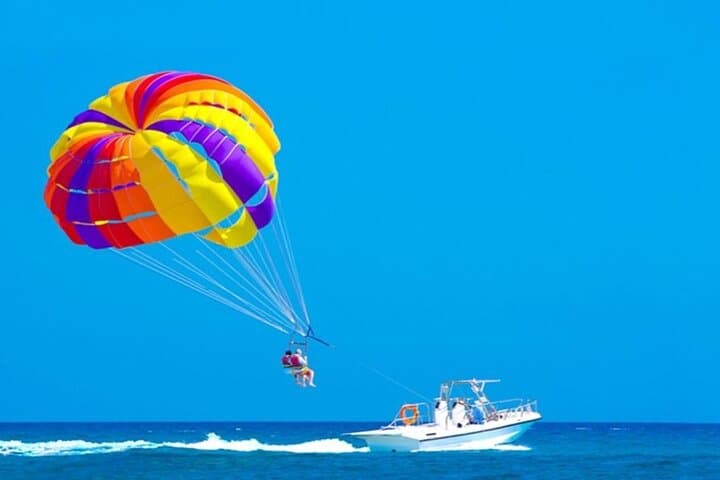
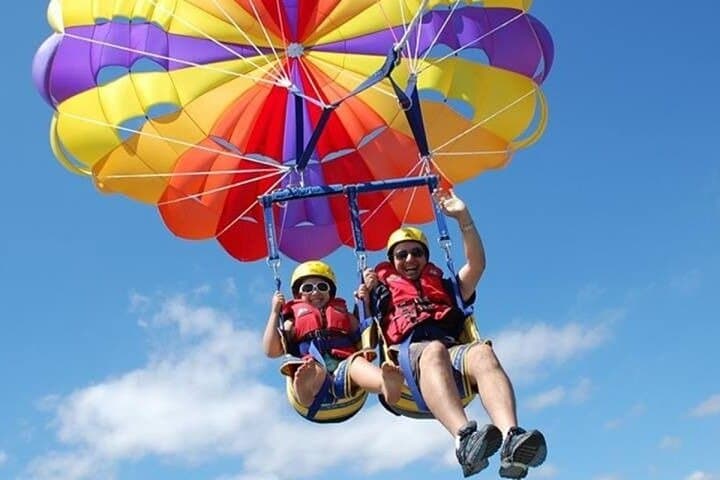
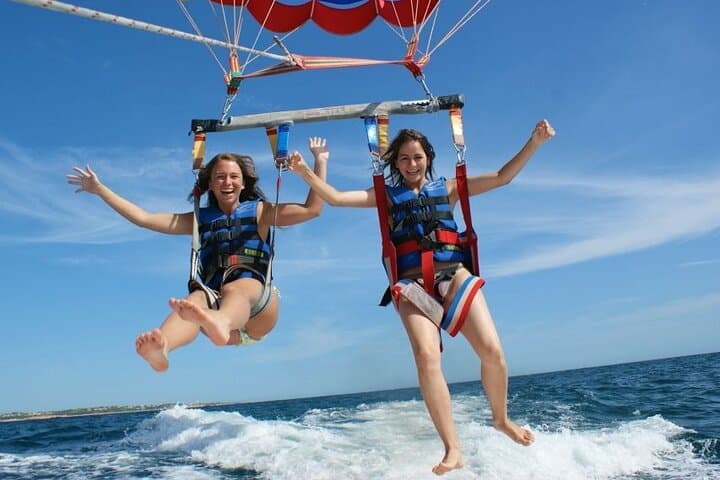
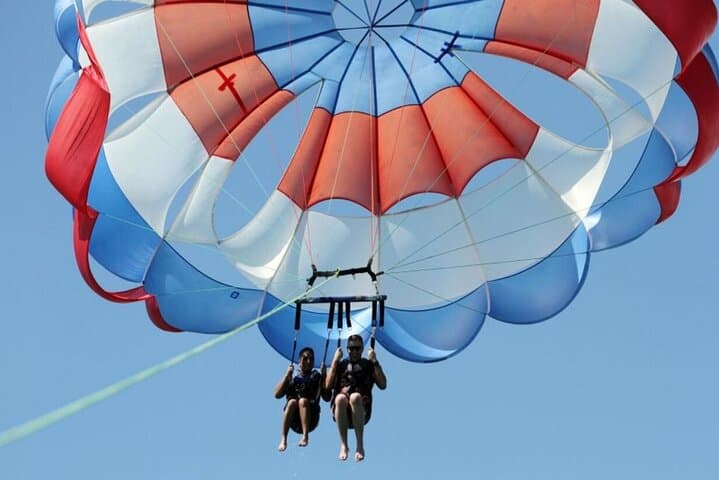
A small boat eases away from Naama Bay's crescent of sand and suddenly the world opens beneath you: turquoise shelves of coral, the jagged ribs of Sinai cliffs, and the resort lights of Sharm El Sheikh shrinking into a ribbon. Within minutes the parachute fills and you rise 40–50 meters above the Red Sea—the wind tugs playfully at the harness and the sea seems to dare you to look down.
Verified experiences and guided adventures in the surrounding area.
Operated by Dream Voyage · Sharm El Sheikh, South Sinai
A small boat eases away from Naama Bay's crescent of sand and suddenly the world opens beneath you: turquoise shelves of coral, the jagged ribs of Sinai cliffs, and the resort lights of Sharm El Sheikh shrinking into a ribbon. Within minutes the parachute fills and you rise 40–50 meters above the Red Sea—the wind tugs playfully at the harness and the sea seems to dare you to look down.
The bay sits on worn limestone and coral foundations where the Gulf of Aqaba carves deep channels; the area's modern resort roots date to the late 20th century when tourism reshaped the coastline. Local Bedouin communities and Egyptian diving culture influence the pace here—boats move with practiced efficiency, crews fluent in safety and quick explanations.
Practicalities are straightforward: the whole booking block runs about 90 minutes, with an actual airborne time of roughly 7–10 minutes per flight. No prior training is needed—crews provide a life jacket and secure harness, and operators often carry first-aid and CPR-certified staff. Beware of combined passenger weight limits (doubles are commonly capped around 150 kg) and a 24-hour cancellation window for full refunds.
For best light and calmer seas, aim for early morning or late afternoon; midday can be hot and glare-heavy. Bring reef-safe sunscreen, a strap for sunglasses or camera, and expect a quick briefing on takeoff and landing procedures. The ride is short but vivid: it’s less about duration and more about a clean, high perspective on one of the Red Sea’s most accessible coasts.
easy.
1–1.5 hours (90 minutes total).
Suitable for people in typical health with no specialized fitness required; able to climb a short ladder onto the boat.
Actual time airborne is typically 7–10 minutes per flight; the full activity block including briefing and transit is about 90 minutes.
Yes—operators commonly set a combined weight limit for doubles (often around 150 kg); disclose weights when booking.
No—no training is necessary; crew handle launch, flight control, and landing, and life jackets are provided.
Operators will postpone or cancel flights in unsafe wind or sea conditions; check the 24-hour cancellation policy for refunds.
Sharm El Sheikh transformed from a small fishing and Bedouin community into an international resort hub in the late 20th century, driven by diving and beach tourism.
Coral reefs here are sensitive—use reef-safe sunscreen, avoid anchoring on reefs, and choose operators that follow responsible anchoring and waste practices.
Dream Voyage operates guided outdoor trips and adventures with an emphasis on safety, stewardship, and memorable experiences.
A small boat eases away from Naama Bay's crescent of sand and suddenly the world opens beneath you: turquoise shelves of coral, the jagged ribs of Sinai cliffs, and the resort lights of Sharm El Sheikh shrinking into a ribbon. Within minutes the parachute fills and you rise 40–50 meters above the Red Sea—the wind tugs playfully at the harness and the sea seems to dare you to look down.
A small boat eases away from Naama Bay's crescent of sand and suddenly the world opens beneath you: turquoise shelves of coral, the jagged ribs of Sinai cliffs, and the resort lights of Sharm El Sheikh shrinking into a ribbon. Within minutes the parachute fills and you rise 40–50 meters above the Red Sea—the wind tugs playfully at the harness and the sea seems to dare you to look down.
The bay sits on worn limestone and coral foundations where the Gulf of Aqaba carves deep channels; the area's modern resort roots date to the late 20th century when tourism reshaped the coastline. Local Bedouin communities and Egyptian diving culture influence the pace here—boats move with practiced efficiency, crews fluent in safety and quick explanations.
Practicalities are straightforward: the whole booking block runs about 90 minutes, with an actual airborne time of roughly 7–10 minutes per flight. No prior training is needed—crews provide a life jacket and secure harness, and operators often carry first-aid and CPR-certified staff. Beware of combined passenger weight limits (doubles are commonly capped around 150 kg) and a 24-hour cancellation window for full refunds.
For best light and calmer seas, aim for early morning or late afternoon; midday can be hot and glare-heavy. Bring reef-safe sunscreen, a strap for sunglasses or camera, and expect a quick briefing on takeoff and landing procedures. The ride is short but vivid: it’s less about duration and more about a clean, high perspective on one of the Red Sea’s most accessible coasts.