THE ADVENTURE COLLECTIVE® · Independent discovery and booking for outdoor travel

Soar above Ronda and the Puente Nuevo on a one‑hour paramotor flight that turns the town’s cliffside streets and bullring into a living map. This accessible aerial tour requires no prior experience and delivers close, sweeping views of the Serranía de Ronda.
Soar above Ronda and the Puente Nuevo on a one‑hour paramotor flight that turns the town’s cliffside streets and bullring into a living map. This accessible aerial tour requires no prior experience and delivers close, sweeping views of the Serranía de Ronda.
You lift off in a powered trike, the engine humming behind you, and the white gap of El Tajo opens beneath — a raw cut through limestone that dares you to look down. The pilot eases the throttle, the paraglider’s canopy fills, and suddenly the town’s red roofs, the bullring’s pale oval and the famed Puente Nuevo compress into a patchwork that slides past like a map.
Verified experiences and guided adventures in the surrounding area.
Operated by Volar Andalucia · Ronda, Andalucía
You lift off in a powered trike, the engine humming behind you, and the white gap of El Tajo opens beneath — a raw cut through limestone that dares you to look down. The pilot eases the throttle, the paraglider’s canopy fills, and suddenly the town’s red roofs, the bullring’s pale oval and the famed Puente Nuevo compress into a patchwork that slides past like a map.
Ronda sits on a dramatic gorge carved by millennia of erosion; Roman foundations and Moorish walls cling to cliff edges while 18th‑century builders spanned the chasm with the Puente Nuevo. Flying here is as much geology lesson as joyride: limestone escarpments, serrated ridgelines and river terraces reveal the Serranía de Ronda’s uplift and fracture history. Culturally, the town’s bullring and narrow alleys speak to Andalusia’s layered past — a compact village visible in one sweeping arc from the air.
Practically, the paratrike experience is accessible: no running start, no prior skill — you sit, strap in, and let the pilot handle inflation and takeoff. Flights usually last about an hour including briefing; expect gentle climbs, thermally influenced bumps, and close views of the Puente Nuevo, city walls and surrounding olive groves. Mornings bring calmer winds; afternoons can build thermals.
Bring a secure camera, dress in layers for wind chill, and heed the pilot’s weight and safety checks. Operators follow strict certification standards and brief on emergency procedures. Landings are controlled and generally smooth. For a fast, high‑perspective way to read Ronda’s geology and history, a paramotor flight is efficient, thrilling and remarkably approachable.
easy.
1 hour.
Minimal fitness required — able to sit upright and follow safety briefings; not recommended if pregnant or with certain mobility limits.
No — flights are guided by a certified pilot and require no paragliding experience; passengers sit in a tandem trike.
Yes. Operators enforce weight limits and ask for passenger weight at booking to ensure safety and proper balance.
Flights are cancelled or rescheduled if winds or conditions are unsafe; expect full refund if cancelled at least 24 hours prior per operator policy.
Total experience is about an hour; airborne time covers views of Puente Nuevo, the bullring, city walls and the Serranía de Ronda landscape.
Ronda’s dramatic gorge and Puente Nuevo date to centuries of Roman and Moorish occupation, with the current bridge completed in the 18th century linking the town’s historic districts.
Stick to operator flight corridors and avoid low passes over nesting cliffs; pilots coordinate with local authorities to minimize disturbance to wildlife.
Volar Andalucia operates guided outdoor trips and adventures with an emphasis on safety, stewardship, and memorable experiences.

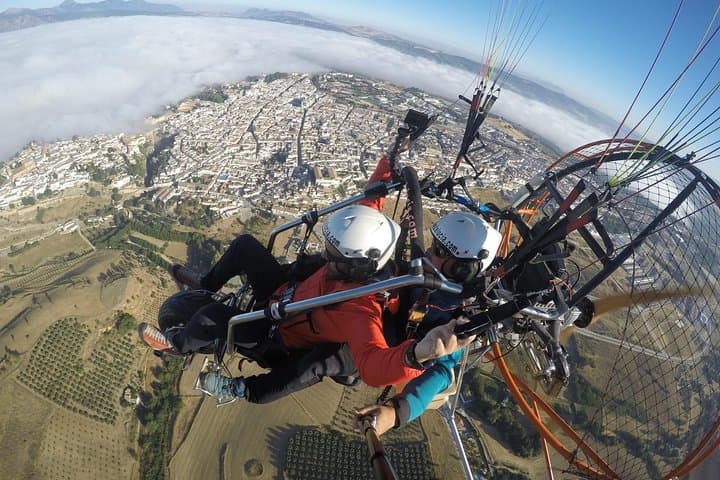

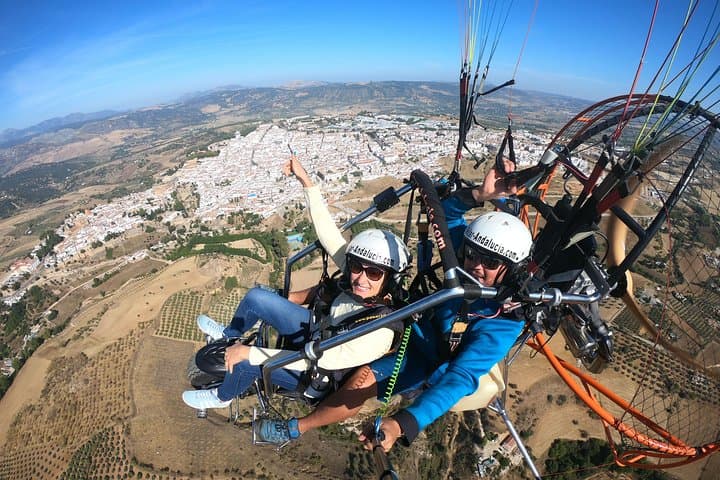
You lift off in a powered trike, the engine humming behind you, and the white gap of El Tajo opens beneath — a raw cut through limestone that dares you to look down. The pilot eases the throttle, the paraglider’s canopy fills, and suddenly the town’s red roofs, the bullring’s pale oval and the famed Puente Nuevo compress into a patchwork that slides past like a map.
You lift off in a powered trike, the engine humming behind you, and the white gap of El Tajo opens beneath — a raw cut through limestone that dares you to look down. The pilot eases the throttle, the paraglider’s canopy fills, and suddenly the town’s red roofs, the bullring’s pale oval and the famed Puente Nuevo compress into a patchwork that slides past like a map.
Ronda sits on a dramatic gorge carved by millennia of erosion; Roman foundations and Moorish walls cling to cliff edges while 18th‑century builders spanned the chasm with the Puente Nuevo. Flying here is as much geology lesson as joyride: limestone escarpments, serrated ridgelines and river terraces reveal the Serranía de Ronda’s uplift and fracture history. Culturally, the town’s bullring and narrow alleys speak to Andalusia’s layered past — a compact village visible in one sweeping arc from the air.
Practically, the paratrike experience is accessible: no running start, no prior skill — you sit, strap in, and let the pilot handle inflation and takeoff. Flights usually last about an hour including briefing; expect gentle climbs, thermally influenced bumps, and close views of the Puente Nuevo, city walls and surrounding olive groves. Mornings bring calmer winds; afternoons can build thermals.
Bring a secure camera, dress in layers for wind chill, and heed the pilot’s weight and safety checks. Operators follow strict certification standards and brief on emergency procedures. Landings are controlled and generally smooth. For a fast, high‑perspective way to read Ronda’s geology and history, a paramotor flight is efficient, thrilling and remarkably approachable.